Messenger Advanced Browsing Protection Explained
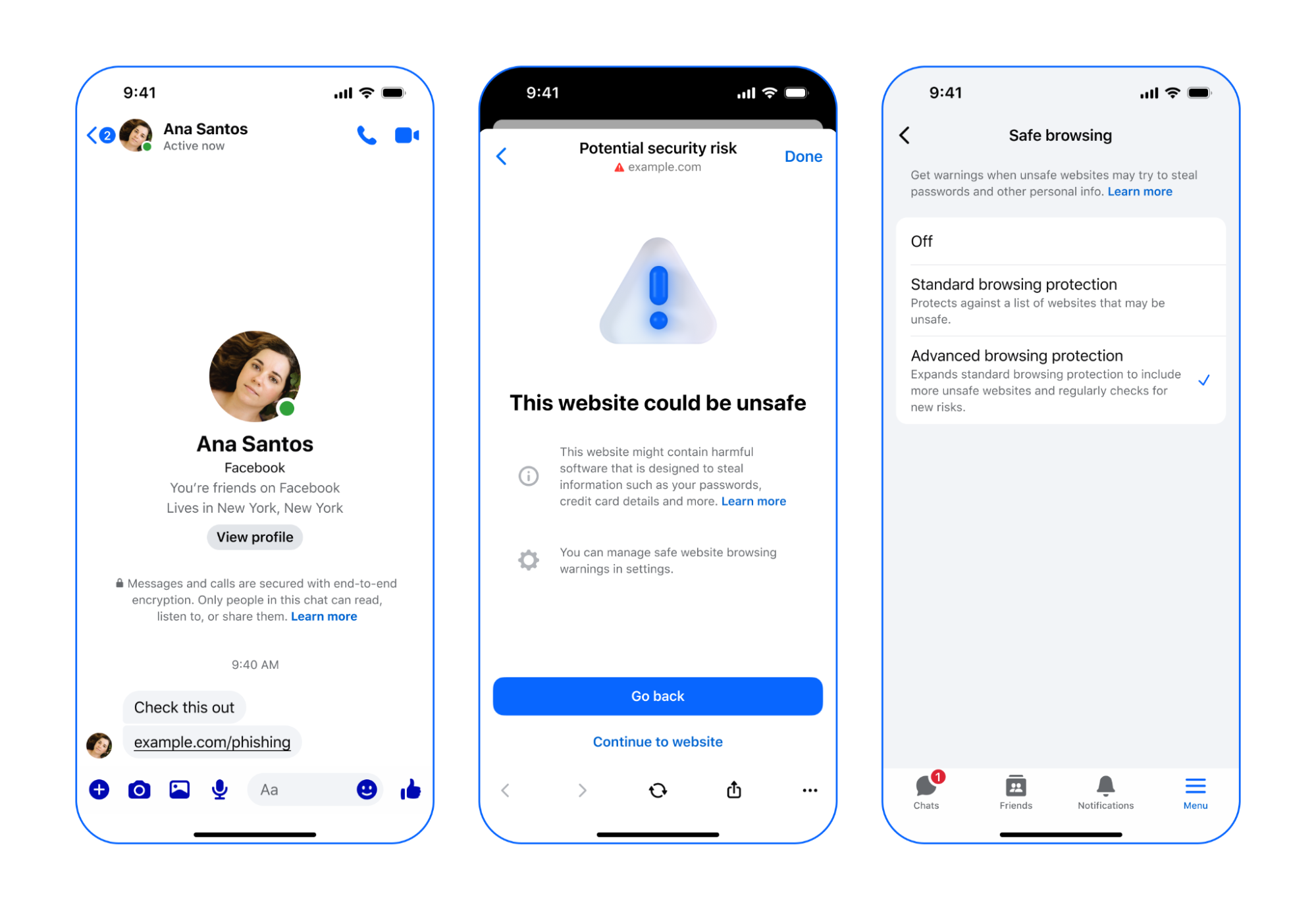
💡Meta's privacy-preserving link security insights for scalable chat infra in AI apps
⚡ 30-Second TL;DR
What Changed
Protects privacy of links clicked within Messenger chats
Why It Matters
Enhances user trust in Messenger by improving link safety and privacy, potentially influencing secure communication standards in messaging apps.
What To Do Next
Study Meta's ABP infrastructure patterns for building privacy-focused security in AI chat agents.
Key Points
- •Protects privacy of links clicked within Messenger chats
- •Warns users about malicious links without privacy leaks
- •Reveals engineering challenges in privacy-preserving scanning
- •Outlines key infrastructure components for ABP
🧠 Deep Insight
Background and context from public sources — not the original article. 6 sources cited.
🔑 Enhanced Key Takeaways
- •By default, all Messenger users have Advanced Browsing Protection enabled, though it can be disabled in privacy settings[3], indicating Meta's security-first approach as the standard configuration.
- •Meta is consolidating its messaging infrastructure by shutting down the standalone Messenger website in April 2026, redirecting users to facebook.com/messages[4], which may impact how browsing protection features are accessed and maintained across platforms.
- •Safe Browsing in Messenger offers three protection levels—Off, Standard Browsing Protection, and Advanced Browsing Protection—allowing users to choose their security posture based on individual risk tolerance[1][2].
🔮 Future ImplicationsAI analysis grounded in cited sources
⏳ Timeline
📎 Sources (6)
Factual claims are grounded in the sources below. Forward-looking analysis is AI-generated interpretation.
Weekly AI Recap
Read this week's curated digest of top AI events →
👉Related Updates
AI-curated news aggregator. All content rights belong to original publishers.
Original source: Meta Engineering Blog ↗
This is a summary, not the original. Read the source, or get the weekly briefing.
Weekly AI briefing
One email a week. Unsubscribe anytime.