Merlin Bird ID integrates AI data into eBird platform
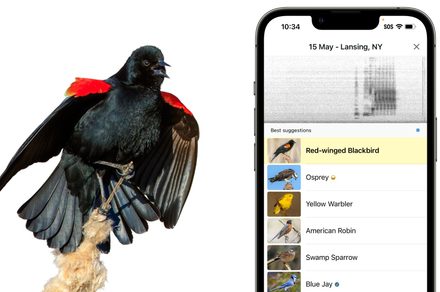
💡Learn how AI-powered consumer apps are being leveraged to build massive, high-quality research datasets.
⚡ 30-Second TL;DR
What Changed
Automated AI bird identification data collection
Why It Matters
This integration turns millions of consumer-generated observations into structured research data, showcasing the power of AI in environmental conservation and biodiversity monitoring.
What To Do Next
Explore the eBird API to see how large-scale crowdsourced datasets can be used to validate or fine-tune your own classification models.
Key Points
- •Automated AI bird identification data collection
- •Integration with Cornell's eBird global research database
- •Large-scale monitoring of bird populations using real-world observations
🧠 Deep Insight
AI-generated analysis for this event — not the original article.
🔑 Enhanced Key Takeaways
- •The integration utilizes the SoundID technology, which employs deep learning models trained on millions of recordings from the Macaulay Library to identify bird species in real-time.
- •Data submitted via Merlin is automatically filtered through eBird's data quality control process, which includes automated filters and expert review by regional editors to ensure scientific accuracy.
- •This initiative addresses the 'data gap' in ornithology by converting casual birdwatching observations into structured, timestamped, and geolocated scientific datasets.
- •The collaboration supports the 'eBird Status and Trends' project, which generates high-resolution abundance maps and seasonal movement models for hundreds of species.
- •Merlin Bird ID's AI models are continuously updated through a feedback loop where user-submitted photos and audio recordings are verified and subsequently used to retrain the underlying neural networks.
📊 Competitor Analysis▸ Show
| Feature | Merlin Bird ID | BirdNET | Audubon Bird Guide |
|---|---|---|---|
| Primary Focus | Integrated Citizen Science | Research/Acoustic Analysis | Field Identification |
| AI Identification | Photo & Sound | Sound Only | Photo Only |
| Database Integration | eBird (Cornell) | BirdNET-Analyzer | Audubon/eBird |
| Pricing | Free | Free | Free |
🛠️ Technical Deep Dive
- Architecture: Utilizes Convolutional Neural Networks (CNNs) for image classification and specialized acoustic models for sound identification.
- Training Data: Models are trained on the Macaulay Library, one of the world's largest archives of biological media.
- Inference: Performs on-device processing for initial identification to minimize latency, with cloud-based verification for complex or rare species.
- Data Pipeline: Observations are ingested into the eBird database using the Darwin Core standard to ensure interoperability with global biodiversity databases.
🔮 Future ImplicationsAI analysis grounded in cited sources
⏳ Timeline
Weekly AI Recap
Read this week's curated digest of top AI events →
👉Related Updates

AI-curated news aggregator. All content rights belong to original publishers.
Original source: Digital Trends ↗
This is a summary, not the original. Read the source, or get the weekly briefing.
Weekly AI briefing
One email a week. Unsubscribe anytime.