Memory Shortage May Last Until 2030
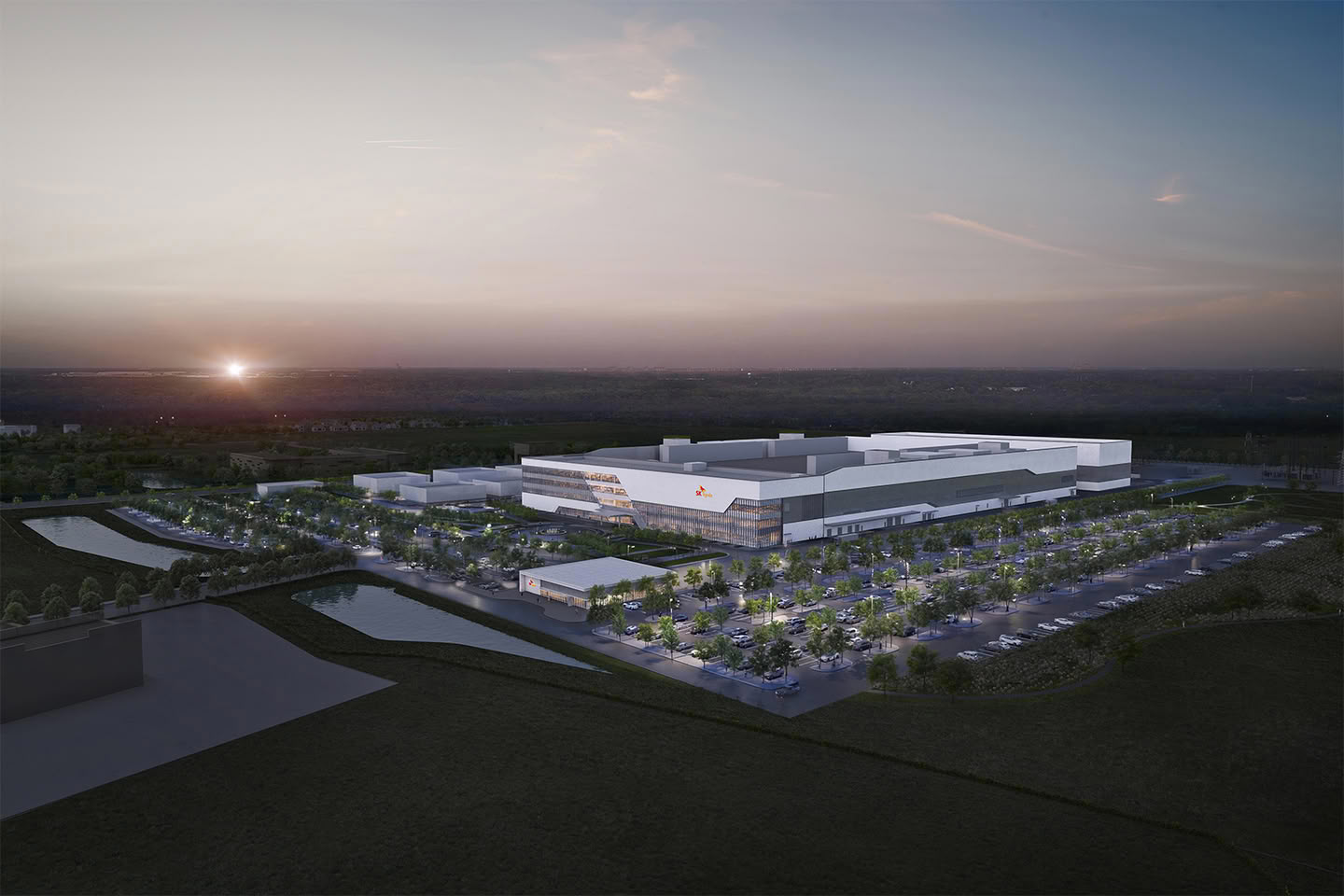
💡Memory shortages could reshape AI server costs and capacity planning through 2030.
⚡ 30-Second TL;DR
What Changed
SK hynix expects the memory shortage to persist through the end of 2030.
Why It Matters
Persistent memory constraints could keep costs elevated for AI servers and data-center expansion. AI companies may need longer-term capacity planning and stronger supplier diversification rather than relying on short-term price declines.
What To Do Next
Reforecast your next three years of AI infrastructure costs using a sustained-memory-shortage scenario through 2030.
Key Points
- •SK hynix expects the memory shortage to persist through the end of 2030.
- •Current market demand shows no clear signs of slowing.
- •A future downturn is expected to ease supply tightness gradually instead of triggering a sharp price collapse.
- •The outlook was shared after the groundbreaking ceremony for SK hynix's new packaging plant in Indiana.
🧠 Deep Insight
Background and context from public sources — not the original article. 13 sources cited.
🔑 Enhanced Key Takeaways
- •The current memory market is undergoing a structural shift where demand is driven by inelastic, high-margin HBM requirements for AI accelerators rather than traditional cyclical consumer electronics demand.
- •Major manufacturers are actively reallocating wafer capacity away from conventional DRAM and NAND flash, leading to a supply-demand gap currently exceeding 20%.
- •Supply chain lead times for critical memory components have extended significantly, reaching between 32 and 40+ weeks in the current market environment.
- •The scarcity of conventional memory has resulted in extreme price volatility, with some specific components experiencing price increases of up to 700% compared to historical averages.
- •SK Hynix is executing a massive capital expenditure strategy, including a $4 billion AI-focused packaging plant in Indiana and a $13 billion facility in South Korea to address long-term capacity constraints.
📊 Competitor Analysis▸ Show
| Feature | SK Hynix | Samsung | Micron |
|---|---|---|---|
| HBM Market Position | Leading HBM3E/HBM4 supplier | Aggressive HBM capacity expansion | Focused on HBM3E/HBM4 integration |
| Primary Strategy | AI-centric wafer reallocation | Diversified memory/foundry mix | US-based production expansion |
| 2026 Supply Outlook | Structural shortage through 2030 | Tight supply, prioritizing AI | Capacity constrained by fab lead times |
🛠️ Technical Deep Dive
- HBM (High-Bandwidth Memory) architecture utilizes 3D stacking of DRAM dies connected via TSVs (Through-Silicon Vias) to achieve high throughput.
- Shift toward HBM3E and HBM4 standards which require advanced packaging technologies like MR-MUF (Mass Reflow Molded Underfill) to manage thermal dissipation.
- Wafer capacity reallocation involves converting legacy DRAM lines to support the complex logic-to-memory interconnects required for AI accelerators.
- Advanced packaging facilities are being prioritized to handle the increased die size and power density of next-generation AI memory modules.
🔮 Future ImplicationsAI analysis grounded in cited sources
⏳ Timeline
📎 Sources (13)
Factual claims are grounded in the sources below. Forward-looking analysis is AI-generated interpretation.
Weekly AI Recap
Read this week's curated digest of top AI events →
👉Related Updates



AI-curated news aggregator. All content rights belong to original publishers.
Original source: cnBeta (Full RSS) ↗
This is a summary, not the original. Read the source, or get the weekly briefing.
Weekly AI briefing
One email a week. Unsubscribe anytime.