Memory Prices Trigger Smartphone Shipment Slump
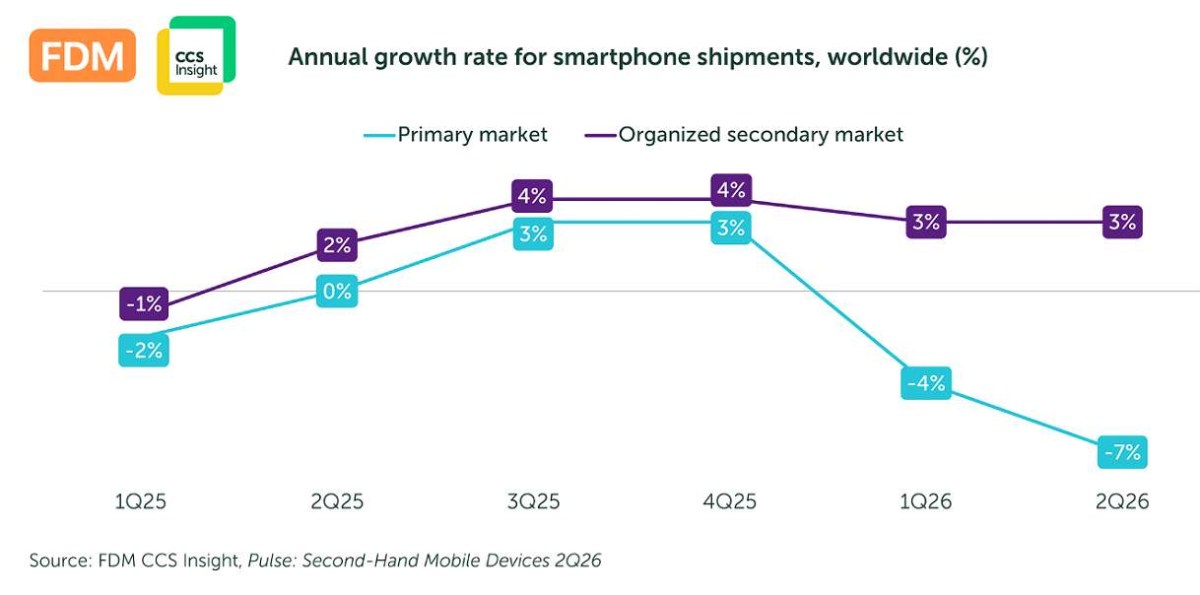
💡Rising memory costs could reshape the economics of AI-capable devices and edge inference hardware.
⚡ 30-Second TL;DR
What Changed
Global smartphone shipments declined 7% year over year in Q2 2026.
Why It Matters
Memory pricing can influence the cost and availability of AI-capable devices, edge inference hardware, and developer test fleets. A prolonged downturn could also reduce manufacturers’ willingness to prioritize higher-memory configurations.
What To Do Next
Recalculate the bill of materials for your edge-AI device prototype using current DRAM and flash quotes, and benchmark whether a lower-memory configuration still meets latency targets.
Key Points
- •Global smartphone shipments declined 7% year over year in Q2 2026.
- •Shipments fell 3% sequentially compared with Q1 2026.
- •The report attributes the downturn to sustained increases in global memory prices.
- •Higher memory costs may pressure device margins and hardware planning across the supply chain.
🧠 Deep Insight
AI-generated analysis for this event.
🔑 Enhanced Key Takeaways
- •The surge in memory prices is primarily driven by the aggressive allocation of HBM (High Bandwidth Memory) capacity toward AI server infrastructure, creating a supply squeeze for LPDDR5X and UFS storage used in mobile devices.
- •Smartphone OEMs are increasingly adopting 'memory-lite' configurations or delaying the integration of high-capacity 16GB/24GB RAM tiers in mid-range models to maintain retail price points.
- •Foundry utilization rates for mobile-specific SoCs have softened as manufacturers prioritize high-margin AI accelerator production, further complicating the supply chain balance.
- •Regional market data indicates that the decline is most pronounced in emerging markets where price sensitivity is high, whereas premium segment shipments in North America have remained relatively flat.
- •Major memory suppliers, including Samsung and SK Hynix, have shifted production mix toward enterprise SSDs and HBM, reducing the available wafer starts for mobile-grade NAND and DRAM.
🛠️ Technical Deep Dive
- LPDDR5X DRAM: Current mobile standard facing supply constraints due to HBM production priority.
- UFS 4.0 Storage: NAND flash pricing volatility is impacting the adoption rate of higher-capacity storage tiers (512GB/1TB) in entry-level and mid-range smartphones.
- SoC Integration: Manufacturers are optimizing memory controllers to support lower-voltage operations to mitigate thermal and power consumption issues associated with high-density memory modules.
- Wafer Allocation: Memory manufacturers are utilizing multi-patterning lithography to increase density, but this process is currently bottlenecked by the demand for AI-focused memory architectures.
🔮 Future ImplicationsAI analysis grounded in cited sources
⏳ Timeline
Weekly AI Recap
Read this week's curated digest of top AI events →
👉Related Updates


AI-curated news aggregator. All content rights belong to original publishers.
Original source: cnBeta (Full RSS) ↗