🐯虎嗅•Freshcollected in 12m
Memory Chip Cycle: HBM Impact and 2028 Outlook
💡Understand how HBM and memory cycles will impact your AI infrastructure costs and hardware availability.
⚡ 30-Second TL;DR
What Changed
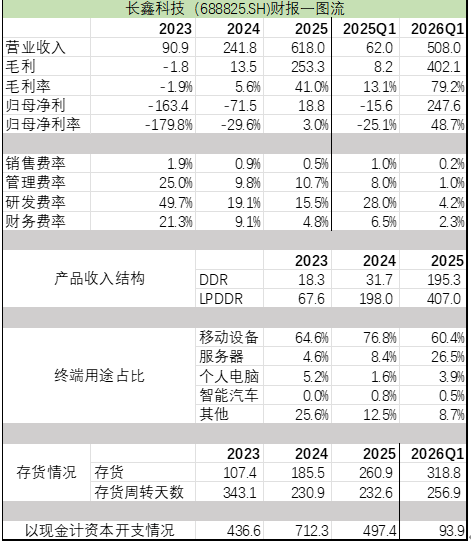
HBM is currently the core driver for memory valuation, with supply gaps expected to persist through 2027.
Why It Matters
The structural shift toward HBM production is forcing a re-evaluation of DRAM supply chains, impacting hardware costs for AI infrastructure.
What To Do Next
Monitor DRAM and HBM supply lead times to adjust hardware procurement strategies for AI clusters.
Who should care:Founders & Product Leaders
Key Points
- •HBM is currently the core driver for memory valuation, with supply gaps expected to persist through 2027.
- •LTA agreements help lock in prices but may limit margin upside and price elasticity.
- •DRAM supply is being squeezed by HBM production, creating structural shortages for non-HBM products.
- •The DRAM cycle peak may arrive earlier than HBM due to inventory levels in consumer electronics.
🧠 Deep Insight
AI-generated analysis for this event.
🔑 Enhanced Key Takeaways
- •The transition to HBM3E and upcoming HBM4 standards is driving a shift toward custom-logic dies, requiring memory manufacturers to integrate more closely with foundry partners like TSMC.
- •Advanced packaging capacity, specifically CoWoS (Chip-on-Wafer-on-Substrate), remains the primary bottleneck for HBM deployment, often more so than raw DRAM wafer output.
- •Thermal management challenges in HBM3E and beyond are forcing a move toward hybrid bonding technologies to improve interconnect density and power efficiency.
- •Memory manufacturers are increasingly adopting 'capacity-based' allocation models, where AI server demand takes precedence over legacy DDR4/DDR5 markets, exacerbating price volatility in commodity segments.
- •The rise of CXL (Compute Express Link) 3.0/3.1 is being positioned as a complementary technology to HBM, allowing for memory pooling that could alter the long-term demand profile for high-bandwidth memory.
📊 Competitor Analysis▸ Show
| Feature | SK Hynix (HBM Leader) | Samsung Electronics | Micron Technology |
|---|---|---|---|
| HBM Market Share | Dominant (Early Mover) | Aggressive Expansion | Focused on HBM3E/4 |
| Key Strategy | High-stack HBM3E focus | Turnkey (Memory + Foundry) | Efficiency & Power focus |
| Primary Node | 10nm-class (1b/1c) | 10nm-class (1b/1c) | 1-beta/1-gamma |
🛠️ Technical Deep Dive
- HBM3E Architecture: Utilizes 8-high or 12-high stacks with per-pin data rates reaching 9.6 Gbps to 10 Gbps.
- Hybrid Bonding: Transitioning from traditional micro-bumps to copper-to-copper hybrid bonding to reduce stack height and increase I/O density.
- Power Efficiency: Implementation of on-die ECC (Error Correction Code) and improved thermal dissipation layers to handle TDPs exceeding 100W per stack in AI accelerators.
- Interface: Shift toward 1024-bit wide interfaces per stack, requiring complex TSV (Through-Silicon Via) arrays for vertical communication.
🔮 Future ImplicationsAI analysis grounded in cited sources
HBM4 will necessitate a shift to 16-high stacking configurations.
To meet the bandwidth requirements of next-generation AI accelerators, manufacturers must increase vertical density beyond the current 12-high limit.
Foundry-Memory partnerships will become the primary competitive moat.
The integration of logic dies into HBM stacks requires deep technical collaboration between memory vendors and logic foundries, favoring companies with existing strong alliances.
⏳ Timeline
2023-08
SK Hynix announces development of HBM3E, setting the industry standard for the next generation of AI memory.
2024-02
Micron officially enters the high-end HBM market with the announcement of HBM3E for NVIDIA's H200 GPUs.
2024-05
Samsung Electronics accelerates HBM3E mass production to address the supply gap in the AI server market.
2025-03
Industry-wide shift toward 12-high HBM3E stacks begins as the primary configuration for flagship AI training chips.
2026-01
Major memory manufacturers report record-high capital expenditure allocations specifically for HBM-dedicated TSV and packaging lines.
📰
Weekly AI Recap
Read this week's curated digest of top AI events →
👉Related Updates



AI-curated news aggregator. All content rights belong to original publishers.
Original source: 虎嗅 ↗