Meituan's Tabbit AI Browser Enters Public Beta
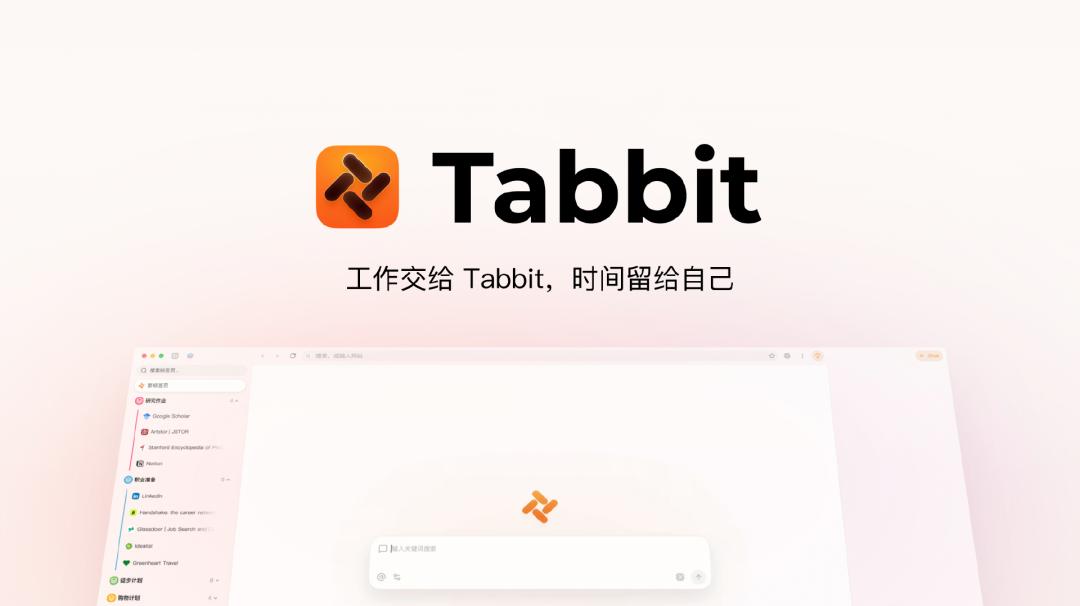
Open AI browser with multi-LLM context beats big tech silos
30-Second TL;DR
What Changed
Public beta achieves industry-leading retention with version 0.25
Why It Matters
Tabbit challenges Chrome/Edge by prioritizing openness over proprietary models, potentially accelerating AI adoption in browsers. It lowers barriers for non-technical users, expanding AI applications in daily workflows.
What To Do Next
Download Tabbit beta, import Chrome data, and test multi-model Agents for web task automation.
Key Points
- •Public beta achieves industry-leading retention with version 0.25
- •Model-agnostic: users switch freely among top LLMs like Claude, Gemini, ChatGPT
- •Contextual AI understands full page for accurate answers, e.g., 'CPL' as 'CPI' typo
- •Real use cases: 8 ecommerce automations, bulk paper reasoning for Tsinghua students, blind lawyer accessibility
Deep Insight
AI-generated analysis for this event — not the original article.
Enhanced Key Takeaways
- •Tabbit's architecture utilizes a proprietary 'Context-Aware Browser Engine' (CABE) that separates DOM-tree parsing from LLM inference, allowing it to maintain state across dynamic web applications without re-rendering.
- •Meituan's GN06 team has integrated Tabbit with the company's internal 'Meituan Brain' knowledge graph, enabling the browser to provide localized, real-time data overlays for local services and merchant information.
- •The browser's 'Agent-in-the-Loop' (AITL) framework allows users to define custom automation scripts via natural language, which are then compiled into executable JavaScript snippets that run locally within the browser sandbox.
Competitor Analysis
- Tabbit (Meituan)
- Multi-model (LongCat, Gemini, Claude)
- Arc Search (The Browser Co.)
- Proprietary/OpenAI
- Perplexity Pages
- Proprietary/Multi-model
- Tabbit (Meituan)
- Native Agent-in-the-Loop
- Arc Search (The Browser Co.)
- Limited (Browse for Me)
- Perplexity Pages
- Research-focused only
- Tabbit (Meituan)
- Freemium (Beta)
- Arc Search (The Browser Co.)
- Free
- Perplexity Pages
- Freemium (Pro)
- Tabbit (Meituan)
- Task-oriented automation
- Arc Search (The Browser Co.)
- UX/Discovery
- Perplexity Pages
- Information synthesis
| Feature | Tabbit (Meituan) | Arc Search (The Browser Co.) | Perplexity Pages |
|---|---|---|---|
| Model Flexibility | Multi-model (LongCat, Gemini, Claude) | Proprietary/OpenAI | Proprietary/Multi-model |
| Automation | Native Agent-in-the-Loop | Limited (Browse for Me) | Research-focused only |
| Pricing | Freemium (Beta) | Free | Freemium (Pro) |
| Primary Focus | Task-oriented automation | UX/Discovery | Information synthesis |
Technical Deep Dive
- •Implements a 'Semantic DOM' layer that converts complex HTML structures into compact, LLM-friendly JSON representations to reduce token consumption.
- •Utilizes a local vector database (indexed via IndexedDB) to store page history and user-defined automation patterns, ensuring privacy and low-latency retrieval.
- •Supports a 'Model-Router' middleware that dynamically selects the LLM based on task complexity, token cost, and latency requirements defined by the user's current workflow.
- •Features a sandboxed execution environment for user-generated automation scripts, preventing unauthorized cross-site scripting (XSS) or data exfiltration.
Future ImplicationsAI analysis grounded in cited sources
Timeline
- 2025-11Meituan GN06 team initiates internal development of the Tabbit project.
- 2026-02Closed alpha testing begins for select power users and academic researchers.
- 2026-03Tabbit v0.25 enters public beta release.
Weekly AI Recap
Read this week's curated digest of top AI events →
AI-curated news aggregator. All content rights belong to original publishers.
Original source: 36氪 ↗
This is a summary, not the original. Read the source, or get the weekly briefing.
The weekly digest
One email a week. Unsubscribe anytime.