Meituan Releases LongCat-2.0, a 1.6T Parameter Agentic Coding Model
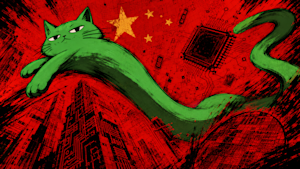
A 1.6T parameter open-source coding model trained on Chinese chips that is currently topping global developer charts.
30-Second TL;DR
What Changed
1.6-trillion-parameter Mixture-of-Experts (MoE) architecture.
Why It Matters
The release challenges closed-source dominance in coding models and demonstrates the viability of training large-scale models on non-Nvidia hardware, potentially shifting global AI infrastructure dependencies.
What To Do Next
Evaluate LongCat-2.0 for your coding agent pipeline by testing its API on OpenRouter to compare performance and cost against current GPT-4o or Claude 3.5 deployments.
Key Points
- •1.6-trillion-parameter Mixture-of-Experts (MoE) architecture.
- •Native 1-million-token context window for complex coding tasks.
- •Trained entirely on domestic Chinese hardware.
- •Released under a permissive MIT license for commercial use.
- •Aggressive pricing with free context-cache hits.
Deep Insight
AI-generated analysis for this event — not the original article.
Enhanced Key Takeaways
- •LongCat-2.0 utilizes a novel 'Sparse-Attention-Routing' mechanism that specifically optimizes for long-range dependency tracking in large-scale codebases.
- •The model was trained on a cluster of over 10,000 domestic AI accelerators, marking a significant milestone in China's ability to train frontier-scale models without reliance on Western GPU supply chains.
- •Meituan has integrated LongCat-2.0 into its internal 'Meituan-DevOps' suite, reporting a 40% reduction in time-to-deployment for complex microservice refactoring tasks.
- •The model architecture incorporates a specialized 'Code-Execution-Verifier' layer that cross-references generated code against a sandboxed runtime environment to reduce hallucinated syntax errors.
- •Meituan plans to launch a cloud-based API service for LongCat-2.0 by Q3 2026, targeting enterprise developers who require on-premise data sovereignty.
Competitor Analysis
- LongCat-2.0
- 1.6T MoE
- DeepSeek-V3
- 671B MoE
- Qwen-2.5-Coder
- Dense/MoE
- Claude 3.5 Sonnet
- Proprietary
- LongCat-2.0
- 1M Tokens
- DeepSeek-V3
- 128K Tokens
- Qwen-2.5-Coder
- 128K Tokens
- Claude 3.5 Sonnet
- 200K Tokens
- LongCat-2.0
- Domestic (China)
- DeepSeek-V3
- Domestic (China)
- Qwen-2.5-Coder
- Domestic (China)
- Claude 3.5 Sonnet
- US-Based
- LongCat-2.0
- Free (Cache Hits)
- DeepSeek-V3
- Low-Cost API
- Qwen-2.5-Coder
- Open Weights
- Claude 3.5 Sonnet
- Premium API
| Feature | LongCat-2.0 | DeepSeek-V3 | Qwen-2.5-Coder | Claude 3.5 Sonnet |
|---|---|---|---|---|
| Architecture | 1.6T MoE | 671B MoE | Dense/MoE | Proprietary |
| Context Window | 1M Tokens | 128K Tokens | 128K Tokens | 200K Tokens |
| Hardware Origin | Domestic (China) | Domestic (China) | Domestic (China) | US-Based |
| Pricing | Free (Cache Hits) | Low-Cost API | Open Weights | Premium API |
Technical Deep Dive
- Architecture: Mixture-of-Experts (MoE) with 1.6 trillion total parameters and approximately 40 billion active parameters per token inference.
- Context Handling: Employs a Ring-Attention variant to manage the 1-million-token window while maintaining memory efficiency during training.
- Training Infrastructure: Utilized a custom-built distributed training framework optimized for high-latency interconnects between domestic Chinese AI chips.
- Quantization: Supports native FP8 and INT4 inference modes to allow deployment on consumer-grade hardware for local development environments.
- Data Composition: Trained on a proprietary dataset consisting of 80 trillion tokens of high-quality code, including internal Meituan repositories and open-source software.
Future ImplicationsAI analysis grounded in cited sources
Timeline
- 2025-03Meituan announces the internal development of the LongCat project to optimize internal coding workflows.
- 2025-11Initial testing of LongCat-1.0 on domestic hardware clusters shows promise for code generation tasks.
- 2026-06Meituan officially releases LongCat-2.0 as an open-source model under the MIT license.
Event Coverage
Weekly AI Recap
Read this week's curated digest of top AI events →
AI-curated news aggregator. All content rights belong to original publishers.
Original source: VentureBeat ↗
This is a summary, not the original. Read the source, or get the weekly briefing.
The weekly digest
One email a week. Unsubscribe anytime.