Mastering MCP tool design and context engineering
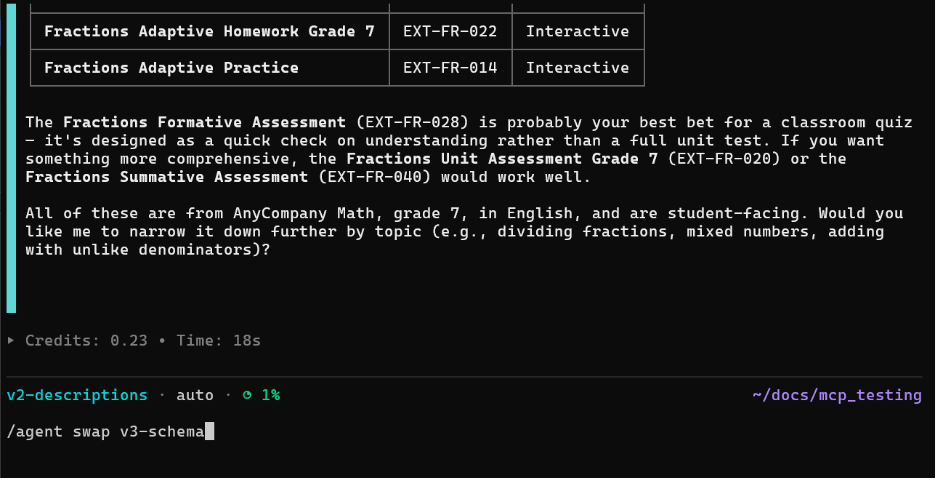
💡Learn how to avoid common MCP design traps and build more reliable AI agent tools.
⚡ 30-Second TL;DR
What Changed
Identifies common design flaws in MCP tool implementation
Why It Matters
Helps developers build more robust AI agents by refining how tools interact with LLMs through the MCP standard.
What To Do Next
Review your current MCP tool definitions against the article's context engineering guidelines to reduce hallucination rates.
Key Points
- •Identifies common design flaws in MCP tool implementation
- •Provides actionable context engineering techniques
- •Focuses on improving tool reliability and model interaction
🧠 Deep Insight
AI-generated analysis for this event — not the original article.
🔑 Enhanced Key Takeaways
- •MCP (Model Context Protocol) functions as an open standard enabling AI assistants to securely connect to data repositories and tools via a standardized client-host-server architecture.
- •The protocol utilizes JSON-RPC 2.0 as its underlying transport mechanism, allowing for decoupled communication between LLM applications and local or remote data sources.
- •Context engineering in MCP involves optimizing the 'prompt-to-tool' mapping, specifically focusing on reducing token overhead by dynamically filtering tool schemas based on user intent.
- •AWS's implementation emphasizes the use of 'MCP Servers' as isolated execution environments, which mitigates security risks associated with arbitrary code execution during tool invocation.
- •Recent updates to the MCP specification include enhanced support for 'Resources' and 'Prompts' templates, allowing developers to pre-define complex context structures that models can retrieve on demand.
📊 Competitor Analysis▸ Show
| Feature | MCP (Model Context Protocol) | LangChain Tools | Microsoft Semantic Kernel |
|---|---|---|---|
| Architecture | Open Standard (Universal) | Framework-Specific | Framework-Specific |
| Interoperability | High (Cross-platform) | Moderate (Ecosystem-locked) | Moderate (Ecosystem-locked) |
| Pricing | Open Source (Free) | Open Source (Free) | Open Source (Free) |
| Benchmarks | Standardized Tool Discovery | Varies by Implementation | Varies by Implementation |
🛠️ Technical Deep Dive
- Transport Layer: Uses Stdio or HTTP/SSE (Server-Sent Events) to establish persistent connections between the host and the MCP server.
- Schema Definition: Tools are defined using JSON Schema, which the host parses to generate function-calling signatures for the LLM.
- Resource URI Scheme: Implements a URI-based system (e.g., mcp://server/resource) to allow models to reference and fetch data chunks dynamically.
- Lifecycle Management: Supports initialization handshakes where servers declare capabilities (tools, resources, logging) to the host upon connection.
- Security Model: Employs a 'deny-by-default' permission model where the host must explicitly approve tool execution requests from the server.
🔮 Future ImplicationsAI analysis grounded in cited sources
⏳ Timeline
Weekly AI Recap
Read this week's curated digest of top AI events →
👉Related Updates
AI-curated news aggregator. All content rights belong to original publishers.
Original source: AWS Machine Learning Blog ↗
This is a summary, not the original. Read the source, or get the weekly briefing.
The weekly digest
One email a week. Unsubscribe anytime.