Make AI Evaluations Reproducible with Docker Sandboxes
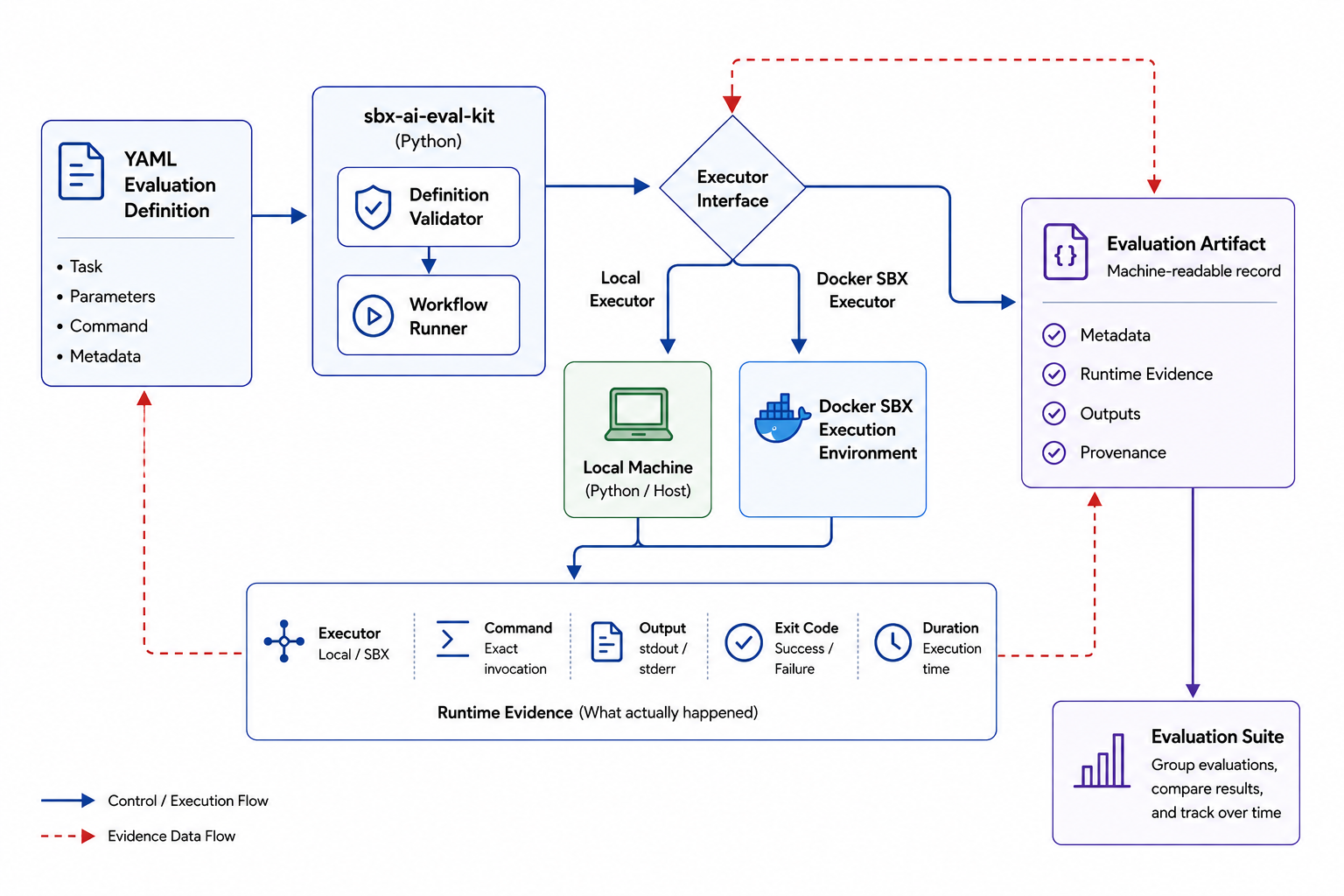
💡Learn how to make AI evaluations repeatable, inspectable, and easier to trust.
⚡ 30-Second TL;DR
What Changed
Use consistent Docker Sandbox environments to reduce execution differences across evaluation runs.
Why It Matters
More reproducible evaluations can make model, agent, and tool comparisons more trustworthy. Teams may also spend less time diagnosing whether a result came from the AI system or from environmental differences.
What To Do Next
Run one representative model or agent evaluation inside a Docker Sandbox and archive its outputs together with runtime evidence.
Key Points
- •Use consistent Docker Sandbox environments to reduce execution differences across evaluation runs.
- •Capture structured artifacts so evaluation outputs can be inspected and compared systematically.
- •Preserve runtime evidence to support reproducibility, debugging, and result verification.
🧠 Deep Insight
Background and context from public sources — not the original article. 7 sources cited.
🔑 Enhanced Key Takeaways
- •Docker Sandboxes leverage microVM-based hardware-enforced isolation to provide a security layer superior to standard containerization for autonomous AI agents.
- •The architecture utilizes credential proxying to prevent sensitive API keys from being exposed within the sandbox, injecting them only during outbound requests to authorized endpoints.
- •The platform integrates with the Model Context Protocol (MCP) to standardize how AI agents interface with external tools and isolated environments.
- •The primary interface for managing these environments is the 'sbx' command-line tool, which facilitates lifecycle management including creation, listing, and policy enforcement.
- •Sandboxes support 'YOLO mode' execution for AI coding agents like Claude Code and Gemini CLI by providing a strictly controlled, ephemeral environment that prevents unauthorized host access.
📊 Competitor Analysis▸ Show
| Feature | Docker Sandboxes | Firecracker (AWS) | Kubernetes Isolation | Cloud Sandbox Services |
|---|---|---|---|---|
| Isolation Type | MicroVM | MicroVM | Namespace/cgroup | Varies (VM/Container) |
| Primary Use Case | AI Agent Security | Serverless/Lambda | Orchestration | Managed SaaS |
| Ease of Setup | High (CLI-based) | Low (Infrastructure) | Medium (Complex) | High (API-based) |
🛠️ Technical Deep Dive
- MicroVM Architecture: Utilizes hardware-enforced isolation to bridge the gap between container performance and VM-level security.
- Filesystem Boundaries: Enforces strict path-based access control to prevent agents from escaping the designated working directory.
- Network Policy Control: Offers configurable network modes including closed (no access), balanced (restricted), and open (full access).
- Credential Proxying: Implements a secure middleware layer that substitutes sensitive tokens at the point of request rather than exposing them in the environment variables.
- Ephemeral Lifecycle: Ensures each sandbox initializes from a clean state to prevent state pollution or dependency drift between evaluation runs.
🔮 Future ImplicationsAI analysis grounded in cited sources
⏳ Timeline
📎 Sources (7)
Factual claims are grounded in the sources below. Forward-looking analysis is AI-generated interpretation.
Weekly AI Recap
Read this week's curated digest of top AI events →
👉Related Updates
AI-curated news aggregator. All content rights belong to original publishers.
Original source: Docker Blog ↗
This is a summary, not the original. Read the source, or get the weekly briefing.
Weekly AI briefing
One email a week. Unsubscribe anytime.