macOS 27 Golden Gate: Subtle Improvements Beyond AI
💡Understand how Apple is balancing core OS stability with AI integration in the latest macOS release.
⚡ 30-Second TL;DR
What Changed
Focuses on non-AI system refinements
Why It Matters
For developers, these updates suggest a balanced OS roadmap where core performance and usability are maintained alongside new AI integrations. It ensures that the underlying platform remains robust for professional workflows.
What To Do Next
Review the macOS 27 developer documentation to ensure your existing applications remain compatible with these new system-level refinements.
Key Points
- •Focuses on non-AI system refinements
- •Improves overall user experience through subtle adjustments
- •Demonstrates Apple's commitment to core OS stability alongside AI features
🧠 Deep Insight
Background and context from public sources — not the original article. 10 sources cited.
🔑 Enhanced Key Takeaways
- •macOS 27 Golden Gate marks the end of Intel Mac support, becoming the first macOS version to run exclusively on Apple Silicon hardware (M1 chip or newer).
- •While macOS 27 retains full Rosetta 2 support, Apple plans to largely end Rosetta 2 functionality with macOS 28 in Fall 2027, which will impact Intel-only applications, particularly older audio plugins.
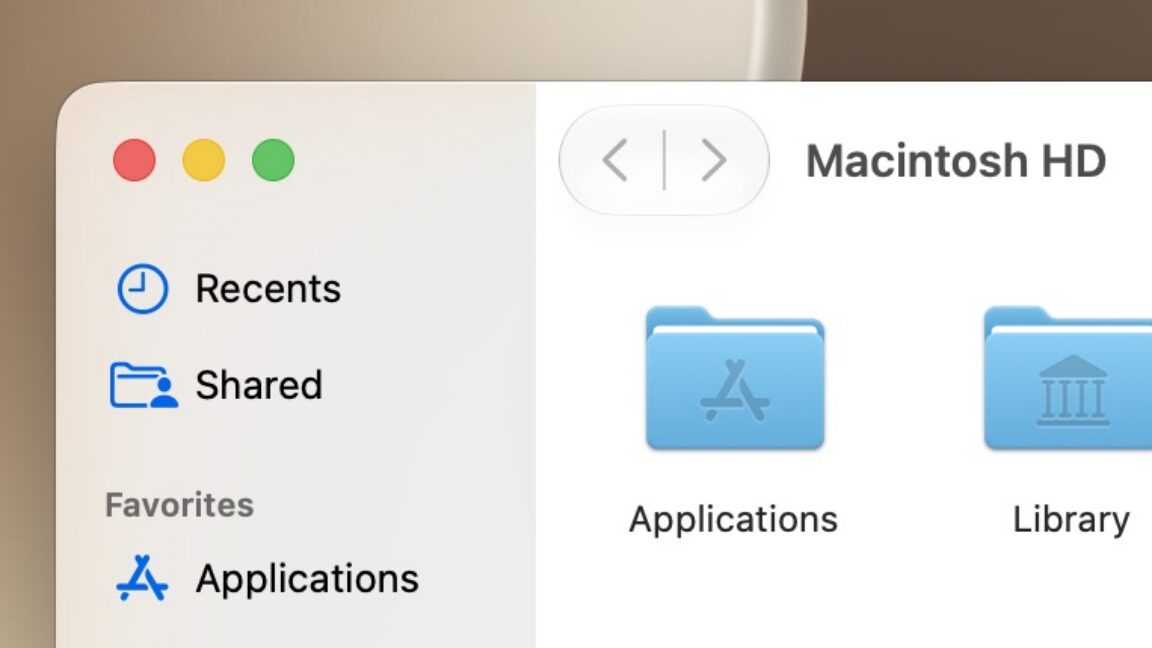
- •The Liquid Glass interface, introduced in macOS 26 Tahoe, receives significant refinements in Golden Gate, including a new customization slider for transparency and uniform design elements like toolbars and window shapes.
- •Golden Gate introduces a rebuilt indexing system for Spotlight, Mail, and Photos, aiming to enhance system responsiveness and provide faster, more reliable search capabilities.
- •Apple has substantially upgraded parental control features in macOS 27, reinforcing its industry leadership in native child safety tools.
🛠️ Technical Deep Dive
- macOS 27 Golden Gate is exclusively compatible with Apple Silicon Macs (M1 chip or later).
- Rosetta 2, while present, will be automatically uninstalled if previously installed under macOS 26 Tahoe, requiring manual reinstallation for Intel-only apps.
- The operating system features a rebuilt indexing system designed to improve the performance and reliability of search functions across Spotlight, Mail, and Photos.
- The Liquid Glass interface now includes a customization slider in System Settings, allowing users to adjust transparency, with underlying design tuned for enhanced readability and depth.
- Developers can leverage new technologies like Metal 4 and the Video Effects API to create powerful and immersive experiences, optimized for Apple Silicon.
- The Foundation Models framework, a native Swift API, provides direct access to Apple Foundation Models (both on-device and via Private Cloud Compute) and supports multimodal prompts and various language models for integrating AI features.
🔮 Future ImplicationsAI analysis grounded in cited sources
⏳ Timeline
📎 Sources (10)
Factual claims are grounded in the sources below. Forward-looking analysis is AI-generated interpretation.
Weekly AI Recap
Read this week's curated digest of top AI events →
👉Related Updates
AI-curated news aggregator. All content rights belong to original publishers.
Original source: Ars Technica ↗
This is a summary, not the original. Read the source, or get the weekly briefing.
The weekly digest
One email a week. Unsubscribe anytime.