Machine Learning Links Galactic Gamma Rays to Dark Matter
💡See how machine learning is being applied to solve long-standing mysteries in fundamental physics.
⚡ 30-Second TL;DR
What Changed
Application of machine learning to astrophysical signal analysis
Why It Matters
This research demonstrates the efficacy of ML in processing complex astrophysical data sets. It highlights how AI can accelerate discoveries in fundamental physics and cosmology.
What To Do Next
Explore the use of anomaly detection algorithms in your own data pipelines to identify patterns in noisy, high-dimensional datasets.
Key Points
- •Application of machine learning to astrophysical signal analysis
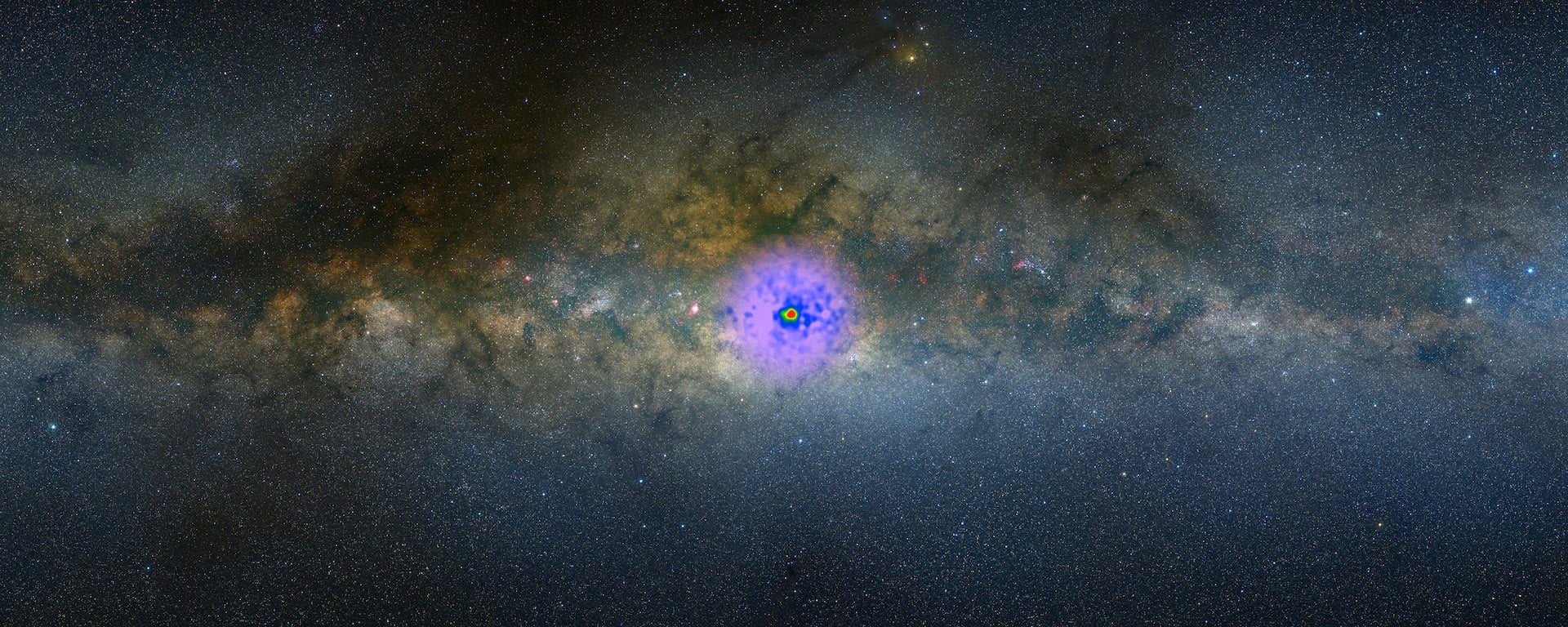
- •New analysis of gamma-ray emissions from the galactic center
- •Dark matter identified as a viable source for the observed signals
🧠 Deep Insight
AI-generated analysis for this event — not the original article.
🔑 Enhanced Key Takeaways
- •The research specifically utilizes Convolutional Neural Networks (CNNs) to distinguish between dark matter annihilation signals and astrophysical backgrounds like millisecond pulsars.
- •Previous studies often relied on template-fitting methods, which struggled to differentiate between point-source populations and diffuse dark matter signatures; the ML approach significantly reduces this model dependency.
- •The gamma-ray excess, often referred to as the Galactic Center Excess (GCE), has been a subject of debate since its discovery in Fermi-LAT data in 2009.
- •The ML model was trained on synthetic sky maps generated by astrophysical simulations to learn the morphological differences between dark matter halos and stellar populations.
- •This analysis addresses the 'small-scale structure' problem, where ML identifies patterns in photon distribution that traditional statistical methods fail to resolve.
🛠️ Technical Deep Dive
- Model Architecture: Deep Convolutional Neural Networks (CNNs) designed for image classification and pattern recognition in high-energy photon count maps.
- Training Data: Synthetic datasets generated using tools like GalProp or similar cosmic-ray propagation codes to simulate dark matter annihilation profiles versus pulsar distributions.
- Input Features: Spatial distribution of gamma-ray counts, energy spectra, and photon arrival directions (pixelated maps).
- Classification Mechanism: Binary or multi-class classification to assign probability scores to pixels or regions based on the likelihood of dark matter origin versus known astrophysical sources.
- Validation: Cross-validation against Fermi Large Area Telescope (LAT) observational data and mock data challenges to minimize false-positive rates.
🔮 Future ImplicationsAI analysis grounded in cited sources
⏳ Timeline
Weekly AI Recap
Read this week's curated digest of top AI events →
👉Related Updates
AI-curated news aggregator. All content rights belong to original publishers.
Original source: cnBeta (Full RSS) ↗
This is a summary, not the original. Read the source, or get the weekly briefing.
The weekly digest
One email a week. Unsubscribe anytime.