Luo Fuli: AGI Achieved, Next Self-Evolution
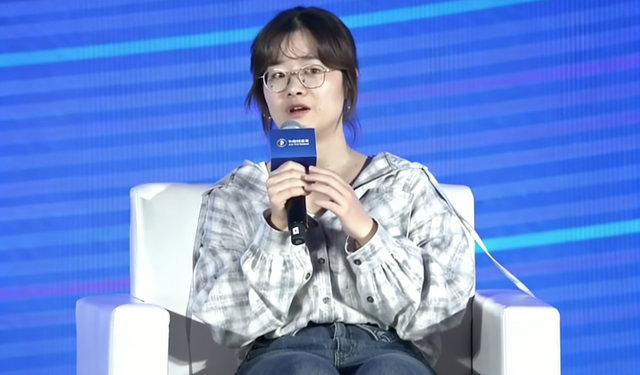
💡AGI 'done' claim by China AI leader – rethink self-improving model strategies
⚡ 30-Second TL;DR
What Changed
Luo Fuli states AGI realization complete
Why It Matters
Challenges global AGI timelines and spurs focus on autonomous improvement systems. Could influence funding and research priorities in China AI ecosystem.
What To Do Next
Review Zhongguancun AI forum transcripts for self-evolution research directions.
Key Points
- •Luo Fuli states AGI realization complete
- •Self-evolution identified as next AI milestone
- •Zhongguancun forum features top AI voices
- •Speakers include Yang Zhilin and Zhang Peng
🧠 Deep Insight
AI-generated analysis for this event — not the original article.
🔑 Enhanced Key Takeaways
- •Luo Fuli's assertion aligns with a broader trend among Chinese AI leaders in early 2026 to redefine AGI benchmarks, shifting focus from static reasoning capabilities to autonomous agentic workflows.
- •The Zhongguancun forum discussion highlighted a strategic pivot in the Chinese AI ecosystem, moving away from pure LLM parameter scaling toward 'self-evolution' architectures that prioritize recursive self-improvement and automated data synthesis.
- •Industry analysts note that the panel, including Yang Zhilin (Moonshot AI) and Zhang Peng (Zhihu), reflects a consensus that the 'AGI' threshold is now being measured by an AI's ability to operate independently in complex, multi-step real-world environments without human intervention.
🔮 Future ImplicationsAI analysis grounded in cited sources
Weekly AI Recap
Read this week's curated digest of top AI events →
👉Related Updates
AI-curated news aggregator. All content rights belong to original publishers.
Original source: 钛媒体 ↗
This is a summary, not the original. Read the source, or get the weekly briefing.
Weekly AI briefing
One email a week. Unsubscribe anytime.