Lobster Topples Doubao's Safety Wall
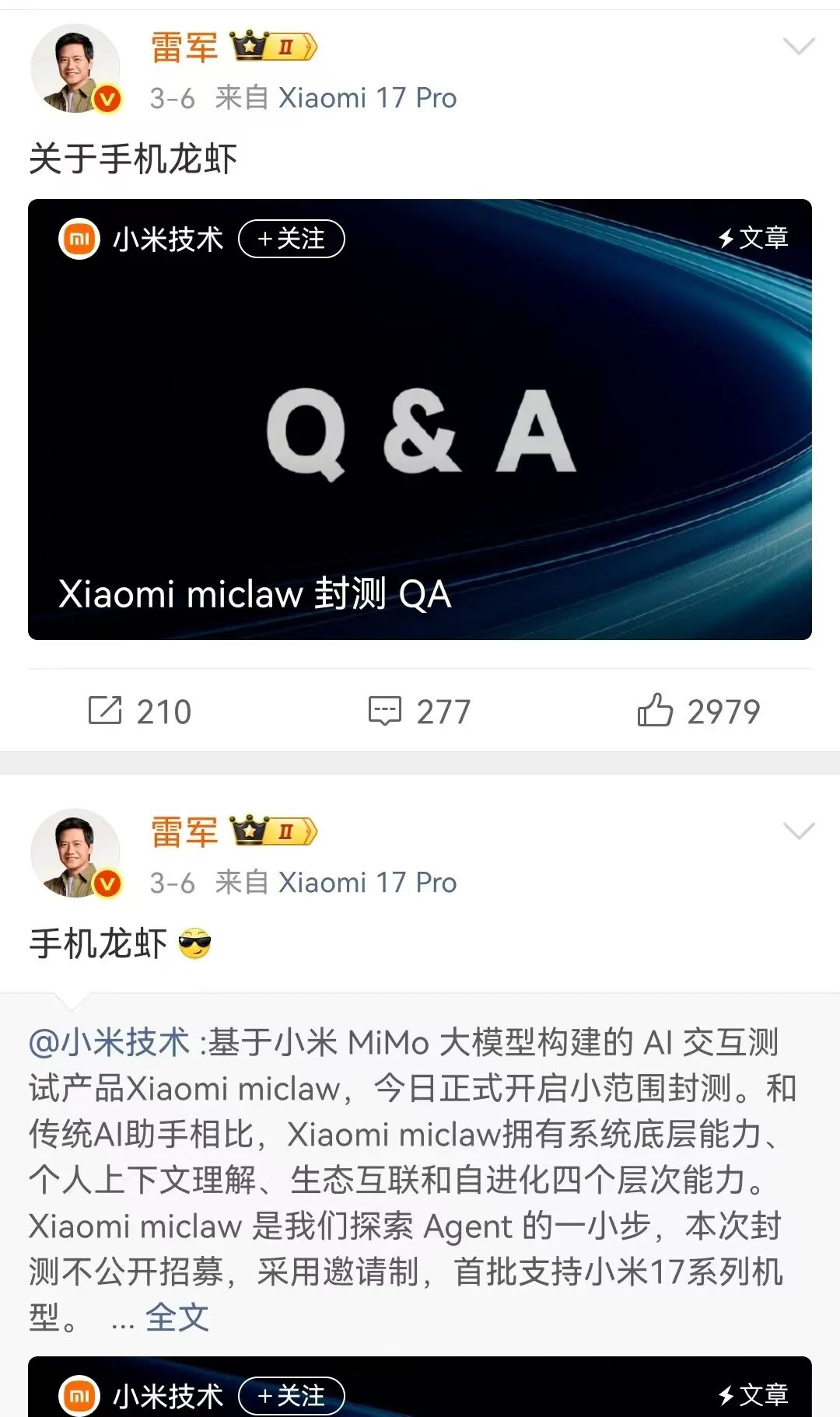
💡'Lobster' (OpenClaw) smashes Doubao safety walls—key for unrestricted AI apps.
⚡ 30-Second TL;DR
What Changed
'Lobster' (OpenClaw) overcomes Doubao restrictions.
Why It Matters
Empowers developers to bypass proprietary AI limits, accelerating OpenClaw adoption over Doubao in safety-sensitive apps.
What To Do Next
Test OpenClaw on Doubao-blocked tasks to compare safety bypass performance.
Key Points
- •'Lobster' (OpenClaw) overcomes Doubao restrictions.
- •Safety no longer protects super apps.
- •Signals open tools challenging closed ecosystems.
- •Boosts OpenClaw's edge in accessibility.
🧠 Deep Insight
Background and context from public sources — not the original article. 7 sources cited.
🔑 Enhanced Key Takeaways
- •OpenClaw originated as a weekend project called ClawBot in January 2026, evolving through Moltbot amid security issues into a local-first AI agent standard.[3][5]
- •Peter Steinberger, OpenClaw's creator, joined OpenAI on February 15, 2026, signaling big tech endorsement of its agent architecture.[4][5]
- •OpenClaw features security vulnerabilities allowing API key theft, leading to regulatory warnings and bans by South Korean firms.[1]
- •Zhou Hongyi announced a one-click install version from 360 Group during the 2026 Two Sessions, targeting PC users.[1]
🛠️ Technical Deep Dive
- •Model-agnostic: integrates with Claude, GPT, DeepSeek, Llama, MiniMax via APIs like OpenRouter.[2][4][5]
- •Local-first execution on user hardware using NPU chips, with data stored locally and no cloud dependency.[3][5]
- •Architecture includes Mission Control pattern, brains-and-muscles separation, reverse prompting, customizable skills, and self-improving memory from conversations.[5]
- •Relies on super-long default prompts for task execution, enabling autonomous actions like email processing, file management, and error correction.[2][3]
🔮 Future ImplicationsAI analysis grounded in cited sources
⏳ Timeline
📎 Sources (7)
Factual claims are grounded in the sources below. Forward-looking analysis is AI-generated interpretation.
- aibase.com — 26034
- panewslab.com — 019cd1ed 212d 733e 893f 4b7913926c07
- diatomenterprises.com — From Clawbot to Openclaw
- eu.36kr.com — 3705207700697476
- taskade.com — Moltbook Clawdbot Openclaw History
- smithstephen.com — The Hottest AI Tool of 2026 Is One
- TechCrunch — After All the Hype Some AI Experts Dont Think Openclaw Is All That Exciting
Weekly AI Recap
Read this week's curated digest of top AI events →
👉Related Updates



AI-curated news aggregator. All content rights belong to original publishers.
Original source: 钛媒体 ↗
This is a summary, not the original. Read the source, or get the weekly briefing.
Weekly AI briefing
One email a week. Unsubscribe anytime.