LLMs Advance in Math but Still Fail Basics
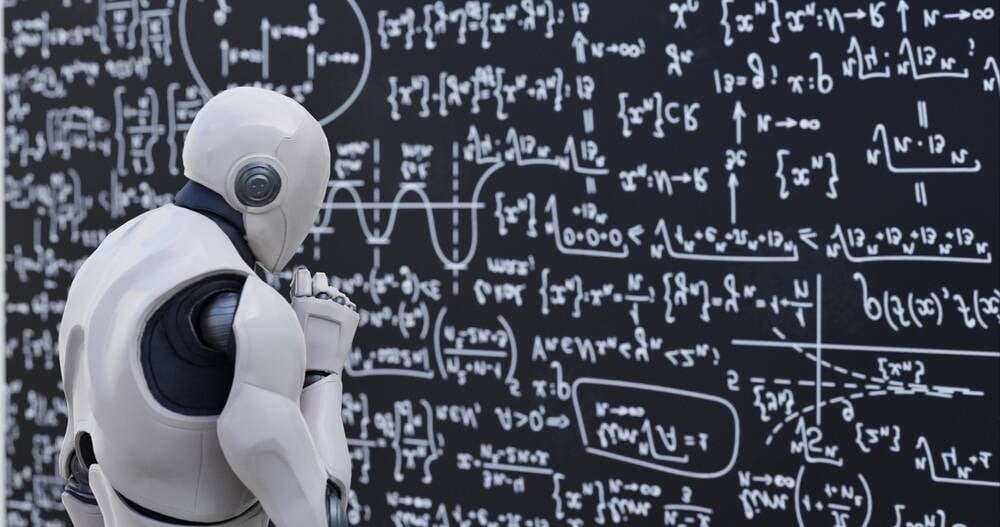
💡ORCA results reveal top LLMs' math gaps—critical for building reliable quantitative AI tools
⚡ 30-Second TL;DR
What Changed
LLMs improved on ORCA math benchmark but not mastered
Why It Matters
Highlights need for better reasoning in LLMs, affecting reliability in quantitative apps. Practitioners should prioritize hybrid systems combining LLMs with calculators or verifiers.
What To Do Next
Run your LLM on ORCA benchmark via Hugging Face to quantify math weaknesses before production deployment.
Key Points
- •LLMs improved on ORCA math benchmark but not mastered
- •Gemini 3 Flash tops leaderboard with C-grade performance
- •Models predict likely solutions, not always correct ones
🧠 Deep Insight
Background and context from public sources — not the original article. 6 sources cited.
🔑 Enhanced Key Takeaways
- •ChatGPT 5.2 improved to 54.0% accuracy on ORCA, a 4.6 percentage point gain from prior tests[1].
- •DeepSeek V3.2 saw dramatic gains in Biology & Chemistry from 10.5% to 43.9% accuracy on ORCA[1].
- •Calculation errors now represent 39.8% of ORCA mistakes, up from 33.4%, while rounding errors decreased[1].
- •Automated math benchmarks like Math-500 suffer from reliability issues due to exact string matching and benchmark contamination[2].
📊 Competitor Analysis▸ Show
| Model | ORCA Math Score | Change from Prior | Other Domain Notes |
|---|---|---|---|
| Gemini 3 Flash | Top (C-grade, ~60-70%) | Improved | Math & Conversions: 93.2% (+10.2 pts)[1] |
| ChatGPT 5.2 | 54.0% | +4.6 pts | N/A[1] |
| Grok 4.1 | 60.2% | -2.6 pts | Losses in Health & Sports (-9 pts), Bio/Chem (-5.3 pts)[1] |
| Claude Sonnet 4.5 | Improved (exact % not top) | Gained | N/A[1] |
| DeepSeek V3.2 | Improved (not top) | Gained | Bio/Chem: +33.4 pts[1] |
🛠️ Technical Deep Dive
- •ORCA Benchmark comprises 500 practical math questions across domains like Math & Conversions, Biology & Chemistry, Health & Sports[1].
- •LLMs exhibit evaluator variance on benchmarks like Math-500, with drops on perturbed versions (e.g., LLaMA3-70B: 59.80% to 22.22%) due to string matching over equivalence[2].
- •Instruction tuning boosts small language models (SLMs) more than large ones on math tasks, with marginal gains for LLMs like Kimi-K2 (94.2% to 93.8%)[2].
- •Fine-tuning on Orca-Math dataset (200k problems) with QLoRA/Spectrum on Llama-3.1-8B yields ~60% on GSM8K[4].
🔮 Future ImplicationsAI analysis grounded in cited sources
⏳ Timeline
📎 Sources (6)
Factual claims are grounded in the sources below. Forward-looking analysis is AI-generated interpretation.
Weekly AI Recap
Read this week's curated digest of top AI events →
👉Related Updates
AI-curated news aggregator. All content rights belong to original publishers.
Original source: The Register - AI/ML ↗
This is a summary, not the original. Read the source, or get the weekly briefing.
Weekly AI briefing
One email a week. Unsubscribe anytime.