Lithium Chain Splits in Two
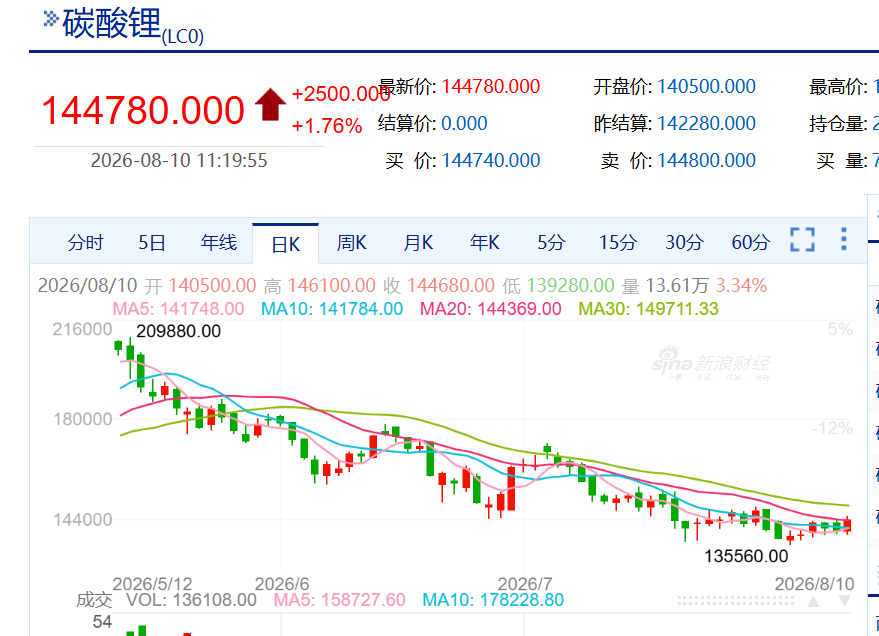
AI算力正在推高銅箔需求,鋰電供應鏈卻出現上游跌、材料漲的罕見分化。
30-Second TL;DR
What Changed
Battery-grade lithium carbonate fell from nearly 210,000 yuan per ton in May to about 140,000–142,000 yuan by August 10.
Why It Matters
For AI infrastructure builders, the article highlights that AI-computing demand is adding pressure to copper and related power-storage supply chains. Hardware and data-center projects may face greater cost volatility even when upstream lithium prices are falling.
What To Do Next
Add lithium carbonate, VC, and copper-foil processing fees to your AI data-center bill of materials, then run a quarterly sensitivity analysis on battery-backup costs.
Key Points
- •Battery-grade lithium carbonate fell from nearly 210,000 yuan per ton in May to about 140,000–142,000 yuan by August 10.
- •VC prices reached about 220,000 yuan per ton by late July, up more than 380% from a year earlier.
- •LFP producers are raising prices as phosphoric acid, monoammonium phosphate, and sulfuric acid costs increase.
- •Power battery sales rose 36.2% year over year in the first half, while energy-storage battery sales increased 83.4%.
- •Copper foil processing fees are rising as EV, AI-computing, tariff, and copper-supply pressures converge.
Deep Insight
AI-generated analysis for this event — not the original article.
Enhanced Key Takeaways
- •The divergence in lithium carbonate and electrolyte additive pricing is driven by a structural shift in supply chain bottlenecks, where upstream lithium mining capacity has expanded faster than the specialized chemical synthesis capacity required for high-purity additives like Vinylene Carbonate (VC).
- •Rising copper foil processing fees are exacerbated by the 'AI-computing' demand surge, which competes with EV battery manufacturers for high-end electrolytic copper foil capacity, creating a cross-industry supply squeeze.
- •The 83.4% growth in energy-storage battery sales is increasingly dominated by large-format LFP (Lithium Iron Phosphate) cells, which require different electrolyte formulations and higher additive concentrations compared to standard EV cells, further tightening VC supply.
- •Geopolitical trade barriers and new tariff regimes implemented in mid-2026 have forced domestic Chinese battery manufacturers to localize more of their upstream chemical supply chain, increasing short-term production costs for critical additives.
- •Phosphoric acid and monoammonium phosphate price hikes are linked to seasonal agricultural demand cycles overlapping with industrial battery-grade requirements, creating a 'double-squeeze' on LFP cathode material costs.
Technical Deep Dive
- Vinylene Carbonate (VC) acts as a critical film-forming additive in lithium-ion battery electrolytes, facilitating the formation of a stable Solid Electrolyte Interphase (SEI) layer on the graphite anode.
- The recent price surge in VC is partially attributed to the shift toward high-nickel cathode chemistries and fast-charging battery architectures, which demand higher purity and concentration of SEI-stabilizing additives to prevent thermal runaway.
- Copper foil manufacturing for high-performance batteries now requires ultra-thin (sub-6 micron) specifications, which are technically more difficult to produce and are currently being diverted to meet the high-density interconnect (HDI) requirements of AI server motherboards.
Future ImplicationsAI analysis grounded in cited sources
Timeline
- 2025-08VC prices hit historic lows due to overcapacity in the electrolyte additive sector.
- 2026-05Lithium carbonate prices peak at 210,000 yuan per ton before beginning a sustained decline.
- 2026-07VC prices reach 220,000 yuan per ton, marking a 380% increase from the previous year's trough.
Weekly AI Recap
Read this week's curated digest of top AI events →
AI-curated news aggregator. All content rights belong to original publishers.
Original source: 虎嗅 ↗
This is a summary, not the original. Read the source, or get the weekly briefing.
The weekly digest
One email a week. Unsubscribe anytime.