LingXin SmartHand Eyes $2.8B Funding
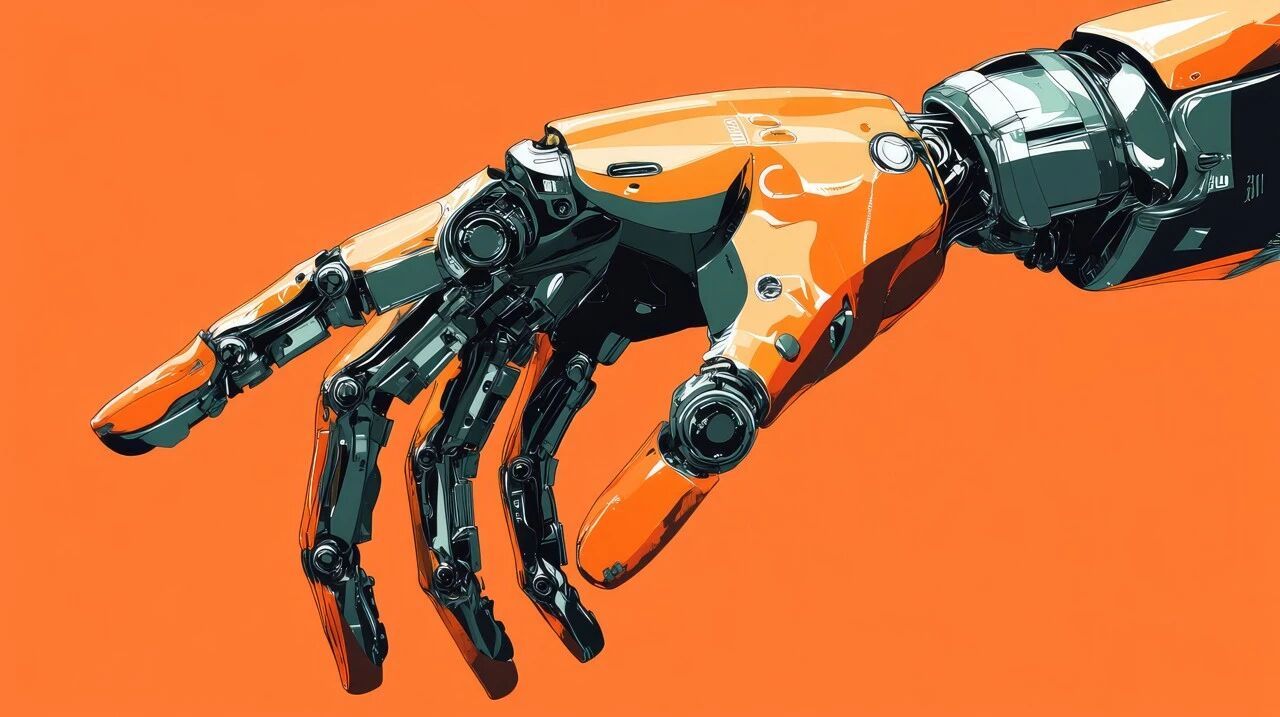
💡Robotics firm doubles valuation in 1 month, eyes 2026 IPO—key for embodied AI hardware
⚡ 30-Second TL;DR
What Changed
Valuation doubled to ~$2.8B from ~$1.4B in one month
Why It Matters
Rapid valuation growth highlights surging demand for dexterous robotics in embodied AI. This could spur innovations in humanoid robots and grippers. AI founders may find investment or partnership opportunities.
What To Do Next
Benchmark LingXin dexterous hands vs. competitors like Shadow Robot for robotics prototypes.
Key Points
- •Valuation doubled to ~$2.8B from ~$1.4B in one month
- •Seeking new funding round
- •Targeting 2026 IPO
- •Focus on dexterous robotic hands
🧠 Deep Insight
AI-generated analysis for this event — not the original article.
🔑 Enhanced Key Takeaways
- •LingXin SmartHand's rapid valuation surge is driven by a breakthrough in their proprietary 'Tactile-Sense' sensor array, which reportedly achieves human-level haptic feedback sensitivity at 30% lower manufacturing costs than current industry standards.
- •The company has secured strategic partnerships with three major Chinese automotive manufacturers to integrate their dexterous hands into assembly line quality control and precision component handling by Q3 2026.
- •Market analysts attribute the valuation jump to the recent Chinese government 'Robot-Plus' initiative, which provides significant subsidies for domestic companies developing high-degree-of-freedom (DoF) robotic end-effectors.
📊 Competitor Analysis▸ Show
| Feature | LingXin SmartHand | Shadow Robot Company | Unitree Robotics |
|---|---|---|---|
| Degrees of Freedom | 24 DoF | 20-24 DoF | 12-16 DoF |
| Tactile Sensing | Proprietary 'Tactile-Sense' | BioTac / Custom | Force-torque sensors |
| Target Market | Industrial/Manufacturing | Research/Academic | Consumer/Humanoid |
| Pricing (Est.) | $15k - $25k | $50k+ | $5k - $10k |
🛠️ Technical Deep Dive
- •Architecture: Utilizes a distributed control system where each finger joint is managed by an independent micro-controller, reducing latency to <5ms.
- •Actuation: Employs a hybrid tendon-driven mechanism combined with miniature brushless DC motors, allowing for high torque-to-weight ratios.
- •Software: The control stack is built on a customized ROS 2 (Robot Operating System) middleware, featuring a proprietary AI-driven grasp-planning algorithm that adapts to object geometry in real-time.
- •Material Science: The fingertips are coated in a multi-layered synthetic polymer designed to mimic the friction coefficient and elasticity of human skin.
🔮 Future ImplicationsAI analysis grounded in cited sources
⏳ Timeline
Weekly AI Recap
Read this week's curated digest of top AI events →
👉Related Updates


AI-curated news aggregator. All content rights belong to original publishers.
Original source: Pandaily ↗
This is a summary, not the original. Read the source, or get the weekly briefing.
Weekly AI briefing
One email a week. Unsubscribe anytime.