LiDAR Emerges as Physical AI’s Biggest Winner
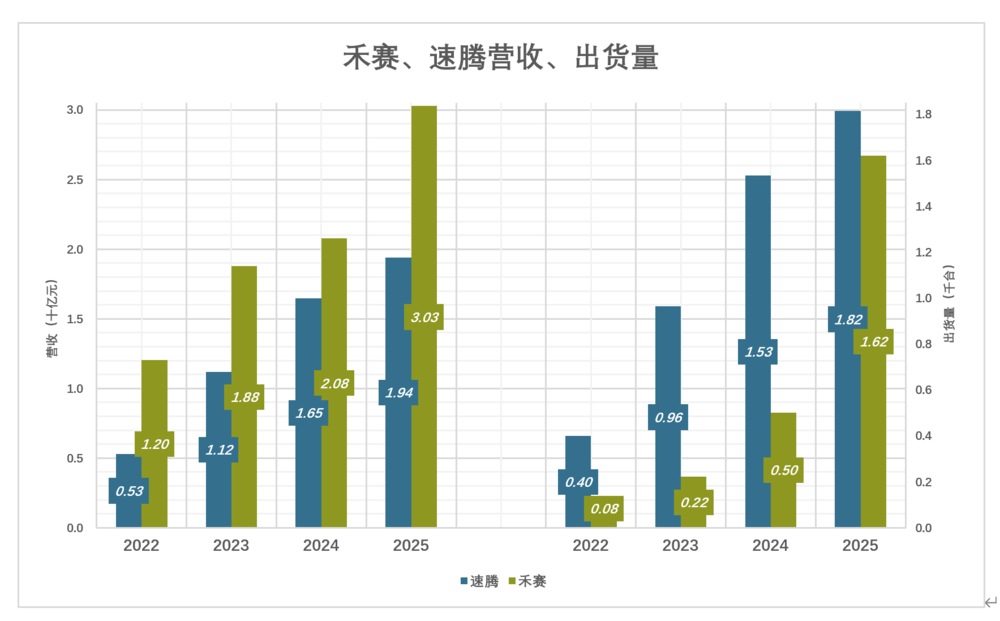
LiDAR is becoming the critical data and sensing layer for real-world AI, robotics, and autonomous driving.
30-Second TL;DR
What Changed
Physical AI requires real-world deployment data, making 3D sensing and LiDAR increasingly important.
Why It Matters
For AI builders, better and cheaper LiDAR could accelerate embodied AI, autonomous vehicles, and industrial perception systems. The main competitive factors are shifting from raw hardware cost toward sensor quality, integrated compute, deployment scale, and access to real-world data.
What To Do Next
Prototype a ROS 2 3D-perception pipeline with LiDAR point clouds and benchmark detection latency, power use, and performance against camera-only input.
Key Points
- •Physical AI requires real-world deployment data, making 3D sensing and LiDAR increasingly important.
- •Hesai reportedly leads global ADAS LiDAR shipments with a 43% share and reached 55% of China’s market in March 2026.
- •RoboSense shipped 71.9万 LiDAR units in the first half of 2026, up 170% year over year.
- •The industry is moving toward sensor-compute integration using SPAD-SoC designs to reduce size and power consumption.
- •Hesai’s Picasso chip targets 4,320 lines and 6D color perception, while RoboSense’s Falcon chip supports 2,160 native lines and up to 600 meters of detection.
Deep Insight
AI-generated analysis for this event — not the original article.
Enhanced Key Takeaways
- •The integration of LiDAR with Physical AI is driving a shift toward 'software-defined LiDAR,' where perception algorithms are increasingly offloaded to centralized domain controllers rather than processed solely on the sensor.
- •Recent supply chain data indicates that Chinese LiDAR manufacturers are aggressively expanding into the European and North American markets to circumvent domestic price wars, despite facing potential geopolitical trade barriers.
- •The industry is seeing a transition from 905nm to 1550nm laser wavelengths for long-range highway autonomy, as 1550nm systems offer superior eye safety and higher power density for long-range detection.
- •Major automotive OEMs are increasingly demanding 'sensor fusion-ready' LiDAR units that provide raw point cloud data with synchronized timestamps to simplify the integration with camera-based vision systems.
- •The rise of Physical AI has spurred a new market segment for 'solid-state' LiDAR specifically designed for humanoid robots, emphasizing low power consumption and high-frequency scanning over the extreme long-range requirements of automotive ADAS.
Competitor Analysis
- Hesai (ATX Series)
- SPAD-SoC (Picasso)
- RoboSense (M-Platform)
- ASIC-based
- Luminar (Iris)
- Fiber Laser (1550nm)
- Innovusion (Falcon)
- 1550nm Hybrid Solid-State
- Hesai (ATX Series)
- ~300m
- RoboSense (M-Platform)
- ~250m
- Luminar (Iris)
- ~600m
- Innovusion (Falcon)
- ~500m
- Hesai (ATX Series)
- ADAS/Robotaxi
- RoboSense (M-Platform)
- ADAS/Robotics
- Luminar (Iris)
- Premium ADAS
- Innovusion (Falcon)
- Highway ADAS
- Hesai (ATX Series)
- High-volume/Margin
- RoboSense (M-Platform)
- Cost-sensitive/Scale
- Luminar (Iris)
- Premium/Performance
- Innovusion (Falcon)
- Performance/Integration
| Feature | Hesai (ATX Series) | RoboSense (M-Platform) | Luminar (Iris) | Innovusion (Falcon) |
|---|---|---|---|---|
| Architecture | SPAD-SoC (Picasso) | ASIC-based | Fiber Laser (1550nm) | 1550nm Hybrid Solid-State |
| Max Range | ~300m | ~250m | ~600m | ~500m |
| Primary Market | ADAS/Robotaxi | ADAS/Robotics | Premium ADAS | Highway ADAS |
| Cost Strategy | High-volume/Margin | Cost-sensitive/Scale | Premium/Performance | Performance/Integration |
Technical Deep Dive
- SPAD-SoC Integration: Modern LiDAR architectures are moving from discrete components to System-on-Chip (SoC) designs, integrating Single-Photon Avalanche Diode (SPAD) arrays directly with processing logic to reduce latency and physical footprint.
- 6D Perception: Hesai's Picasso architecture utilizes 6D perception, which adds velocity and reflectivity data to traditional 3D spatial coordinates, enabling better classification of dynamic objects in complex urban environments.
- Native Line Resolution: The shift toward 2,000+ native lines allows for higher point density at distance, which is critical for identifying small road debris or lane markings at highway speeds.
- Power Efficiency: New generation chips are targeting sub-10W power consumption, a critical threshold for integration into passive-cooled automotive housings and battery-constrained robotic platforms.
Future ImplicationsAI analysis grounded in cited sources
Timeline
- 2023-02Hesai Group completes its initial public offering on the Nasdaq.
- 2024-01RoboSense officially lists on the Hong Kong Stock Exchange.
- 2025-06Hesai announces the Picasso chip architecture to enable next-generation 6D perception.
- 2026-03Hesai achieves a 55% market share in China's domestic ADAS LiDAR sector.
Weekly AI Recap
Read this week's curated digest of top AI events →
AI-curated news aggregator. All content rights belong to original publishers.
Original source: 虎嗅 ↗
This is a summary, not the original. Read the source, or get the weekly briefing.
The weekly digest
One email a week. Unsubscribe anytime.