Lenovo's transition from PC maker to AI provider
See how legacy hardware giants are retooling their infrastructure for the AI-first era.
30-Second TL;DR
What Changed
Lenovo is integrating AI capabilities into its hardware portfolio
Why It Matters
Lenovo's pivot highlights the hardware industry's necessity to embed AI to maintain relevance and increase average selling prices.
What To Do Next
Evaluate Lenovo's AI PC developer kits to see if they offer unique hardware-level acceleration for your local LLM deployments.
Key Points
- •Lenovo is integrating AI capabilities into its hardware portfolio
- •The company is shifting focus toward AI-as-a-Service and enterprise solutions
- •Transition faces challenges in market adoption and competitive landscape
Deep Insight
Background and context from public sources — not the original article. 23 sources cited.
Enhanced Key Takeaways
- •Lenovo's core AI strategy, termed "Hybrid AI," integrates AI capabilities across personal devices, edge computing, and data centers, allowing for flexible deployment based on use case, security, and latency requirements.
- •As of April 2026, Lenovo has secured the #1 global ranking in Windows AI PC shipments, holding a 31% market share, with AI PCs constituting over 30% of its total PC shipments.
- •Lenovo is adopting an "orchestrator approach" for Large Language Model (LLM) integration, seeking partnerships with multiple global LLM developers like Humain, Mistral AI, Alibaba, and DeepSeek, rather than committing to a single provider.
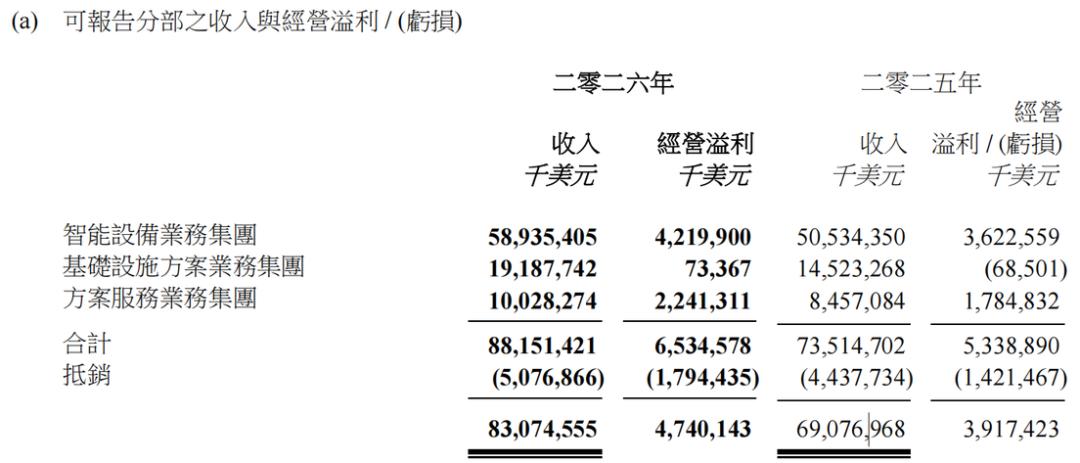
- •The company's Infrastructure Solutions Group (ISG), which includes AI servers and data center products, demonstrated significant growth, with AI-related revenue surging 84% year-over-year in Q4 FY2026, contributing 38% to the total group revenue for that quarter.
- •Lenovo has expanded its AI-as-a-Service offerings through its TruScale platform, including GPU-as-a-Service (GPUaaS) providing on-demand access to high-performance NVIDIA GPUs (e.g., H100, L40S) orchestrated by Lenovo's Intelligent Computer Orchestration (LiCO) technology, and AI-driven system management with XClarity One.
Technical Deep Dive
- Lenovo's AI PCs integrate a combination of CPUs, GPUs, and dedicated Neural Processing Units (NPUs) to handle on-device AI tasks, which reduces reliance on cloud connectivity and enables efficient low-power AI calculations.
- The Lenovo Hybrid AI Advantage, developed with NVIDIA, incorporates NVIDIA Blackwell accelerated compute, BlueField DPUs for offloading infrastructure tasks, and NVIDIA Spectrum-X Ethernet for high-performance AI networking.
- Lenovo's TruScale GPU as a Service (GPUaaS) leverages NVIDIA GPUs such as the H100 and L40S, with resource orchestration managed by Lenovo's Intelligent Computer Orchestration (LiCO) technology.
- The ThinkSystem SR680a V4 system features Intel Xeon 6 CPUs and eight NVIDIA Blackwell GPUs interconnected via NVIDIA NVLink, designed to deliver significantly faster AI inferencing for large language models.
- For enhanced security in AI PCs, Lenovo integrates a "Trusted AI Controller" at the hardware level, complementing its ThinkShield security solutions.
Future ImplicationsAI analysis grounded in cited sources
Timeline
- 2005-05Acquisition of IBM's Personal Computing Division, including the ThinkPad brand, establishing Lenovo as a global PC leader.
- 2020-09Formation of the Solutions and Services Group (SSG), signaling a strategic shift towards services-led growth.
- 2022-10Launch of the AI Innovators Program to build an ecosystem of AI software partners.
- 2023-10Expansion of partnership with NVIDIA to deliver hybrid AI solutions for enterprises.
- 2024Inauguration of first AI PCs across consumer and commercial segments, integrating Neural Processing Units (NPUs) for on-device AI.
- 2024-09Introduction of Lenovo TruScale GPU as a Service (GPUaaS) and AI-driven system management with XClarity One.
Sources (23)
Factual claims are grounded in the sources below. Forward-looking analysis is AI-generated interpretation.
Weekly AI Recap
Read this week's curated digest of top AI events →
AI-curated news aggregator. All content rights belong to original publishers.
Original source: 钛媒体 ↗
This is a summary, not the original. Read the source, or get the weekly briefing.
The weekly digest
One email a week. Unsubscribe anytime.