Source钛媒体•Stalecollected in 20m
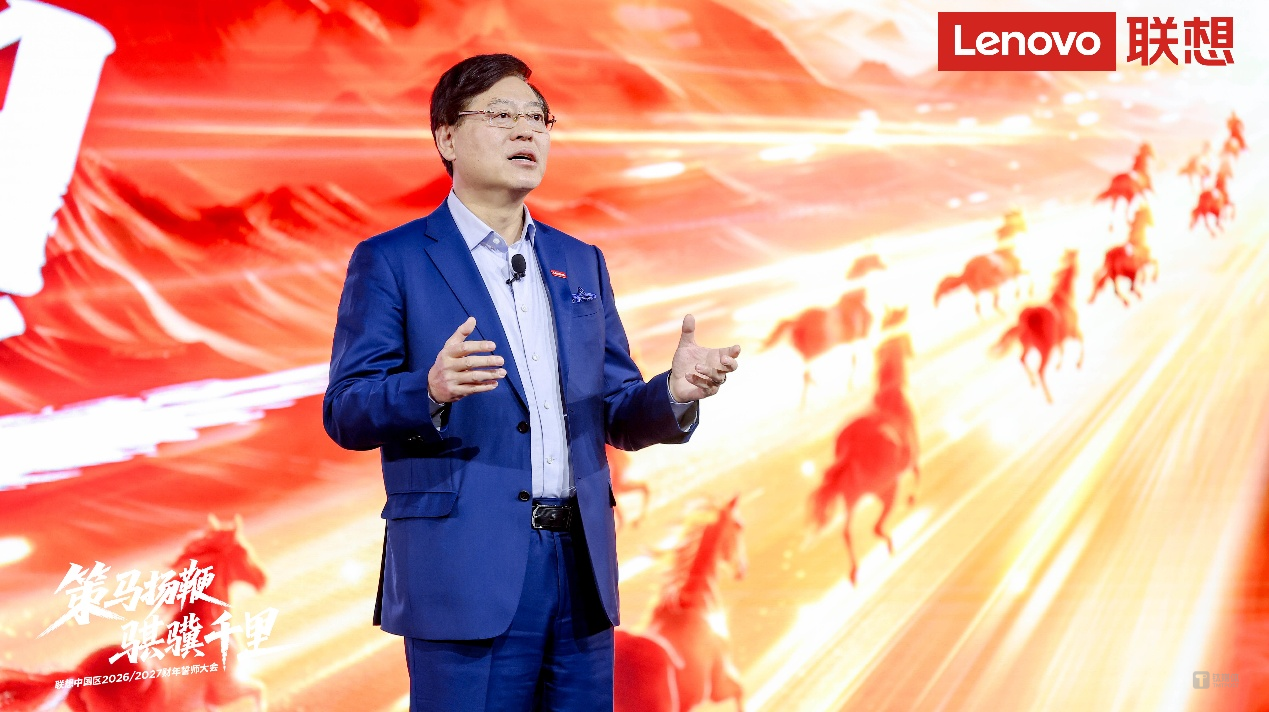
Lenovo's Carbon-Silicon Fusion AI Pivot
#ai-hardware#strategy-shift#carbon-silicon碳硅融合lenovo
💡Lenovo's 'carbon-silicon' tech could disrupt AI hardware in 2026 era
⚡ 30-Second TL;DR
What Changed
2026 designated as AI value commercialization starting year
Why It Matters
Success could elevate Lenovo in AI hardware, challenging Nvidia; failure risks stagnation in commoditized PC market.
What To Do Next
Investigate Lenovo's carbon-silicon fusion whitepapers for hybrid AI accelerator opportunities.
Who should care:Enterprise & Security Teams
Key Points
- •2026 designated as AI value commercialization starting year
- •Lenovo seeks reinvention beyond PC hardware era
- •Carbon-silicon fusion positioned as core AI transformation technology
- •Pivotal battle for Lenovo's AI leadership status
🧠 Deep Insight
AI-generated analysis for this event — not the original article.
🔑 Enhanced Key Takeaways
- •Lenovo's 'Carbon-Silicon Fusion' strategy centers on the integration of biological intelligence (carbon) with machine intelligence (silicon) through advanced neuro-symbolic AI architectures and brain-computer interface (BCI) research.
- •The company is shifting its R&D focus toward 'Hybrid AI' infrastructure, prioritizing on-device AI processing to address data privacy and latency concerns in enterprise-grade AI deployments.
- •Lenovo is leveraging its global supply chain dominance to vertically integrate AI-optimized hardware, specifically targeting the edge-to-cloud continuum to differentiate from pure-play cloud AI providers.
📊 Competitor Analysis▸ Show
| Feature | Lenovo (Carbon-Silicon Fusion) | Dell (AI Factory) | HP (AI PC Strategy) |
|---|---|---|---|
| Core Focus | Neuro-symbolic/BCI Integration | Enterprise Infrastructure/Cloud | Productivity/Consumer AI PCs |
| Hardware Strategy | Edge-to-Cloud Vertical Integration | Data Center/Server Dominance | Client-side AI Optimization |
| Market Positioning | AI-Era Transformation | Enterprise AI Backbone | AI-Enhanced Personal Computing |
🛠️ Technical Deep Dive
- •Implementation of 'Heterogeneous Computing Architecture' designed to dynamically allocate workloads between NPU, GPU, and CPU based on real-time power and latency requirements.
- •Development of proprietary 'AI-Core' firmware that enables low-level hardware acceleration for Large Language Models (LLMs) running locally on edge devices.
- •Integration of neuro-symbolic AI frameworks that combine deep learning's pattern recognition with symbolic AI's logical reasoning to improve model explainability and reliability.
- •Utilization of advanced thermal management systems specifically engineered to support sustained high-performance AI inference in compact form factors.
🔮 Future ImplicationsAI analysis grounded in cited sources
Lenovo will achieve a majority of revenue from AI-integrated services by 2028.
The aggressive pivot toward AI-as-a-Service (AIaaS) and hybrid infrastructure is designed to offset declining traditional PC hardware margins.
The company will face significant regulatory hurdles regarding BCI-related data privacy.
As 'Carbon-Silicon Fusion' moves toward human-machine interface integration, it will trigger stringent data protection and ethical oversight requirements.
⏳ Timeline
2023-08
Lenovo announces a $1 billion investment over three years to accelerate AI deployment.
2024-04
Lenovo unveils its 'AI PC' strategy at the Tech World event, focusing on local LLM execution.
2025-01
Lenovo establishes the 'AI Innovation Center' to focus on hybrid AI architecture and edge computing.
2025-10
Lenovo launches the first generation of AI-native enterprise servers featuring integrated neuro-symbolic processing capabilities.
📰
Weekly AI Recap
Read this week's curated digest of top AI events →
👉Related Updates



AI-curated news aggregator. All content rights belong to original publishers.
Original source: 钛媒体 ↗
This is a summary, not the original. Read the source, or get the weekly briefing.
The weekly digest
One email a week. Unsubscribe anytime.