Lendi Group integrates AI usage into performance reviews
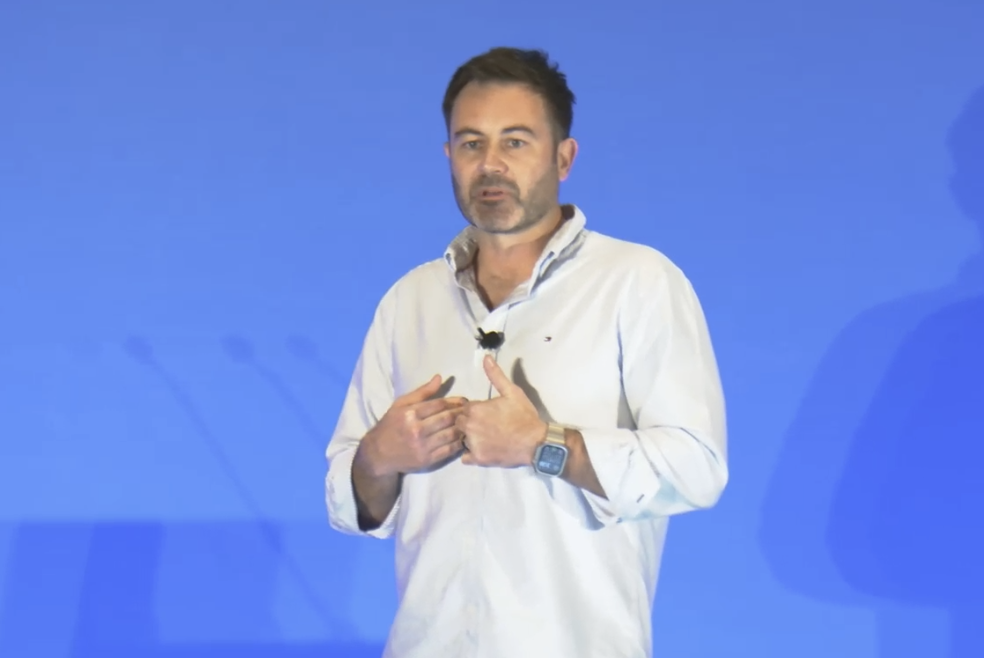
💡See how a major firm is formalizing AI literacy as a mandatory performance metric for all employees.
⚡ 30-Second TL;DR
What Changed
AI proficiency is now a formal metric in annual performance evaluations
Why It Matters
This signals a shift in corporate culture where AI literacy becomes a core competency for career advancement. It sets a precedent for other enterprises to formalize AI adoption metrics.
What To Do Next
Audit your team's current AI tool usage and establish clear KPIs for AI-driven productivity improvements.
Key Points
- •AI proficiency is now a formal metric in annual performance evaluations
- •The policy supports Lendi Group's goal of becoming an AI-native company
- •Employees are encouraged to integrate AI into their daily workflows
🧠 Deep Insight
Web-grounded analysis with 10 cited sources.
🔑 Enhanced Key Takeaways
- •AI proficiency in performance reviews will specifically measure how effectively employees train and utilize AI agents, and their collaborative performance with these agents, rather than solely individual output.
- •Lendi Group's ambition to become 'AI-native' by June 2026 entails making agentic AI the default approach across all workflows, decisions, and customer interactions.
- •The company has already deployed internal AI agents such as Voxi, which has reportedly saved 55,000 hours annually in post-call administration and boosted customer satisfaction by 20%, alongside Sam for after-hours calls and Mel for appointment booking.
- •Lendi Group is leveraging various AI tools, including Magic Patterns for AI-based design and rapid prototyping, and enterprise-grade platforms like Enterprise ChatGPT, ROVO, Jira, Loom, and Glean to underpin its AI strategy.
- •This strategic shift is intended to redeploy human talent to higher-value, relationship-driven tasks, rather than reducing headcount, and includes embedding transparency, audit trails, and human override points into AI workflows to ensure regulatory compliance.
🛠️ Technical Deep Dive
- Lendi Group's 'Aurora' platform is engineered for agentic AI, utilizing open schemas and common interfaces to ensure interoperability.
- The platform incorporates abstraction layers, enabling the seamless swapping of AI tools and Large Language Models (LLMs) without system disruption.
- Security is paramount, with the platform operating under strict least-privilege principles, avoiding secret storage in agents, and enforcing scoped tokens and per-tool allowlists.
- Observability, control, and modularity are integrated into the platform's design to ensure future-proofing.
- The company employs machine learning, large language models, and generative AI across its operations.
- Lendi Group has consolidated its data infrastructure onto a unified Operational Data Layer (ODL), powered by MongoDB Atlas and AWS.
- The ODL meticulously tracks metadata for every field, documenting the updater (human, agent, or customer) for enhanced transparency and accountability.
- Their agentic AI architecture, including the 'Guardian' application, was developed on AWS, leveraging Amazon Bedrock's foundation models.
- 'Guardian' features a multi-agent orchestration system where specialized agents collaborate on tasks like mortgage refinancing, maintaining context across handovers.
- Lendi Group utilizes prompt management for versioning and strategically selects models, acknowledging that the most sophisticated model is not always the most effective for specific use cases.
- Magic Patterns is specifically used for AI-based design and rapid prototyping within the company.
🔮 Future ImplicationsAI analysis grounded in cited sources
⏳ Timeline
📎 Sources (10)
Factual claims are grounded in the sources below. Forward-looking analysis is AI-generated interpretation.
Weekly AI Recap
Read this week's curated digest of top AI events →
👉Related Updates
AI-curated news aggregator. All content rights belong to original publishers.
Original source: iTNews Australia ↗