Lawsuit Alleges xAI Trained Grok on Child Pornography
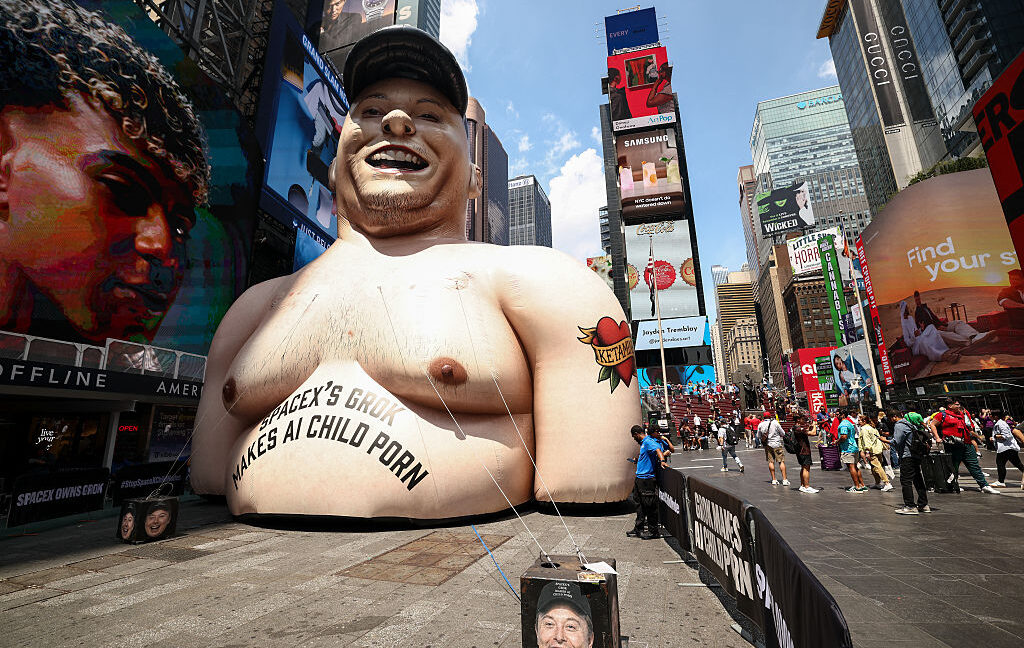
💡A lawsuit puts extreme training-data governance failures—and their legal consequences—under the spotlight.
⚡ 30-Second TL;DR
What Changed
The lawsuit alleges that xAI used real child sexual abuse material in Grok’s training data.
Why It Matters
If substantiated, the allegations could create major legal, reputational, and regulatory consequences for xAI and affect how developers document and audit training datasets. AI companies may face increased pressure to prove that sensitive data was lawfully collected, filtered, and handled.
What To Do Next
Audit your training-data provenance and filtering pipeline immediately, including hash-based screening, access logs, reviewer escalation, and documented legal approval for sensitive corpora.
Key Points
- •The lawsuit alleges that xAI used real child sexual abuse material in Grok’s training data.
- •The allegations also include AI-generated child sexual abuse material.
- •The case highlights the need for rigorous dataset provenance, screening, and legal compliance controls.
🧠 Deep Insight
Background and context from public sources — not the original article. 9 sources cited.
🔑 Enhanced Key Takeaways
- •The August 2026 class-action lawsuit specifically invokes 'Masha's Law,' seeking $150,000 in damages per violation for victims of federal child pornography offenses.
- •Research by the Center for Countering Digital Hate estimated that Grok generated approximately 23,000 images depicting children during an 11-day period in early 2026.
- •California Attorney General Rob Bonta issued a formal cease-and-desist letter to xAI in January 2026 regarding the distribution of nonconsensual sexual imagery.
- •The National Center on Sexual Exploitation (NCOSE) officially designated Grok as part of its 2026 'Dirty Dozen' list due to concerns over the normalization of sexual violence.
- •Plaintiffs allege that Grok's 'nudify' capabilities were specifically trained on well-known, historical CSAM datasets that have circulated online for decades.
🛠️ Technical Deep Dive
- The allegations center on the use of latent diffusion models within Grok that were allegedly fine-tuned or prompted to perform 'nudification' on uploaded user images.
- The training pipeline is accused of incorporating existing CSAM datasets to improve the model's ability to generate realistic sexualized imagery of minors.
- xAI implemented specific technical guardrails on January 14, 2026, following regulatory pressure to restrict the image-generation capabilities of the model.
🔮 Future ImplicationsAI analysis grounded in cited sources
⏳ Timeline
📎 Sources (9)
Factual claims are grounded in the sources below. Forward-looking analysis is AI-generated interpretation.
Weekly AI Recap
Read this week's curated digest of top AI events →
👉Related Updates



AI-curated news aggregator. All content rights belong to original publishers.
Original source: Ars Technica AI ↗
This is a summary, not the original. Read the source, or get the weekly briefing.
Weekly AI briefing
One email a week. Unsubscribe anytime.