Laser Charging Could Keep Drones Airborne Indefinitely
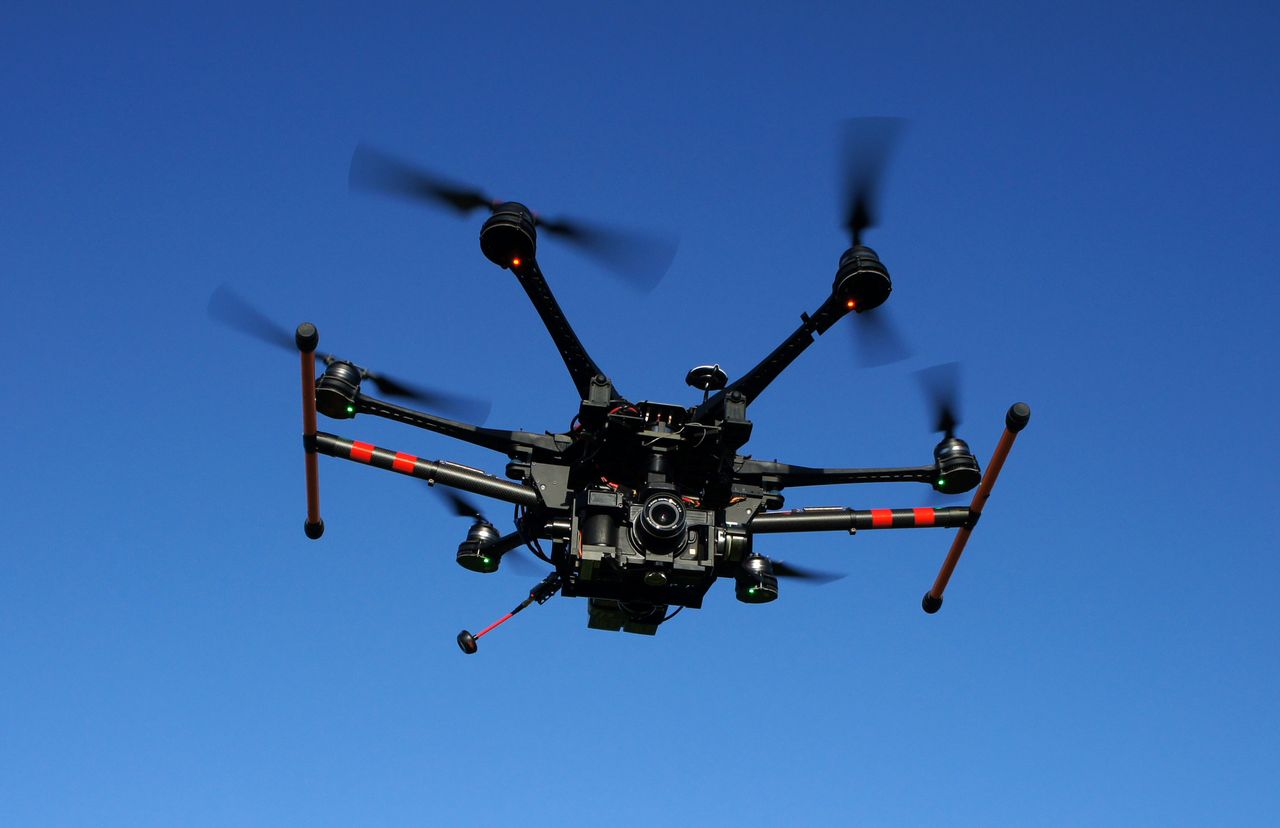
💡A 38.49%-efficient laser receiver could change endurance limits for autonomous drone fleets.
⚡ 30-Second TL;DR
What Changed
A ground-based laser wirelessly transmits power to airborne drones.
Why It Matters
Persistent aerial power could expand the operating time of autonomous drones used for inspection, monitoring, and robotics research. Practical deployment will still depend on beam tracking, weather tolerance, safety controls, and reliable operation over distance.
What To Do Next
Add laser-power beaming constraints—38.49% receiver efficiency, line-of-sight tracking, and thermal limits—to simulations for autonomous drone mission planning.
Key Points
- •A ground-based laser wirelessly transmits power to airborne drones.
- •The improved receiver converts laser energy at 38.49% efficiency.
- •Nanocrystalline material is used to improve thermal management.
- •The approach could extend drone flight duration by reducing landing interruptions.
🧠 Deep Insight
AI-generated analysis for this event.
🔑 Enhanced Key Takeaways
- •The research team behind this development is primarily based at Sejong University in South Korea, focusing on overcoming the line-of-sight and power density limitations of optical wireless power transmission.
- •The system utilizes a specific wavelength of 1550nm, which is considered 'eye-safe' and minimizes atmospheric scattering compared to shorter visible light wavelengths.
- •The nanocrystalline material integrated into the receiver is specifically designed to act as a heat sink, preventing the photovoltaic cells from degrading due to the high-intensity laser energy concentration.
- •This technology addresses the 'energy density gap' in drone operations, where traditional lithium-ion batteries typically limit flight times to 30-60 minutes, necessitating frequent ground-based charging cycles.
- •The 38.49% conversion efficiency represents a significant leap in the field of laser-to-electricity conversion, which has historically struggled to exceed 20-25% in practical, long-range outdoor testing environments.
📊 Competitor Analysis▸ Show
| Feature | Laser Power Transmission (Sejong) | Inductive Charging Pads | Tethered Drone Systems |
|---|---|---|---|
| Range | Long-range (Line-of-sight) | Contact-based | Limited by cable length |
| Mobility | High (Dynamic tracking) | Stationary | Low (Cable drag) |
| Efficiency | ~38.5% | ~80-90% | High (Direct power) |
| Deployment | Complex (Laser alignment) | Simple | Moderate |
🛠️ Technical Deep Dive
- Receiver Architecture: Employs a specialized photovoltaic (PV) array optimized for the 1550nm infrared spectrum to maximize photon-to-electron conversion.
- Thermal Management: The nanocrystalline layer utilizes high thermal conductivity properties to dissipate heat generated by the concentrated laser beam, maintaining PV cell efficiency.
- Beam Tracking: The system incorporates a closed-loop feedback mechanism using a secondary low-power pilot laser to maintain precise alignment between the ground transmitter and the airborne receiver.
- Power Density: The system is designed to maintain a stable power output even as the drone moves, compensating for atmospheric turbulence and platform vibration.
🔮 Future ImplicationsAI analysis grounded in cited sources
⏳ Timeline
Weekly AI Recap
Read this week's curated digest of top AI events →
👉Related Updates

AI-curated news aggregator. All content rights belong to original publishers.
Original source: Tom's Hardware ↗