FCC Targets Chinese Optical Transceivers in AI Links
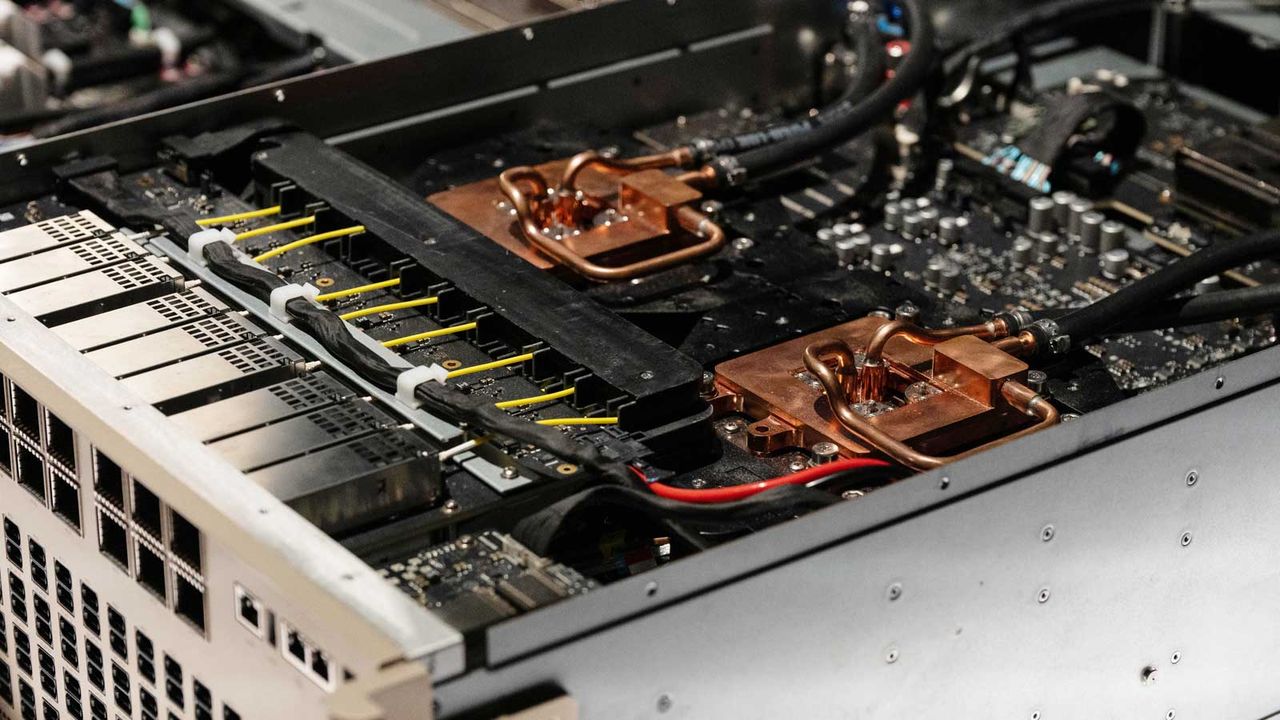
💡A proposed FCC restriction could disrupt the optical links that connect large AI clusters.
⚡ 30-Second TL;DR
What Changed
The FCC proposal would expand the Secure Networks Act’s covered equipment list.
Why It Matters
AI companies building clusters or purchasing networking equipment may face higher sourcing risk, longer qualification cycles, and potential cost increases. Enterprises should treat optical-transceiver origin as a supply-chain and compliance consideration rather than relying solely on chip availability.
What To Do Next
Inventory the country of origin for every optical transceiver in your AI cluster and qualify at least one non-China replacement for critical links.
Key Points
- •The FCC proposal would expand the Secure Networks Act’s covered equipment list.
- •New-model optical transceivers manufactured in China could face import restrictions.
- •China reportedly accounts for 56% of the global optical-transceiver market.
- •The policy could affect networking hardware used for high-bandwidth AI interconnects.
🧠 Deep Insight
AI-generated analysis for this event.
🔑 Enhanced Key Takeaways
- •The FCC's initiative is driven by bipartisan concerns regarding 'backdoor' vulnerabilities in high-speed networking hardware that could facilitate data exfiltration or network disruption.
- •Industry analysts note that while China dominates the market for lower-cost, high-volume transceivers, Western firms like Coherent, Lumentum, and Ciena hold stronger positions in high-end, specialized optical components.
- •The proposal specifically targets the 'Covered List' under the Secure and Trusted Communications Networks Act of 2019, which currently restricts equipment from companies like Huawei, ZTE, and Hytera.
- •Supply chain experts warn that a sudden ban could trigger a short-term shortage of 800G and 1.6T optical modules, which are critical for the massive GPU clusters required for large-scale AI model training.
- •The Department of Commerce is reportedly coordinating with the FCC to align these import restrictions with broader export controls on semiconductor manufacturing equipment and advanced AI chips.
🛠️ Technical Deep Dive
- Optical transceivers serve as the physical layer interface converting electrical signals to optical signals for fiber optic communication.
- High-bandwidth AI interconnects rely on pluggable form factors such as QSFP-DD (Quad Small Form-factor Pluggable Double Density) and OSFP (Octal Small Form-factor Pluggable).
- Modern AI data centers are transitioning from 400G to 800G and 1.6T modules, which utilize PAM4 (Pulse Amplitude Modulation 4-level) signaling to increase data throughput.
- The security concerns often center on the firmware embedded within the transceiver's microcontrollers, which manage digital diagnostics and link training protocols.
🔮 Future ImplicationsAI analysis grounded in cited sources
⏳ Timeline
Weekly AI Recap
Read this week's curated digest of top AI events →
👉Related Updates


AI-curated news aggregator. All content rights belong to original publishers.
Original source: Tom's Hardware ↗