LangSmith Adds Enterprise RBAC
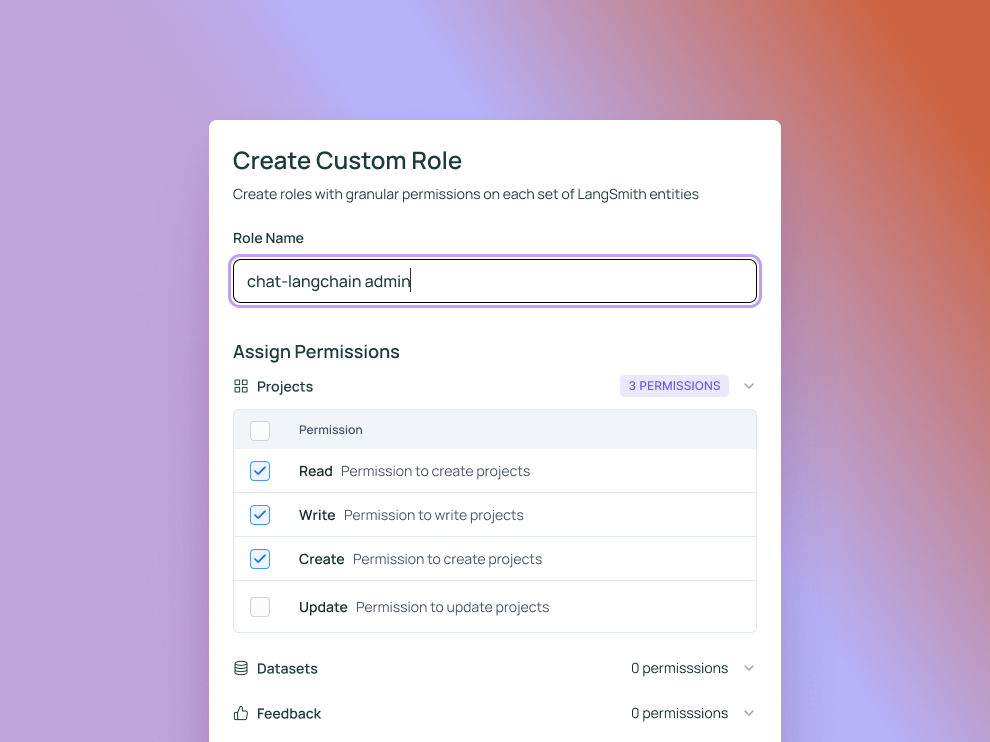
💡See how LangSmith’s custom roles and API keys address enterprise access management.
⚡ 30-Second TL;DR
What Changed
Adds Role Based Access Control to LangSmith
Why It Matters
RBAC can help larger teams adopt LangSmith with clearer permission boundaries and administrative controls. It is particularly relevant for organizations that need structured access management across AI development and evaluation workflows.
What To Do Next
Review LangSmith’s RBAC documentation and map your team’s users to custom roles before expanding shared project access.
Key Points
- •Adds Role Based Access Control to LangSmith
- •Enables enterprises to manage access to resources
- •Supports custom roles and API keys
🧠 Deep Insight
Background and context from public sources — not the original article. 12 sources cited.
🔑 Enhanced Key Takeaways
- •RBAC is restricted exclusively to the LangSmith Enterprise tier, with lower-tier plans defaulting to a simplified Admin-only permission model.
- •The platform utilizes a two-layer security architecture where RBAC manages workspace membership and ABAC (Attribute-Based Access Control) handles fine-grained resource scoping via tags.
- •Enterprise administrators can synchronize role assignments and user provisioning directly from identity providers using SCIM or SAML/OIDC protocols.
- •The system enforces a separation of duties by distinguishing between organization-level roles for billing/global settings and workspace-level roles for project-specific management.
- •Access control policies extend to MCP (Model Context Protocol) servers, allowing granular management of tool usage within specific agent workspaces.
📊 Competitor Analysis▸ Show
| Feature | LangSmith | Langfuse | Weights & Biases |
|---|---|---|---|
| RBAC Model | Enterprise-only | Available in self-hosted/OSS | Enterprise-only |
| Identity Provider Sync | SCIM/SAML/OIDC | SAML/OIDC | SAML/OIDC |
| Deployment Governance | Integrated (LangSmith Deployment) | Limited | Focused on Model Registry |
🛠️ Technical Deep Dive
- Two-layer access model: RBAC for coarse-grained workspace membership and ABAC for fine-grained resource-level scoping.
- Identity Integration: Supports automated provisioning via SCIM and authentication via SAML/OIDC.
- Audit Infrastructure: Implements tamper-resistant logging for administrative actions including workspace modifications and deployment changes.
- Integration Security: RBAC policies are applied to MCP server access, restricting tool execution based on user permissions.
🔮 Future ImplicationsAI analysis grounded in cited sources
⏳ Timeline
📎 Sources (12)
Factual claims are grounded in the sources below. Forward-looking analysis is AI-generated interpretation.
Weekly AI Recap
Read this week's curated digest of top AI events →
👉Related Updates


AI-curated news aggregator. All content rights belong to original publishers.
Original source: LangChain Blog ↗
This is a summary, not the original. Read the source, or get the weekly briefing.
Weekly AI briefing
One email a week. Unsubscribe anytime.