LangChain’s Blueprint for Agent Tasks
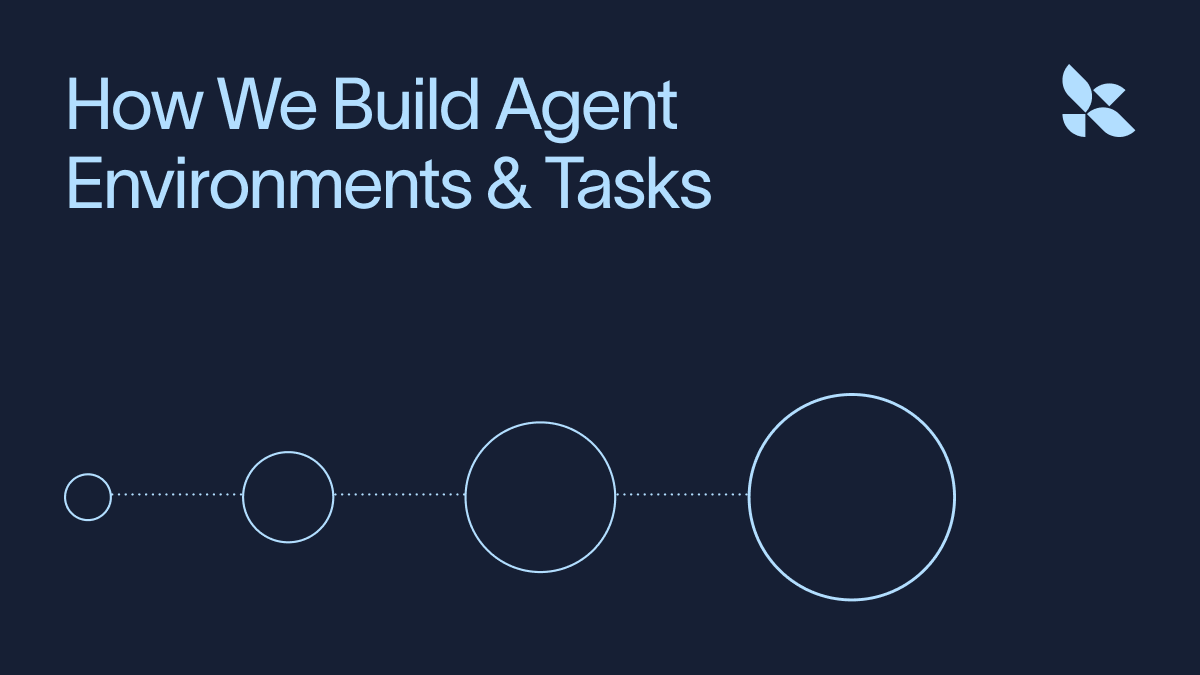
💡See a practical pipeline for generating repeatable agent environments, tasks, and shared knowledge.
⚡ 30-Second TL;DR
What Changed
A spec generation step defines the intended environment or task structure.
Why It Matters
A repeatable environment-generation process can help teams create more consistent tests for agent planning, tool use, and adaptation. Shared world knowledge may also make synthetic tasks more coherent and easier to scale.
What To Do Next
Create a small world spec and generate three spec-to-task variants to benchmark your agent’s planning and tool-use consistency.
Key Points
- •A spec generation step defines the intended environment or task structure.
- •A spec-to-task step converts abstract specifications into executable agent tasks.
- •A world spec stores shared knowledge used across the synthetic environment.
- •The modular workflow supports more systematic agent evaluation and development.
🧠 Deep Insight
Background and context from public sources — not the original article. 7 sources cited.
🔑 Enhanced Key Takeaways
- •LangChain has formalized the Agent Development Lifecycle (ADLC) as an industry standard, categorizing agent creation into distinct build, test, deploy, and monitor phases.
- •The NemoClaw Deep Agents Blueprint, launched in partnership with NVIDIA on July 8, 2026, serves as the foundational framework for these synthetic environment tasks.
- •LangChain has officially deprecated the older AgentExecutor in favor of LangGraph for all new projects to better support complex branching and multi-agent coordination.
- •The LangSmith Engine, introduced at Interrupt 26, automates the evaluation process by identifying patterns in traces and suggesting fixes without manual intervention.
- •Despite 89% of organizations implementing observability, only 52% have adopted systematic evaluation, indicating a critical gap in production-grade agent assurance.
📊 Competitor Analysis▸ Show
| Feature | LangChain (ADLC/LangGraph) | Meta (Muse Code/Spark) | Microsoft (AutoGen) |
|---|---|---|---|
| Primary Focus | Lifecycle Management | Multi-agent Coding | Multi-agent Orchestration |
| Pricing | Open Source / Managed Beta | Proprietary / API-based | Open Source |
| Benchmarks | High (Production ADLC) | High (Long-horizon tasks) | High (Research/Complex) |
🛠️ Technical Deep Dive
- Implementation utilizes LangGraph for state management, replacing the legacy AgentExecutor architecture.
- Synthetic environments are generated via the NemoClaw framework, which integrates with NVIDIA hardware acceleration for high-throughput simulation.
- The LangSmith Engine utilizes automated trace analysis to generate synthetic test cases based on real-world production logs.
- Managed Deep Agents leverage a platform-integrated architecture that abstracts infrastructure concerns for persistent agent deployment.
🔮 Future ImplicationsAI analysis grounded in cited sources
⏳ Timeline
📎 Sources (7)
Factual claims are grounded in the sources below. Forward-looking analysis is AI-generated interpretation.
Weekly AI Recap
Read this week's curated digest of top AI events →
👉Related Updates
AI-curated news aggregator. All content rights belong to original publishers.
Original source: LangChain Blog ↗
This is a summary, not the original. Read the source, or get the weekly briefing.
Weekly AI briefing
One email a week. Unsubscribe anytime.