L3: Must-Have for AV or Pseudo-Concept?
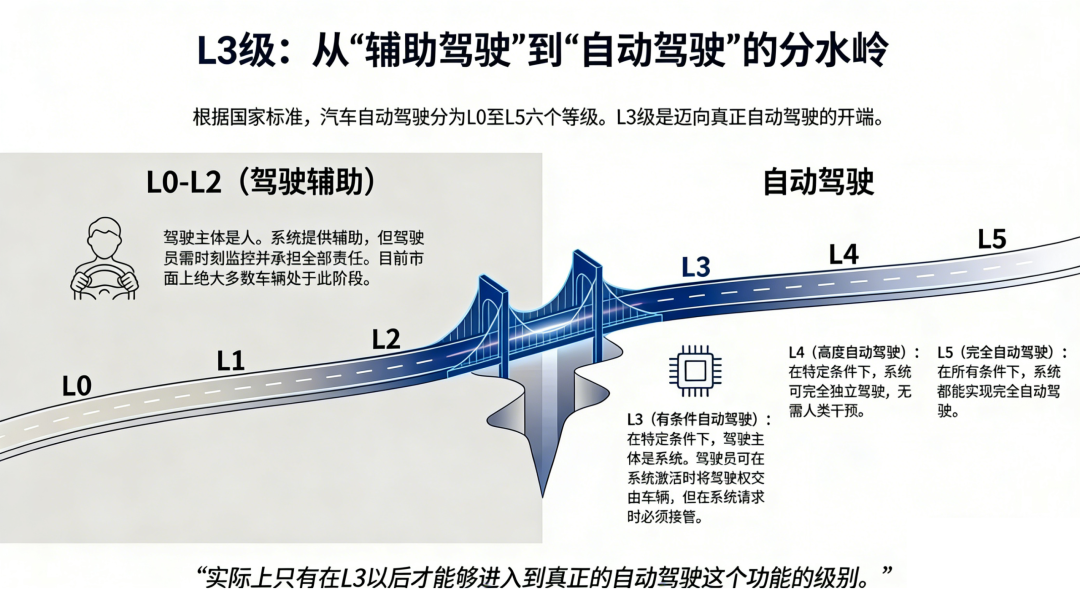
💡Challenges L3 necessity—key for AV roadmap decisions
⚡ 30-Second TL;DR
What Changed
Debates L3 as necessary AV milestone
Why It Matters
Could delay full L4/L5 adoption if L3 deemed unnecessary, affecting investment in AV firms.
What To Do Next
Benchmark L3 systems like Mobileye's against L2+ for deployment feasibility.
Key Points
- •Debates L3 as necessary AV milestone
- •Highlights no shortcuts in tech evolution
- •Questions intermediate autonomy validity
🧠 Deep Insight
Background and context from public sources — not the original article. 7 sources cited.
🔑 Enhanced Key Takeaways
- •Level 3 autonomy represents a technological inflection point where vehicles transition from driver-assistance (Levels 1-2) to genuine autonomous operation, with the system handling all driving tasks without driver monitoring—a capability that fundamentally changes liability, insurance, and regulatory frameworks[2][7]
- •Real-world Level 3 deployments are constrained by Operational Design Domains (ODDs) with strict conditions: Mercedes-Benz's DRIVE PILOT operates only under 40 mph on divided highways with clear weather and readable markings, demonstrating that Level 3 is not a universal solution but rather a conditional stepping stone[4]
- •Goldman Sachs projects Level 3 vehicles could represent up to 10% of global new car sales by 2030, indicating significant market adoption despite the technology's limitations, though regulatory fragmentation (U.S. state-by-state mandates versus European federal frameworks) creates divergent development pathways[5]
- •The handover mechanism between AI and human driver is technically complex and safety-critical; Level 3 systems must reliably detect scenarios they cannot handle and request driver intervention, with response times and communication methods varying across manufacturers[4][7]
- •Level 3 adoption requires alignment across three external domains—regulatory frameworks, insurance liability models, and public acceptance—making it as much a policy and social challenge as a technical one[7]
🛠️ Technical Deep Dive
- •Sensor Suite: Level 3 vehicles integrate LiDAR, radar, and camera systems to provide environmental detection and real-time decision-making capabilities[1]
- •AI Processing: AI algorithms process multi-sensor data streams to interpret surroundings, predict hazards, and execute steering, acceleration, and braking without human intervention under defined conditions[1]
- •Operational Design Domain (ODD): Systems operate within manufacturer-defined constraints (speed limits, weather conditions, road types, time of day) and must request driver takeover when exiting ODD or encountering unhandled scenarios[4]
- •Driver Monitoring System (DMS): Level 3 systems include mechanisms to alert drivers to take control, though alert methods vary by manufacturer and are not standardized across the industry[4]
- •Mobileye Chauffeur™ Solution: Enables eyes-off operation at speeds up to 80 mph (130 km/h) on regular road types, representing one commercial implementation of Level 3 architecture[7]
🔮 Future ImplicationsAI analysis grounded in cited sources
⏳ Timeline
📎 Sources (7)
Factual claims are grounded in the sources below. Forward-looking analysis is AI-generated interpretation.
- caradas.com — Sae Autonomous Level 3 Levels of Driving Automation
- autosinnovate.org — Level%203%20explainer
- torc.ai — Understanding the Levels of Autonomy 3 4 5
- kittelson.com — Level 3 Automation Is Here What Does This Mean for Our Roadways
- synopsys.com — Autonomous Driving Levels
- nhtsa.gov — Levels Automation
- mobileye.com — Level 3 Autonomy Explained
Weekly AI Recap
Read this week's curated digest of top AI events →
👉Related Updates

AI-curated news aggregator. All content rights belong to original publishers.
Original source: 钛媒体 ↗
This is a summary, not the original. Read the source, or get the weekly briefing.
Weekly AI briefing
One email a week. Unsubscribe anytime.