Kyushu University achieves visible-to-UV light upconversion breakthrough
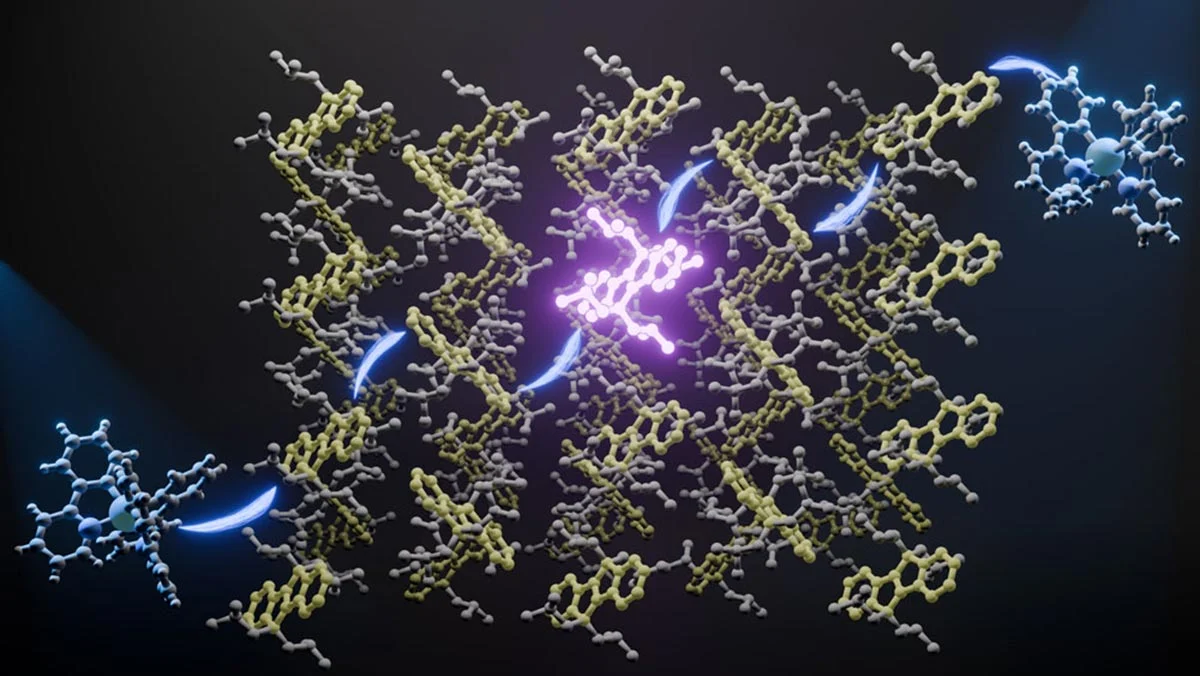
A major materials science breakthrough that could redefine energy efficiency for future light-based AI hardware.
30-Second TL;DR
What Changed
Developed a new solid-state molecular material for photon upconversion
Why It Matters
This breakthrough could lead to more efficient solar energy harvesting and advanced photocatalytic applications. It provides a new pathway for utilizing the high-energy UV spectrum from ambient sunlight.
What To Do Next
Monitor advancements in solid-state photonics if you are working on energy-efficient AI hardware or specialized sensor development.
Key Points
- •Developed a new solid-state molecular material for photon upconversion
- •Achieved 1.9% efficiency in converting visible light to UV under natural sunlight
- •Published findings in Nature Communications on June 23, 2026
- •Advances the field of molecular self-assembly and energy conversion
Deep Insight
AI-generated analysis for this event — not the original article.
Enhanced Key Takeaways
- •The material utilizes a triplet-triplet annihilation (TTA) mechanism, which is critical for overcoming the low-energy limitations of visible light photons.
- •Researchers employed a self-assembling molecular crystal structure that minimizes energy loss, a common bottleneck in previous upconversion attempts.
- •The study addresses the 'solar spectrum mismatch' problem, potentially allowing for more efficient photocatalysis and light-driven chemical synthesis.
- •This breakthrough overcomes the traditional requirement for high-intensity laser excitation, enabling operation under low-intensity, non-coherent natural sunlight.
- •The molecular design incorporates specific chromophore arrangements that facilitate long-range triplet exciton diffusion within the solid state.
Technical Deep Dive
- Mechanism: Triplet-Triplet Annihilation (TTA) based photon upconversion.
- Material Class: Solid-state molecular crystals formed via self-assembly.
- Excitation Source: Non-coherent, low-intensity natural sunlight (1 sun intensity).
- Conversion Pathway: Visible light (longer wavelength) to Ultraviolet (shorter wavelength).
- Key Metric: 1.9% external quantum efficiency under ambient conditions.
Future ImplicationsAI analysis grounded in cited sources
Timeline
- 2026-06Kyushu University researchers publish findings on solid-state visible-to-UV upconversion in Nature Communications.
Weekly AI Recap
Read this week's curated digest of top AI events →
Related Updates
AI-curated news aggregator. All content rights belong to original publishers.
Original source: cnBeta (Full RSS) ↗
This is a summary, not the original. Read the source, or get the weekly briefing.
The weekly digest
One email a week. Unsubscribe anytime.