Kunlun Chip Mandates Bundled Purchases Ahead of IPO
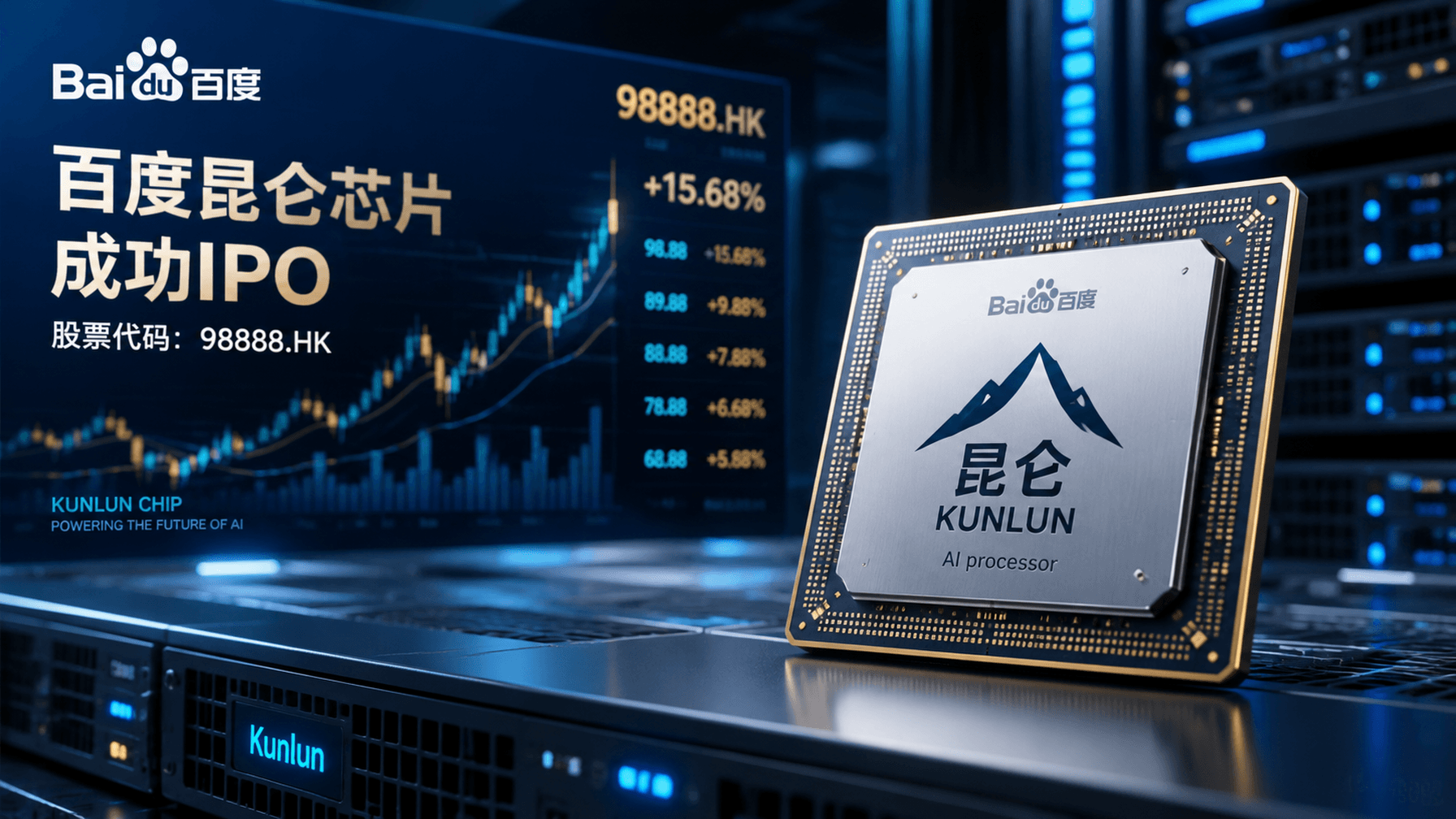
💡See how Chinese AI chipmakers are using IPO leverage to secure market share amidst global trade tensions.
⚡ 30-Second TL;DR
What Changed
Kunlun Chip is leveraging its IPO to lock in long-term customer commitments
Why It Matters
This move highlights the aggressive 'customer-as-investor' model currently shaping the Chinese AI hardware landscape. It signals a shift toward guaranteed demand in the AI chip sector.
What To Do Next
Monitor Kunlun Chip's performance benchmarks against NVIDIA's H20 to evaluate the viability of domestic alternatives for your AI training clusters.
Key Points
- •Kunlun Chip is leveraging its IPO to lock in long-term customer commitments
- •The strategy reflects intense competition in China's domestic AI semiconductor market
- •Investors are being asked to act as both capital providers and anchor customers
🧠 Deep Insight
AI-generated analysis for this event — not the original article.
🔑 Enhanced Key Takeaways
- •Kunlun Chip's strategy is reportedly a response to tightening export controls on high-end GPUs, which has forced Chinese firms to prioritize domestic supply chain stability over pure market-driven sales.
- •The bundled purchase requirement is specifically targeting state-backed investment funds and major cloud service providers in China to ensure a guaranteed revenue stream for the next 24-36 months.
- •Industry analysts suggest this 'customer-investor' model is a defensive maneuver to inflate valuation metrics ahead of a Hong Kong or Shanghai stock exchange listing amid cooling investor sentiment toward AI hardware startups.
- •Baidu has been internally transitioning its own massive AI workloads from NVIDIA A100/H100 clusters to Kunlun's KUNLUN II and third-generation chips to provide the 'proof of concept' required by these new investors.
- •The move has sparked concerns among smaller potential clients who fear that prioritizing 'investor-customers' will lead to supply shortages and longer lead times for non-investor enterprise buyers.
📊 Competitor Analysis▸ Show
| Feature | Kunlun Chip (KUNLUN II/III) | Huawei Ascend (910B/C) | Cambricon (MLU series) |
|---|---|---|---|
| Primary Focus | Baidu Ecosystem/Cloud | Telecom/Government/General AI | Edge/Cloud AI Inference |
| Architecture | XPU (Proprietary) | Da Vinci | MLU (Tensor-based) |
| Software Stack | PaddlePaddle optimized | CANN (MindSpore) | Cambricon Neuware |
| Market Position | High-end Cloud Training | Market Leader (Domestic) | Specialized Inference |
🛠️ Technical Deep Dive
- Architecture: Utilizes a proprietary XPU architecture designed for high-throughput tensor processing and large-scale AI model training.
- Interconnect: Supports high-speed chip-to-chip interconnects to facilitate multi-node scaling for Large Language Model (LLM) training.
- Memory: Integrates HBM (High Bandwidth Memory) to mitigate memory wall bottlenecks common in transformer-based model training.
- Software Compatibility: Deeply integrated with Baidu's PaddlePaddle deep learning framework, with increasing support for PyTorch via custom compilers.
- Process Node: Manufactured using advanced 7nm and 5nm-class processes, navigating supply constraints through domestic foundry partnerships.
🔮 Future ImplicationsAI analysis grounded in cited sources
⏳ Timeline
Weekly AI Recap
Read this week's curated digest of top AI events →
👉Related Updates

AI-curated news aggregator. All content rights belong to original publishers.
Original source: Pandaily ↗
This is a summary, not the original. Read the source, or get the weekly briefing.
Weekly AI briefing
One email a week. Unsubscribe anytime.