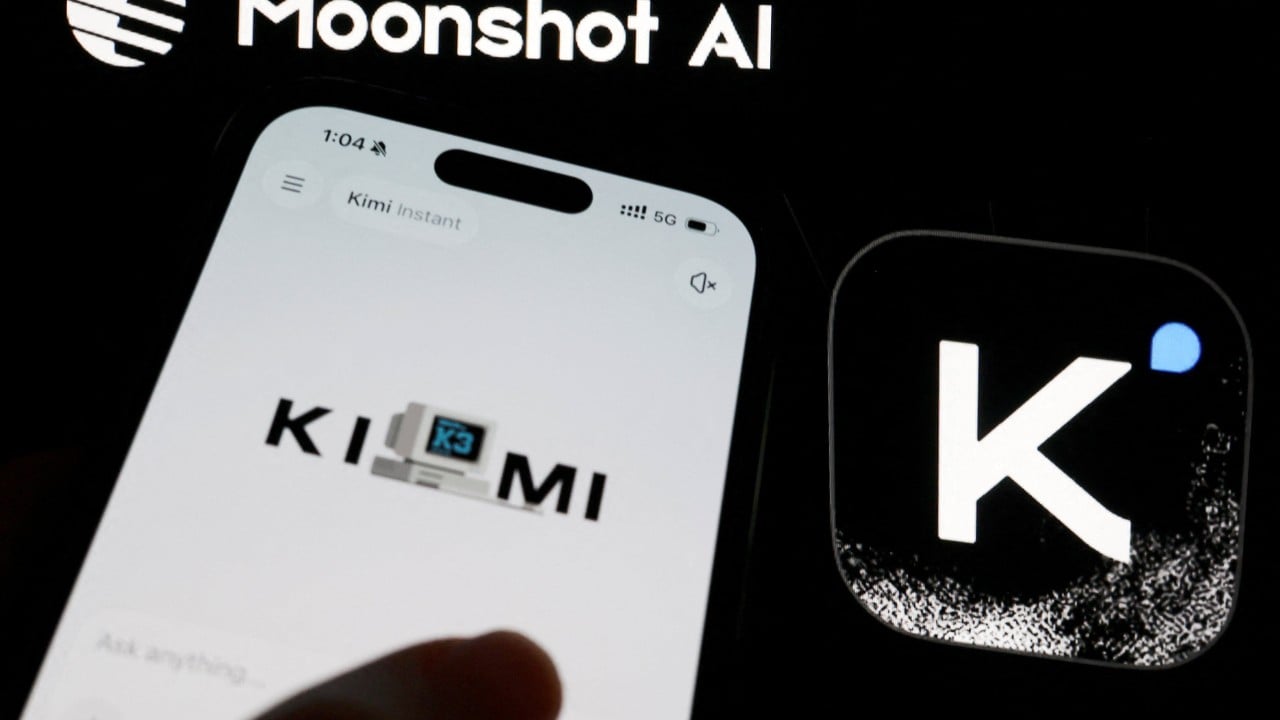
Kimi K3 Runs Locally Across Two Clusters

See how a budget multi-cluster setup makes local Kimi K3 inference possible.
30-Second TL;DR
What Changed
Kimi K3 is running across two separate clusters through llama.cpp over RPC.
Why It Matters
The experiment illustrates how enthusiasts can run very large models by combining commodity GPUs, even when no single machine has enough memory. It also highlights the performance penalty of distributed RPC inference and aggressive quantization.
What To Do Next
Benchmark Kimi K3 with and without RPC using identical prompts, context lengths, and quantizations before investing in a unified multi-GPU chassis.
Key Points
- •Kimi K3 is running across two separate clusters through llama.cpp over RPC.
- •The available memory is insufficient to hold the full model, so the main cluster performs partial offloading.
- •The current quantization is IQ1_M, with Q2_K_XL as the target configuration.
- •The author expects a single consolidated system without RPC to achieve roughly 2–3x higher speed.
Deep Insight
AI-generated analysis for this event — not the original article.
Enhanced Key Takeaways
- •Kimi K3 is developed by Moonshot AI, a prominent Chinese AI startup known for its long-context window capabilities.
- •The use of llama.cpp RPC (Remote Procedure Call) allows for distributed inference, enabling users to bridge hardware gaps by linking disparate GPU nodes over a network.
- •IQ1_M quantization represents an extreme compression technique, typically resulting in significant perplexity degradation but allowing massive models to fit into consumer-grade VRAM.
- •Moonshot AI's Kimi series models often utilize a Mixture-of-Experts (MoE) or highly optimized dense architecture designed to compete with top-tier proprietary models like GPT-4o or Claude 3.5.
- •The community interest in running Kimi K3 locally highlights a growing trend of 'model distillation' and local deployment of frontier-class Chinese LLMs by the open-source community.
Competitor Analysis
- Kimi K3 (Local)
- Proprietary/MoE
- DeepSeek-V3
- MoE
- Qwen 2.5
- Dense/MoE
- Kimi K3 (Local)
- Ultra-Long
- DeepSeek-V3
- 128k+
- Qwen 2.5
- 128k+
- Kimi K3 (Local)
- Community-led (llama.cpp)
- DeepSeek-V3
- Official
- Qwen 2.5
- Official
- Kimi K3 (Local)
- China/Global
- DeepSeek-V3
- Global
- Qwen 2.5
- Global
| Feature | Kimi K3 (Local) | DeepSeek-V3 | Qwen 2.5 |
|---|---|---|---|
| Architecture | Proprietary/MoE | MoE | Dense/MoE |
| Context Window | Ultra-Long | 128k+ | 128k+ |
| Local Support | Community-led (llama.cpp) | Official | Official |
| Primary Market | China/Global | Global | Global |
Technical Deep Dive
- Kimi K3 utilizes a specialized architecture optimized for long-context retrieval and reasoning, often requiring high memory bandwidth.
- llama.cpp RPC backend enables tensor parallelism across network boundaries, though it is heavily bottlenecked by interconnect speeds (e.g., Ethernet vs. NVLink).
- IQ1_M quantization is a 1-bit-per-weight (or near 1-bit) format that leverages Importance Matrix (IMatrix) calibration to minimize accuracy loss during extreme compression.
- Partial offloading in this context implies that the KV cache and specific model layers are split between the local GPU and the remote RPC node, increasing latency due to network round-trips.
Future ImplicationsAI analysis grounded in cited sources
Timeline
- 2023-10Moonshot AI releases the first version of the Kimi chatbot.
- 2024-03Moonshot AI introduces support for 200,000-token context windows.
- 2025-05Moonshot AI announces the Kimi K3 model series with enhanced reasoning capabilities.
- 2026-08Community developers successfully port Kimi K3 to llama.cpp with RPC support.
Weekly AI Recap
Read this week's curated digest of top AI events →
Related Updates
AI-curated news aggregator. All content rights belong to original publishers.
Original source: Reddit r/LocalLLaMA ↗
This is a summary, not the original. Read the source, or get the weekly briefing.
The weekly digest
One email a week. Unsubscribe anytime.