Kimi K3 Shakes Up the Open-Model Economy
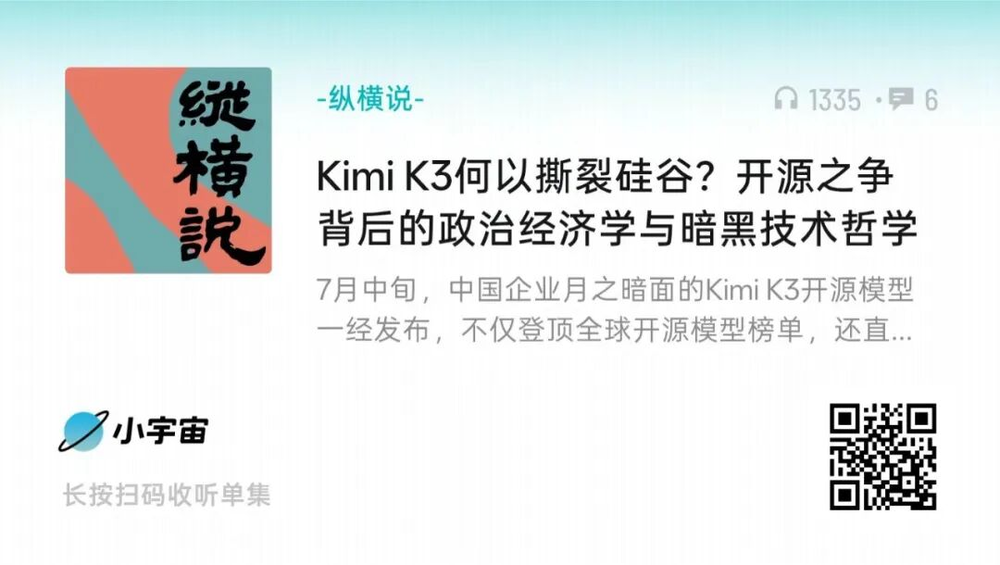
A reported 2.8-trillion-parameter open model may challenge closed-model pricing, benchmarks, and AI policy.
30-Second TL;DR
What Changed
Kimi K3 reportedly launched on July 16 with 2.8 trillion total parameters.
Why It Matters
If the reported performance and cost claims hold, Kimi K3 could accelerate adoption of open-weight models and pressure closed providers to reduce prices. The policy response may also influence whether startups can legally and commercially depend on foreign open models.
What To Do Next
Download Kimi K3’s released weights and technical report, then benchmark it against your current model on representative coding and vision workloads.
Key Points
- •Kimi K3 reportedly launched on July 16 with 2.8 trillion total parameters.
- •Moonshot AI later released the model weights, technical report, and key infrastructure details.
- •The model allegedly topped a frontend coding arena with a score of 1679, exceeding several closed models.
- •Its release was associated with approximately $470 billion in market value losses across US AI stocks over three days.
- •The debate divided financial, political, and industry stakeholders over open weights, security, and China-related restrictions.
Deep Insight
AI-generated analysis for this event — not the original article.
Enhanced Key Takeaways
- •Kimi K3 utilizes a highly sparse Mixture-of-Experts (MoE) architecture, activating only 16 out of 896 experts per token, which significantly optimizes compute-to-capability efficiency.
- •The model incorporates 'Kimi Delta Attention' (KDA), a hybrid linear attention mechanism designed to maintain long-context performance while reducing the computational overhead typically associated with million-token windows.
- •Moonshot AI's release strategy included a phased rollout: the API became available on July 16, 2026, followed by the public release of model weights on July 27, 2026.
- •The model's 'always-on' thinking mode is a core architectural feature that contributes to its high performance in complex reasoning and coding tasks, though it also impacts latency and operational costs.
- •Despite its 2.8-trillion-parameter scale, the model requires substantial infrastructure for local deployment, with estimates suggesting a resident memory footprint of approximately 1.4TB.
Competitor Analysis
- Kimi K3
- 2.8T MoE (16/896 active)
- Claude Fable 5
- Proprietary
- GPT-5.6 Sol
- Proprietary
- Kimi K3
- 1M Tokens
- Claude Fable 5
- Frontier
- GPT-5.6 Sol
- Frontier
- Kimi K3
- #1 (1679)
- Claude Fable 5
- #2
- GPT-5.6 Sol
- #3
- Kimi K3
- $3/$15 (Input/Output)
- Claude Fable 5
- Competitive
- GPT-5.6 Sol
- Competitive
| Feature | Kimi K3 | Claude Fable 5 | GPT-5.6 Sol |
|---|---|---|---|
| Architecture | 2.8T MoE (16/896 active) | Proprietary | Proprietary |
| Context Window | 1M Tokens | Frontier | Frontier |
| Frontend Coding | #1 (1679) | #2 | #3 |
| Pricing | $3/$15 (Input/Output) | Competitive | Competitive |
Technical Deep Dive
- Architecture: Autoregressive Mixture-of-Experts (MoE) transformer with native vision capabilities.
- Attention Mechanism: Kimi Delta Attention (KDA), a hybrid linear attention mechanism replacing standard quadratic attention in specific layers.
- Residual Connections: Uses Attention Residuals (AttnRes) to allow layers to selectively retrieve representations from arbitrary earlier layers, mitigating signal degradation in deep models.
- Sparsity: Stable LatentMoE framework managing 896 experts with 16 active per token.
- Quantization: Employs MXFP4 weights and MXFP8 activations for efficient scaling.
- Context Handling: Native 1-million-token context window with optimized decoding speedups.
Future ImplicationsAI analysis grounded in cited sources
Timeline
- 2023-03Moonshot AI is founded in Beijing.
- 2023-10Kimi chatbot is released with 128k context support.
- 2025-07Moonshot AI releases the open-weights Kimi K2 model.
- 2026-07-16Kimi K3 is officially launched via API.
- 2026-07-27Full model weights for Kimi K3 are released to the public.
Event Coverage
Weekly AI Recap
Read this week's curated digest of top AI events →
Related Updates
AI-curated news aggregator. All content rights belong to original publishers.
Original source: 虎嗅 ↗
This is a summary, not the original. Read the source, or get the weekly briefing.
The weekly digest
One email a week. Unsubscribe anytime.