Kimi evolves from 'student' to 'project manager' with 300 Agents
💡See how Kimi is scaling AI capabilities through multi-agent orchestration instead of just model size.
⚡ 30-Second TL;DR
What Changed
Orchestration of 300 distinct AI agents
Why It Matters
This architecture demonstrates a scalable path for managing complex AI workflows without needing to scale individual model parameters indefinitely.
What To Do Next
Explore multi-agent framework design patterns to see how you can decompose your own complex tasks into specialized agent workflows.
Key Points
- •Orchestration of 300 distinct AI agents
- •Reduction of computational burden for trillion-parameter models
- •Transition from individual task execution to organizational project management
- •Focus on multi-agent collaboration for complex workflows
🧠 Deep Insight
Background and context from public sources — not the original article. 27 sources cited.
🔑 Enhanced Key Takeaways
- •Kimi is developed by Moonshot AI, a Chinese company founded in March 2023, which has recently achieved a valuation exceeding $20 billion after a $2 billion funding round in May 2026.
- •The multi-agent system, specifically the 'Agent Swarm' in Kimi K2.6, can execute up to 4,000 coordinated steps in a single autonomous run, a significant increase from Kimi K2.5's 1,500 tool calls.
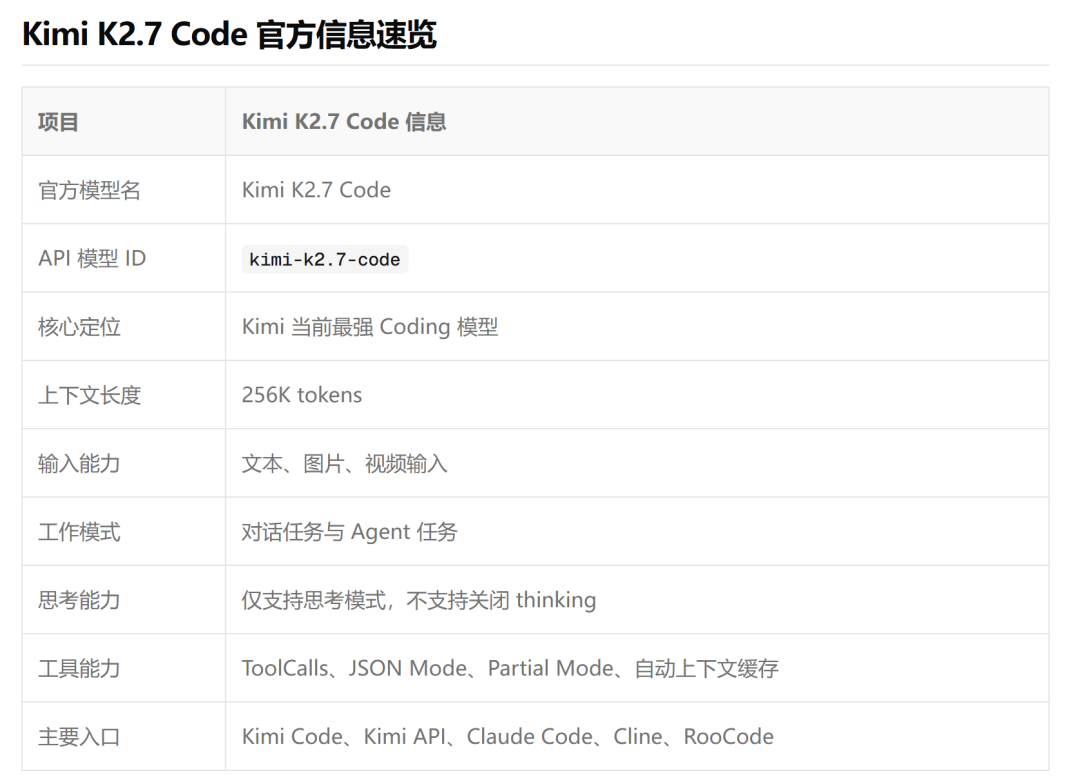
- •Kimi K2.6, the underlying model, is an open-weight 1-trillion parameter Mixture-of-Experts (MoE) model that only activates 32 billion parameters per token, offering high capability with efficient inference costs.
- •Moonshot AI has extended Kimi's capabilities with 'Kimi Work,' a local desktop agent that runs on Kimi K2.6, enabling it to interact directly with local files and a user's real browser sessions for enhanced privacy and functionality.
- •Kimi K2.6 has demonstrated competitive performance against leading proprietary models like GPT-5.4 and Claude Opus 4.6 on benchmarks such as Humanity's Last Exam and SWE-Bench Pro, often at a substantially lower token cost.
📊 Competitor Analysis▸ Show
| Feature / Model | Kimi K2.6 / K2.7 Code | Claude Opus 4.7 / Mythos 5 | GPT-5.5 / GPT-4o | DeepSeek-V3.2 | GLM-4.7 |
|---|---|---|---|---|---|
| Agent Orchestration | Native 300-agent swarm, 4,000 coordinated steps | Strong agentic capabilities, multi-agent systems exist (e.g., CrewAI can use Claude) | Strong agentic capabilities, multi-agent systems exist (e.g., CrewAI can use GPT) | Agent-friendly modes | Strong multi-step agent behavior |
| Model Type | 1T MoE (32B active) | Proprietary | Proprietary | Open-source | Open-source |
| Context Window | 262K tokens (256K) | Varies, often large (e.g., 200K for Opus) | Varies, often large (e.g., 128K for GPT-4o) | Varies | Varies |
| Multimodality | Native multimodal (text, images, video) | Yes | Yes | Yes | Yes |
| Open-source | Yes (Modified MIT License) | No | No | Yes | Yes |
| Key Benchmarks (Coding/Agentic) | SWE-Bench Pro: 58.6% (ties GPT-5.5); HLE with tools: 54.0% (leads frontier models); BrowseComp Swarm: 86.3% | SWE-bench: Claude Opus 4.5 set record 63.3%; Mythos 5 leads several coding/agentic benchmarks | SWE-Bench Pro: 58.6% (tied by K2.6) | Strong reasoning + agents on a budget | Strong "spec → UI" tendencies and multi-step workflow reliability |
| Pricing (API) | ~$0.55/1M input vs $2.50–$3.00 for GPT-4o/Claude (K2.6) | Higher cost | Higher cost | Cost-effective | Varies |
🛠️ Technical Deep Dive
- Model Architecture: Mixture-of-Experts (MoE) with 1 trillion total parameters, where only 32 billion parameters are active per token during inference.
- Experts and Layers: Comprises 384 total experts, with 8 selected per token (plus 1 shared expert), distributed across 61 transformer blocks.
- Context Window: Supports a 262,144-token (256K) context window, utilizing Multi-Head Latent Attention (MLA) to manage memory footprint efficiently.
- Multimodality: Kimi K2.5 introduced native multimodal capabilities, processing text, images, and video within the same architecture. K2.6 includes a 400M-parameter MoonViT vision encoder, though image input is not directly exposed via API for K2.6.
- Optimizer: Employs the Muon optimizer (MuonClip) for training stability, particularly crucial for trillion-parameter scale MoE models.
- Activation Function: Uses SwiGLU (Swish-Gated Linear Unit) for non-linearity in feedforward layers, known for its hardware efficiency.
- Agent Swarm Mechanism: An orchestrator dynamically decomposes complex tasks into parallel subtasks, instantiates specialized sub-agents, and schedules their concurrent execution. Kimi K2.6 scales this system to 300 sub-agents capable of executing up to 4,000 coordinated steps.
- Training Data: The base Kimi K2 model was pre-trained on 15.5 trillion high-quality tokens, with K2.5 incorporating 15 trillion mixed visual and textual data.
- Operational Modes: Kimi K2.5 and K2.6 offer four distinct operational modes: Instant for rapid responses, Thinking for deep reasoning, Agent for autonomous workflows with tool use, and Agent Swarm for complex multi-step parallel tasks.
- Local Agent (Kimi Work): A downloadable application that runs on the user's desktop, leveraging Kimi K2.6. It uses a 'WebBridge' browser extension to interact with real browser sessions and includes a Cron scheduling engine for automated tasks.
🔮 Future ImplicationsAI analysis grounded in cited sources
⏳ Timeline
📎 Sources (27)
Factual claims are grounded in the sources below. Forward-looking analysis is AI-generated interpretation.
- wikipedia.org
- wikipedia.org
- pulse2.com
- tracxn.com
- tracxn.com
- deepinfra.com
- kimik2ai.com
- verdent.ai
- youtube.com
- medium.com
- lushbinary.com
- verdent.ai
- miraflow.ai
- medium.com
- marktechpost.com
- lushbinary.com
- ai.cc
- medium.com
- openrouter.ai
- codecademy.com
- overchat.ai
- arxiv.org
- eesel.ai
- shareai.now
- intuitionlabs.ai
- huggingface.co
- till-freitag.com
Weekly AI Recap
Read this week's curated digest of top AI events →
👉Related Updates



AI-curated news aggregator. All content rights belong to original publishers.
Original source: 钛媒体 ↗
This is a summary, not the original. Read the source, or get the weekly briefing.
The weekly digest
One email a week. Unsubscribe anytime.