Keep’s AI Pivot Meets a Market Collapse
💡Keep’s shrinking users, falling R&D budget, and AI pivot reveal the economics behind consumer AI transformation.
⚡ 30-Second TL;DR
What Changed
First-half revenue reached 825 million yuan, up only 0.4% year over year, while adjusted net profit was 5.88 million yuan.
Why It Matters
Keep is shifting from a content-led fitness platform toward a sports-consumer brand with an AI layer. For AI founders, the case highlights the difficulty of funding AI transformation while the core user base and subscription economics are weakening.
What To Do Next
Benchmark Keepace.ai’s AI coaching features against your own exercise product using safety, hallucination, and user-retention metrics before adding a paid AI tier.
Key Points
- •First-half revenue reached 825 million yuan, up only 0.4% year over year, while adjusted net profit was 5.88 million yuan.
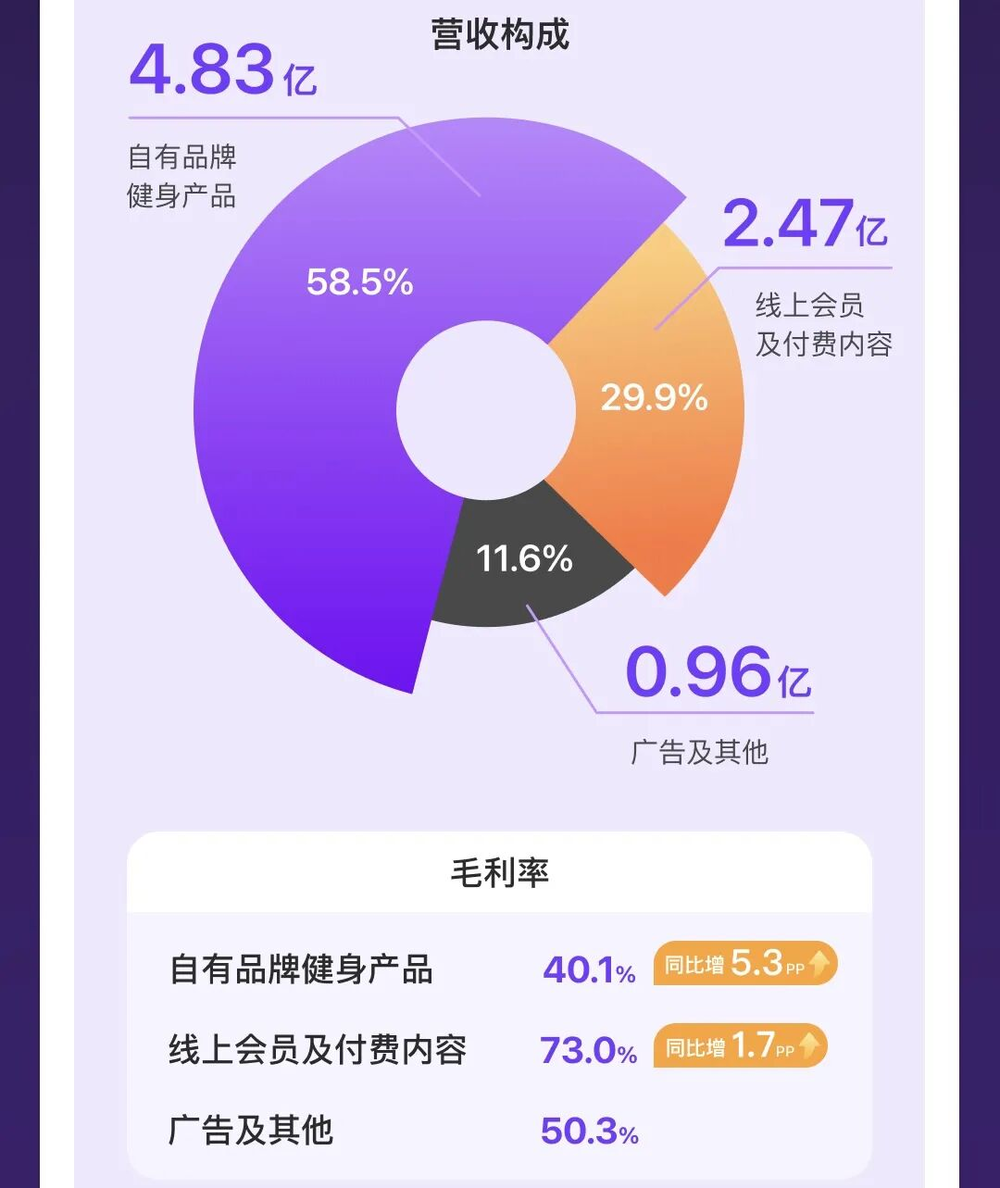
- •Own-brand sports products generated 483 million yuan, or 58.5% of total revenue, and became the largest source of gross profit.
- •Average MAU fell from 29.92 million in 2024 to 18.58 million in the first half of 2026, a decline of about 38%.
- •Keep launched Keepace.ai for course generation, exercise Q&A, and data interpretation, with more than 8,000 AI-customized courses.
- •R&D spending declined 29.4% in 2025 and another 23.2% in the first half of 2026, while AI products had not yet reached meaningful commercialization.
🧠 Deep Insight
Background and context from public sources — not the original article. 10 sources cited.
🔑 Enhanced Key Takeaways
- •Keep achieved its first annual adjusted net profit of 25.2 million RMB in 2025, marking a major turnaround from the 470 million RMB loss recorded in 2024.
- •The decline in MAU is partially attributed to a deliberate strategic decision to prune low-efficiency business lines to prioritize high-margin operations.
- •Keep launched its first general AI coach, 'Kaka,' in March 2025, which served as the precursor to the more advanced Keepace.ai motion health large model.
- •The company is explicitly benchmarking its business model against Decathlon, attempting to transition into a 'sports consumption' entity that links AI-powered digital content with physical retail goods.
- •Keep's 2026 financial performance reflects a broader market correction where investors have shifted focus from speculative AI narratives to tangible, sustainable profitability.
📊 Competitor Analysis▸ Show
| Feature | Keep | Decathlon | Peloton |
|---|---|---|---|
| Core Model | AI-Content + Hardware | Physical Retail + Private Label | Hardware + Subscription |
| AI Integration | High (Kaka/Keepace.ai) | Low | Moderate (AI coaching) |
| Revenue Focus | Sports Consumption | Physical Equipment | Subscription/Hardware |
🛠️ Technical Deep Dive
- Keepace.ai is built upon a proprietary motion health large model architecture.
- The system utilizes multi-modal data processing to integrate exercise Q&A, real-time motion tracking, and dietary calorie analysis.
- The platform supports generative course creation, allowing for the synthesis of over 8,000 customized training plans based on user biometric data.
🔮 Future ImplicationsAI analysis grounded in cited sources
⏳ Timeline
📎 Sources (10)
Factual claims are grounded in the sources below. Forward-looking analysis is AI-generated interpretation.
Weekly AI Recap
Read this week's curated digest of top AI events →
👉Related Updates


AI-curated news aggregator. All content rights belong to original publishers.
Original source: 虎嗅 ↗
This is a summary, not the original. Read the source, or get the weekly briefing.
Weekly AI briefing
One email a week. Unsubscribe anytime.