KCLS Opens North America’s Largest Library Sorter
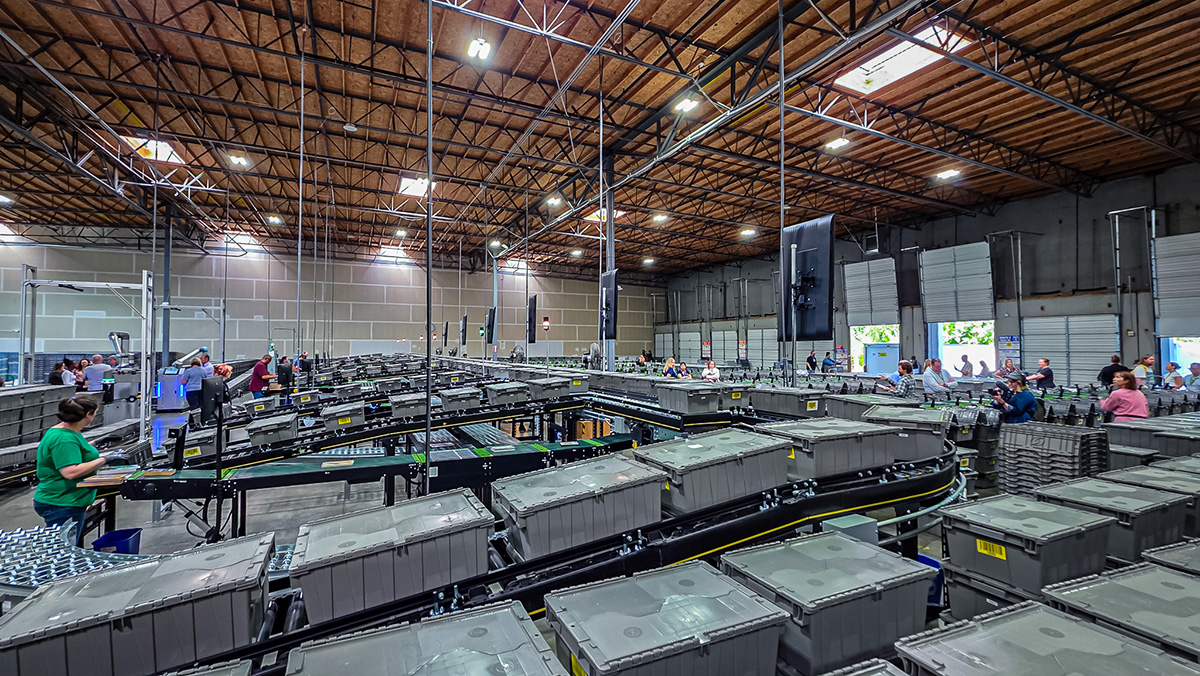
💡See how robotic handling scales to 25,000 daily items across 50 library locations.
⚡ 30-Second TL;DR
What Changed
The $5.2 million facility handles approximately 25,000 library items per day.
Why It Matters
The facility demonstrates how robotic material handling can improve throughput in a high-volume logistics environment. For AI and robotics practitioners, it offers a practical example of embodied automation, even though the article does not specify the use of machine-learning models.
What To Do Next
Benchmark your logistics automation design against the facility's 15-second tote cadence and 186-destination routing model.
Key Points
- •The $5.2 million facility handles approximately 25,000 library items per day.
- •Robotic arms destack collection totes every 15 seconds.
- •An automated routing system distributes materials across 186 delivery chutes.
- •The installation serves materials moving among King County Library System's 50 libraries.
🧠 Deep Insight
AI-generated analysis for this event.
🔑 Enhanced Key Takeaways
- •The facility utilizes a proprietary sortation system developed by Lyngsoe Systems, a global leader in library automation technology.
- •The Renton hub was designed to consolidate operations previously handled by smaller, decentralized sorting stations at individual library branches, significantly reducing manual labor.
- •The system incorporates advanced RFID (Radio Frequency Identification) scanning technology to track and route items with 99.9% accuracy.
- •The project was funded in part through a combination of capital improvement bonds and operational budget reallocations aimed at long-term labor cost reduction.
- •The facility operates on a 24/7 basis during peak periods to manage the high volume of inter-library loans and returns across the King County region.
🛠️ Technical Deep Dive
- System Architecture: Integrated automated material handling (AMH) system featuring high-speed conveyor belts and robotic de-stacking units.
- Throughput Capacity: Capable of processing up to 25,000 items daily with a peak capacity exceeding 3,000 items per hour.
- Sorting Logic: Utilizes real-time database integration with the KCLS Integrated Library System (ILS) to determine destination chutes based on branch-specific routing rules.
- Hardware Components: Features industrial-grade robotic arms for tote handling and high-speed RFID readers for item identification and verification.
🔮 Future ImplicationsAI analysis grounded in cited sources
⏳ Timeline
Weekly AI Recap
Read this week's curated digest of top AI events →
👉Related Updates

AI-curated news aggregator. All content rights belong to original publishers.
Original source: GeekWire ↗