KCD Hangzhou Opens CFP for Agent Era Discussions
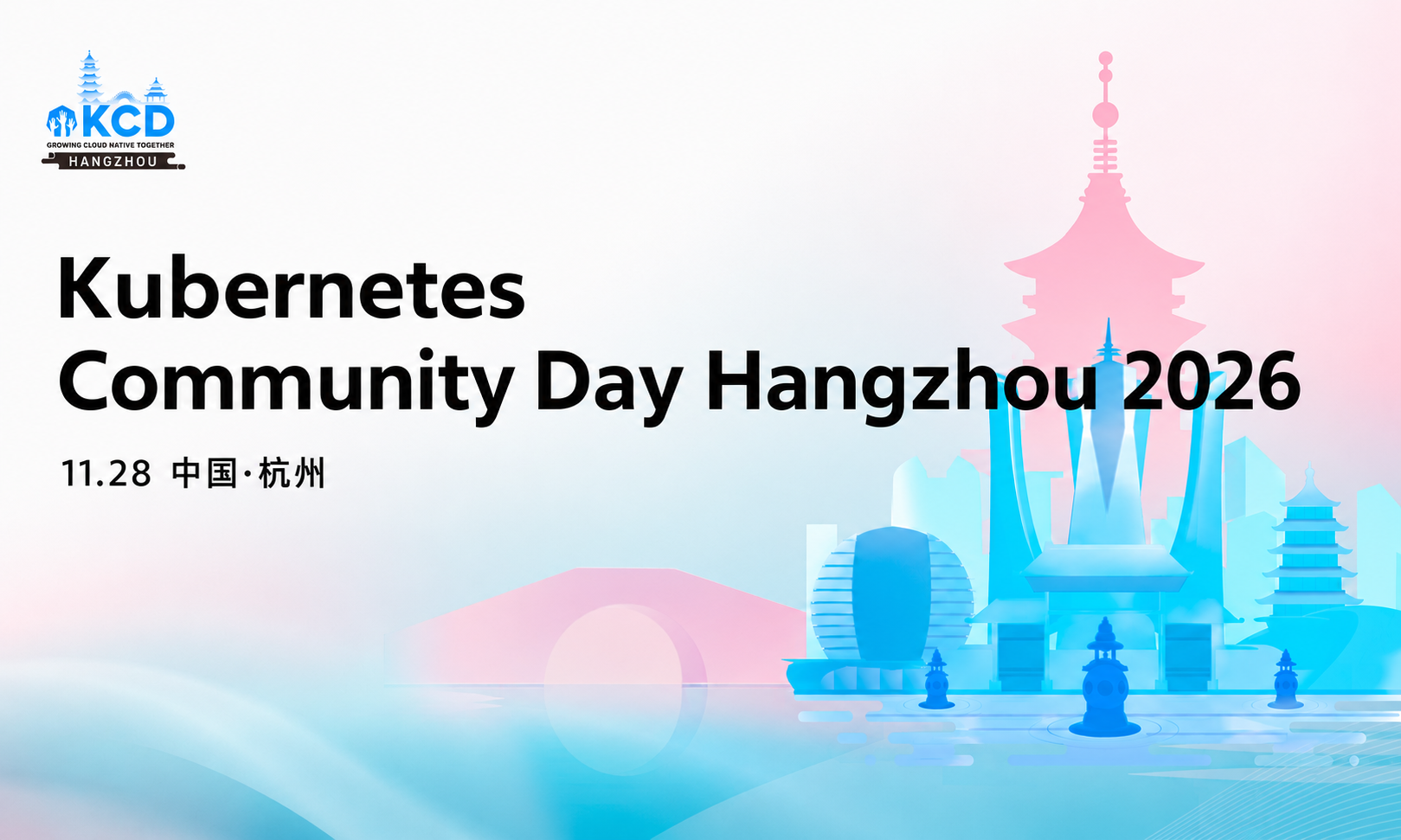
💡Find a venue to share practical lessons on cloud-native Agent infrastructure and LLM inference.
⚡ 30-Second TL;DR
What Changed
The KCD Hangzhou call for papers is now open.
Why It Matters
The event could help AI infrastructure builders exchange practical approaches for deploying, monitoring, and scaling agent systems. Its value depends on the eventual speaker lineup and the technical depth of accepted submissions.
What To Do Next
Review the KCD Hangzhou CFP and prepare a proposal covering a concrete Agent deployment, observability, or inference lesson from your project.
Key Points
- •The KCD Hangzhou call for papers is now open.
- •Proposed discussion areas include cloud native technologies, observability, and large-model inference.
- •The event focuses on infrastructure challenges and practices for the Agent era.
🧠 Deep Insight
Web-grounded analysis with 25 cited sources.
🔑 Enhanced Key Takeaways
- •KCD Hangzhou is a community-organized Kubernetes technology conference, supported by the Cloud Native Computing Foundation (CNCF), emphasizing community-driven collaboration and real-world engineering practices.
- •KCD Hangzhou has a history of cross-community collaboration, notably co-locating with OpenInfra Days China in November 2025, bringing together resources from both ecosystems.
- •The 'Agent era' signifies a paradigm shift where AI agents evolve from simple demos or copilots into autonomous execution units within enterprise IT architectures, capable of taking on complex tasks and responsibilities.
- •AI agent observability extends traditional software observability by capturing AI-specific telemetry, such as probabilistic reasoning, planning steps, tool usage, intermediate decisions, token usage, and output quality, crucial for understanding non-deterministic agent behavior.
- •Scaling large model inference for AI agents presents significant challenges because a single user request can trigger numerous, uneven model calls for planning, tool selection, and error recovery, making efficient serving engines like vLLM essential for performance and cost management.
🛠️ Technical Deep Dive
- AI Agent Observability: Extends traditional monitoring by collecting AI-specific telemetry, including detailed input/output logs, records of tool permissions and call sequences, decision paths, error rates, execution traces, token usage, model responses, and output quality. It leverages distributed traces to link each step of an agent run into an ordered timeline and structured logs to capture step-level details in a consistent format.
- Large Model Inference for Agents: AI agents amplify inference challenges due to the potential for many model calls per user request. Open-source inference runtimes and serving engines like vLLM are designed to address this by providing OpenAI-compatible APIs, managing model execution, request scheduling, continuous batching, and KV cache memory to efficiently process concurrent requests.
- Cloud-Native Infrastructure for AI Agents: Kubernetes is considered a foundational technology for next-generation AI agents, requiring an 'AI-native' reimagining. This involves treating agents as Kubernetes objects, implementing declarative agent management (using Custom Resource Definitions and GitOps), enabling tool service-ization through MCP (Multi-Cloud Platform) services, and utilizing AI Native Gateways as a control plane entry for agent-to-agent (A2A), agent-to-tool (A2T), agent-to-LLM (A2L) interactions, along with authorization and rate limiting.
- Security in Agentic Workloads: Addresses the issue of over-permissioned AI agents by applying cloud-native security principles. Solutions include isolating each agent execution within its own container on a dedicated Docker network, scoping filesystem access to specific worktrees, and employing service meshes and egress gateways to control agent network access.
- Inference Optimization Techniques: To reduce latency and costs for long-context inference workloads, techniques such as caching frequently reused content (LMCache) and speculative decoding (e.g., EAGLE) are employed. Speculative decoding generates draft tokens that the primary model validates in parallel, accelerating generation while maintaining output quality.
🔮 Future ImplicationsAI analysis grounded in cited sources
⏳ Timeline
📎 Sources (25)
Factual claims are grounded in the sources below. Forward-looking analysis is AI-generated interpretation.
Weekly AI Recap
Read this week's curated digest of top AI events →
👉Related Updates


AI-curated news aggregator. All content rights belong to original publishers.
Original source: InfoQ中国 ↗