KargoBot Raises $100M+ Series B for Unmanned Trucks
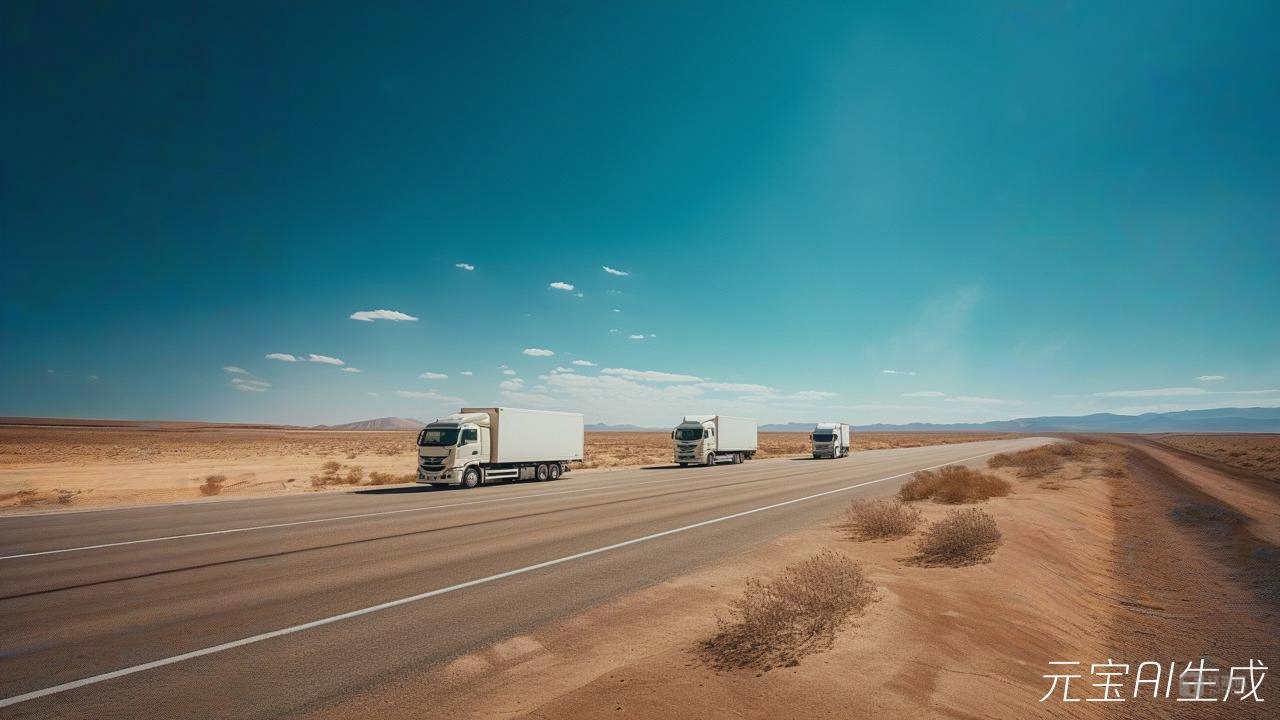
💡$100M funding fuels unmanned trucking leader – embodied AI logistics breakthrough
⚡ 30-Second TL;DR
What Changed
KargoBot領導幹線無人貨運市場
Why It Matters
此融資將加速無人駕駛卡車技術發展,推動物流業變革,降低成本並提升效率,對具身AI應用至關重要。
What To Do Next
Benchmark KargoBot's autonomy stack against ROS 2 for logistics robot deployment.
Key Points
- •KargoBot領導幹線無人貨運市場
- •完成超1億美元B輪融資
- •無人重卡領域新興強勢玩家
🧠 Deep Insight
Background and context from public sources — not the original article. 8 sources cited.
🔑 Enhanced Key Takeaways
- •KargoBot has achieved normalized unmanned operations in Ordos, Inner Mongolia, securing China's first license for commercial platooning without drivers, with L4 technology now supporting operations across more than 10 provinces serving over 20 customers nationwide[3].
- •The company utilizes a Hybrid Driverless Solution (HDS) combining human and machine intelligence, featuring a fleet model with one assisted human-driven pilot truck coordinating multiple L4 autonomous trucks, demonstrated by a 1,049-km unassisted journey from Tianjin to Inner Mongolia[1].
- •KargoBot's perception systems integrate five Hesai AT128 lidars providing 360-degree field-of-view coverage with 1.53 million points per second, complemented by Arbe's 4D imaging radar chipset offering 2,304 virtual RF channels and 100,000+ detections per frame[1][2].
- •Strategic partnerships with vehicle manufacturers like SuperPanther focus on developing fully redundant L4 autonomous vehicles with integrated powertrain solutions and charging/battery-swapping networks for Northwest China operations[3].
🛠️ Technical Deep Dive
- •Perception Architecture: Five Hesai AT128 lidars with ultra-high point frequency (1.53M points/second) for 360° coverage; Arbe's 4D imaging radar chipset with 2,304 virtual RF channels supporting 100,000+ detections per frame[1][2]
- •Processing Capability: Imaging resolution 100x more detailed than leading radar solutions; advanced stationary object detection, false alarm elimination, and interference avoidance[1]
- •Autonomous Driving Strategy Metrics: Lane change lateral acceleration threshold [2, 3.6] m/s²; yaw rate threshold [4.12, 5.78] °/s; detour distance threshold [44.68, 58.34] m[4]
- •Operational Redundancy: Hybrid Driverless Solution with safety operator oversight; full-stack L4 technology with complex path planning, obstacle avoidance, and emergency braking functions[1][7]
- •Environmental Durability: AT128 lidars demonstrated zero failures after two years of real-world operations in sand, rain, snow, and rugged terrains[2]
🔮 Future ImplicationsAI analysis grounded in cited sources
⏳ Timeline
📎 Sources (8)
Factual claims are grounded in the sources below. Forward-looking analysis is AI-generated interpretation.
- insideautonomousvehicles.com — Arbe and Weifu 4d Imaging Radar to Power Didis Kargobot L4 Autonomous Trucks
- hesaitech.com — Robotrucking
- autonews.gasgoo.com — Kargobotai Partners with Superpanther to Develop New Energy L4 Autonomous Heavy Duty Trucks 70038893
- hvttforum.org — 818
- shacmantruks.com — Shacman Truck and Kargobot Reach Strategic Cooperation on Intelligent Transportation Jointly Usher in a New Era of Unmanned Logistics
- en.eeworld.com.cn — Eic695772
- en.kargobot.ai — Solution
- en.kargobot.ai
Weekly AI Recap
Read this week's curated digest of top AI events →
👉Related Updates


AI-curated news aggregator. All content rights belong to original publishers.
Original source: 钛媒体 ↗
This is a summary, not the original. Read the source, or get the weekly briefing.
Weekly AI briefing
One email a week. Unsubscribe anytime.