JPMorgan Sees Sustained Demand for Big-Tech AI Debt
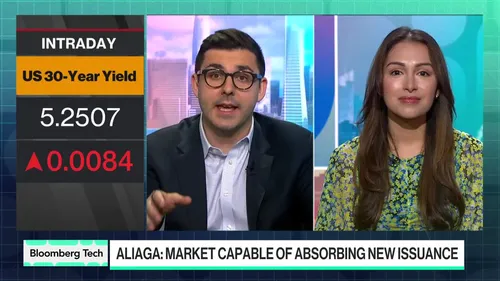
💡Hyperscaler debt could determine how quickly AI compute capacity expands—and how much returns matter.
⚡ 30-Second TL;DR
What Changed
Big Tech is increasingly using debt to finance AI infrastructure expansion.
Why It Matters
Continued debt demand could expand the capital available for data centers, accelerators, networking, and power capacity. For AI companies, it may also increase infrastructure availability while raising pressure to demonstrate measurable returns on compute spending.
What To Do Next
Recalculate your AI product’s infrastructure runway using higher compute-demand scenarios and include debt-driven hyperscaler capacity growth in vendor availability assumptions.
Key Points
- •Big Tech is increasingly using debt to finance AI infrastructure expansion.
- •Hyperscaler bond issuance is expected to continue growing.
- •Greater visibility into AI returns could sustain the current infrastructure spending boom.
🧠 Deep Insight
Background and context from public sources — not the original article. 10 sources cited.
🔑 Enhanced Key Takeaways
- •The five largest U.S. hyperscalers are projected to reach $697 billion in capital expenditures for 2026, marking a $173 billion increase since the start of the year.
- •Major tech firms are increasingly utilizing off-balance-sheet commitments and special-purpose vehicles to manage AI-related obligations, adding to their existing $770 billion in debt and lease liabilities.
- •The share of operating cash flow consumed by AI capital expenditures has surged to 93% for major hyperscalers in 2026, up significantly from 33% in 2023.
- •Market leadership in the AI debt space has expanded beyond the 'Magnificent Seven' to include utilities, industrial companies, and infrastructure providers essential to the AI ecosystem.
- •JPMorgan is directly facilitating this growth by structuring large-scale financing, such as the $5 billion debt agreement recently secured for Volta Infrastructure.
🔮 Future ImplicationsAI analysis grounded in cited sources
⏳ Timeline
📎 Sources (10)
Factual claims are grounded in the sources below. Forward-looking analysis is AI-generated interpretation.
Weekly AI Recap
Read this week's curated digest of top AI events →
👉Related Updates
AI-curated news aggregator. All content rights belong to original publishers.
Original source: Bloomberg Technology ↗
This is a summary, not the original. Read the source, or get the weekly briefing.
Weekly AI briefing
One email a week. Unsubscribe anytime.