Joby-ASI AI Partnership for eVTOL Airspace
💡AI platform scales eVTOL airspace—vital for aviation AI builders
⚡ 30-Second TL;DR
What Changed
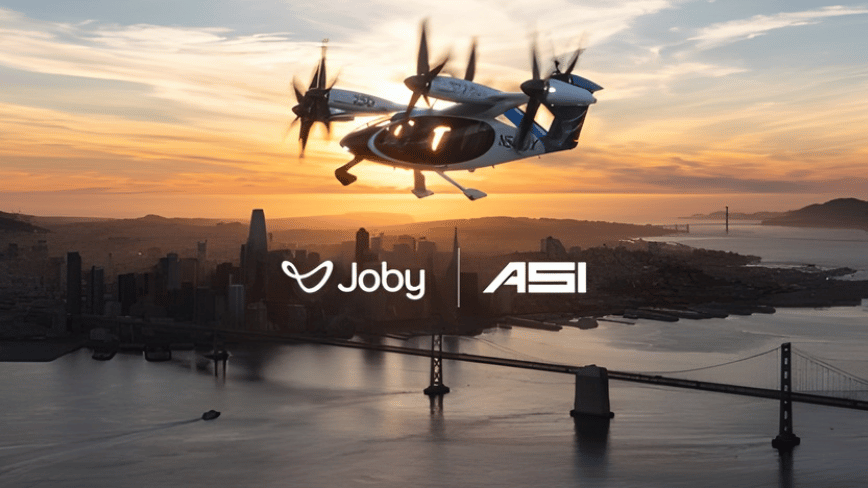
Joby Aviation and Air Space Intelligence announce partnership
Why It Matters
This bolsters Joby's path to commercial eVTOL ops with AI safety tools, potentially setting standards for urban air traffic. AI practitioners gain a real-world case for simulation in dense autonomous systems.
What To Do Next
Test Flyways AI demos for modeling dense autonomous airspace traffic.
Key Points
- •Joby Aviation and Air Space Intelligence announce partnership
- •Flyways AI integrates for US eVTOL airspace management
- •Platform models high-density traffic pre-commercial launch this year
🧠 Deep Insight
AI-generated analysis for this event — not the original article.
🔑 Enhanced Key Takeaways
- •The partnership leverages ASI's Flyways platform to specifically address the 'dynamic airspace' challenge, allowing Joby to simulate complex weather patterns and traffic congestion scenarios that traditional static flight planning cannot handle.
- •This integration is a critical component of Joby's FAA certification roadmap, aimed at demonstrating 'equivalent level of safety' for autonomous or semi-autonomous traffic management in urban environments.
- •The collaboration focuses on data-sharing protocols between Joby's fleet telemetry and ASI's predictive models to refine real-time rerouting capabilities, reducing potential delays in high-density corridors.
📊 Competitor Analysis▸ Show
| Competitor | Airspace Management Approach | Key Focus |
|---|---|---|
| Archer Aviation | Partnered with NASA/FAA on UTM research | Infrastructure-led traffic flow |
| Volocopter | Proprietary 'VoloIQ' digital ecosystem | End-to-end fleet operations |
| Lilium | Integration with existing ATM systems | Regional network optimization |
🛠️ Technical Deep Dive
- •Flyways AI utilizes a 'Digital Twin' architecture to create a high-fidelity, real-time replica of the National Airspace System (NAS).
- •The platform employs reinforcement learning algorithms to optimize flight trajectories, minimizing energy consumption and noise footprint while maintaining separation minima.
- •Integration utilizes standardized APIs to ingest Joby's aircraft performance data, allowing the AI to adjust flight paths based on real-time battery state-of-charge and environmental constraints.
- •The system is designed to interface with existing FAA NextGen infrastructure, specifically targeting compatibility with future U-Space and UTM (Unmanned Aircraft System Traffic Management) standards.
🔮 Future ImplicationsAI analysis grounded in cited sources
⏳ Timeline
Weekly AI Recap
Read this week's curated digest of top AI events →
👉Related Updates


AI-curated news aggregator. All content rights belong to original publishers.
Original source: The Next Web (TNW) ↗
This is a summary, not the original. Read the source, or get the weekly briefing.
The weekly digest
One email a week. Unsubscribe anytime.