Japan Tests Data Centers Under Elevated Rail Bridges
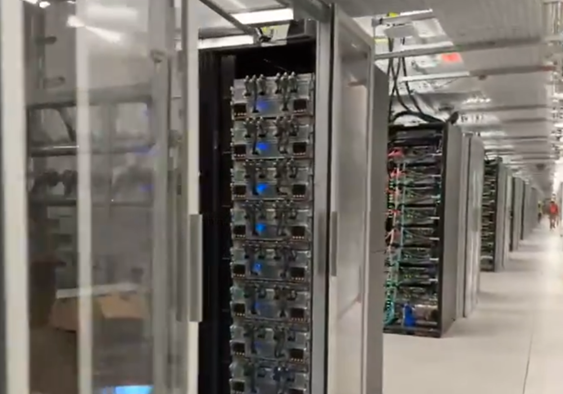
💡Urban bridge-under DCs test resilient cooling—vital for city AI infra scaling.
⚡ 30-Second TL;DR
What Changed
Experiment starts June by four Tokyu group firms
Why It Matters
Enables dense urban data centers, reducing land costs for AI compute scaling. Offers resilient designs for earthquake-prone areas, benefiting global AI infrastructure expansion. Could inspire hybrid urban deployments for edge AI.
What To Do Next
Track Tokyu experiment reports for vibration-proof cooling in GPU data centers.
Key Points
- •Experiment starts June by four Tokyu group firms
- •Tests server cooling under train vibrations
- •Evaluates seismic resistance and temp fluctuations
- •Pioneers urban viaduct space for data centers
🧠 Deep Insight
AI-generated analysis for this event — not the original article.
🔑 Enhanced Key Takeaways
- •The project leverages edge computing architecture to reduce latency for local smart city applications, such as real-time traffic monitoring and automated station services, rather than serving as a traditional hyperscale data center.
- •The experiment utilizes specialized vibration-dampening server racks designed to isolate sensitive hardware from the high-frequency mechanical oscillations generated by passing trains.
- •The initiative is part of a broader Japanese government-backed 'Smart City' infrastructure strategy aimed at repurposing underutilized urban land owned by railway operators to address the severe shortage of available real estate for digital infrastructure in Tokyo.
🛠️ Technical Deep Dive
- •Vibration Mitigation: Deployment of active seismic isolation platforms and high-damping rubber mounts to decouple server cabinets from the viaduct structure.
- •Thermal Management: Implementation of closed-loop liquid cooling systems to mitigate ambient temperature fluctuations caused by external weather exposure and train-induced airflow.
- •Connectivity: Integration with the railway's private fiber-optic backbone to ensure low-latency backhaul to the core network.
- •Power Redundancy: Utilization of existing railway power substations with integrated battery energy storage systems (BESS) to provide uninterruptible power supply (UPS) during grid instability.
🔮 Future ImplicationsAI analysis grounded in cited sources
⏳ Timeline
Weekly AI Recap
Read this week's curated digest of top AI events →
👉Related Updates


AI-curated news aggregator. All content rights belong to original publishers.
Original source: cnBeta (Full RSS) ↗
This is a summary, not the original. Read the source, or get the weekly briefing.
Weekly AI briefing
One email a week. Unsubscribe anytime.