Is OpenAI losing its lead in the AI race?
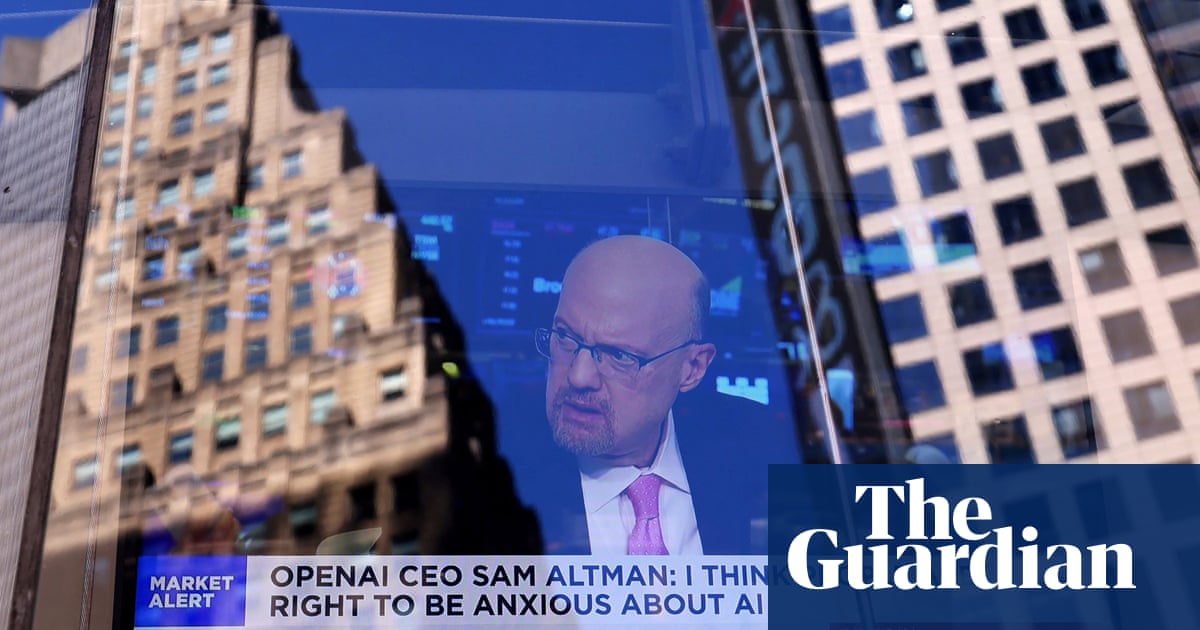
💡Understand the shifting market dynamics as OpenAI faces pressure from competitors and monetization hurdles.
⚡ 30-Second TL;DR
What Changed
OpenAI faces intense competition from rivals pursuing aggressive IPO strategies.
Why It Matters
The shift in OpenAI's strategy suggests a broader industry trend where 'growth at all costs' is being replaced by a focus on sustainable revenue models.
What To Do Next
Monitor OpenAI's upcoming API pricing and product roadmap updates to see how they pivot their monetization strategy.
Key Points
- •OpenAI faces intense competition from rivals pursuing aggressive IPO strategies.
- •Internal challenges include difficulties in monetizing ad-based models and erotic chatbots.
- •Sam Altman is recalibrating the company's vision for superintelligence and societal impact.
🧠 Deep Insight
Background and context from public sources — not the original article. 26 sources cited.
🔑 Enhanced Key Takeaways
- •OpenAI achieved rapid revenue growth, reaching $20 billion in annualized revenue by the end of 2025 and $25 billion by February 2026, primarily driven by ChatGPT subscriptions and a rapidly expanding enterprise customer base.
- •Despite initial reports of monetization struggles, OpenAI launched an advertising pilot in ChatGPT in February 2026 for its free and Go tiers, with internal projections aiming for $2.4 billion in ad revenue in 2026 and potentially $102 billion by 2030.
- •The company faces substantial financial pressures from high operational costs, with projected cash burn of approximately $27 billion in 2026, leading to cumulative losses before profitability potentially reaching $143 billion by 2029, largely due to high compute and R&D expenses.
- •OpenAI's valuation soared to $730 billion in February 2026 following a $110 billion funding round led by Amazon, SoftBank, and Nvidia, solidifying its position as the world's most valuable privately owned company.
- •OpenAI is strategically shifting its enterprise focus for 2026 towards "practical adoption" in health, science, and other industries, alongside exploring outcome-based pricing models and expanding its sales and support teams to regain market share.
📊 Competitor Analysis▸ Show
| Company | Valuation (as of) | Annualized Revenue (as of) | Primary Focus / Key Models | Key Differentiators |
|---|---|---|---|---|
| OpenAI | $730B (Feb 2026) | $25B (Feb 2026) | GPT-4o, ChatGPT (consumer & enterprise), DALL-E, Sora | Multimodal capabilities, broad consumer and enterprise offerings, AGI research, ad monetization strategy. |
| Anthropic | N/A | $5B (Aug 2025) | Claude (e.g., Claude 3.5 Sonnet) | Strong emphasis on AI safety and alignment, competitive performance in coding benchmarks, significant enterprise traction. |
| Mistral AI | €11.7B / $13.7B (Sep 2025) | >€1B projected (end 2026) | Mistral Large, Mixtral (open-weight & proprietary) | European-based, offers both open-weight and proprietary models, growing enterprise solutions. |
| Cohere | $7B (Sep 2025) | $240M (2025) | Enterprise AI platform, custom models | Exclusively enterprise-focused, provides cloud-agnostic deployments for custom AI solutions for businesses. |
🛠️ Technical Deep Dive
- GPT-4 is a large-scale, multimodal Transformer-style model, featuring over 100 billion parameters.
- Its architecture incorporates deep attention mechanisms, multi-head self-attention, and layer normalization to process and generate human-like text.
- The model is trained on a diverse, internet-scale dataset and further fine-tuned using Reinforcement Learning from Human Feedback (RLHF) to align responses with human intent.
- GPT-4 accepts both text and image inputs, with variants like GPT-4 Turbo extending the context window to 128,000 tokens and GPT-4o offering native multimodal capabilities across text, audio, and image.
- OpenAI has maintained secrecy regarding specific technical details such as GPT-4's exact model size, hardware, training compute, and dataset construction due to competitive and safety considerations.
🔮 Future ImplicationsAI analysis grounded in cited sources
⏳ Timeline
📎 Sources (26)
Factual claims are grounded in the sources below. Forward-looking analysis is AI-generated interpretation.
- sacra.com
- dig.watch
- aicerts.ai
- intuitionlabs.ai
- tradingkey.com
- futuresearch.ai
- medium.com
- wikipedia.org
- cryptorank.io
- substack.com
- constellationr.com
- forbes.com
- speechmatics.com
- wikipedia.org
- saastr.com
- wikipedia.org
- getpanto.ai
- tracxn.com
- mlq.ai
- sacra.com
- tsginvest.com
- tracxn.com
- crunchbase.com
- everythingai.io
- medium.com
- openai.com
Weekly AI Recap
Read this week's curated digest of top AI events →
👉Related Updates

AI-curated news aggregator. All content rights belong to original publishers.
Original source: The Guardian Technology ↗
This is a summary, not the original. Read the source, or get the weekly briefing.
The weekly digest
One email a week. Unsubscribe anytime.