Is ByteDance building a new Baidu Apollo?
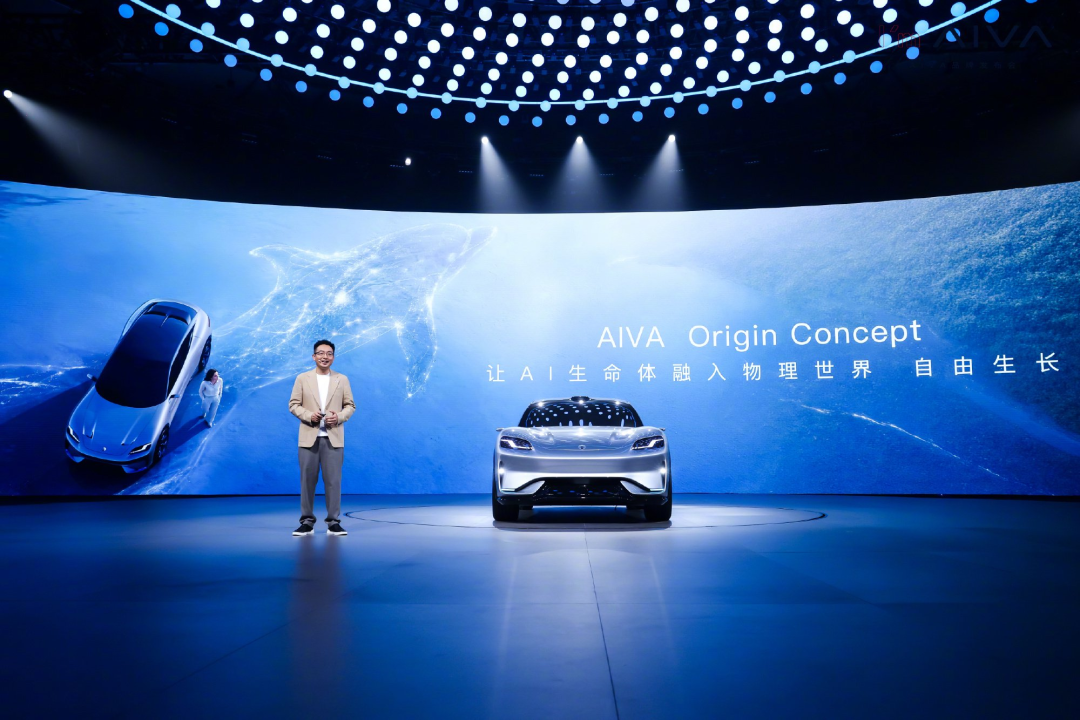
💡ByteDance's entry into autonomous driving could reshape the AI infrastructure and perception model landscape.
⚡ 30-Second TL;DR
What Changed
ByteDance is increasing investment in autonomous driving R&D
Why It Matters
If successful, ByteDance's entry could disrupt the current autonomous driving landscape by leveraging its massive data processing and AI model capabilities.
What To Do Next
Monitor ByteDance's job postings and research publications related to perception and planning algorithms to gauge their specific technical focus.
Key Points
- •ByteDance is increasing investment in autonomous driving R&D
- •Comparison to Baidu Apollo suggests a platform-based or full-stack ambition
- •Strategic alignment with ByteDance's existing AI infrastructure is expected
🧠 Deep Insight
AI-generated analysis for this event — not the original article.
🔑 Enhanced Key Takeaways
- •ByteDance has been actively recruiting senior talent from major autonomous driving firms like Waymo, Tesla, and Pony.ai to bolster its internal 'ByteAuto' initiative.
- •The company is leveraging its proprietary 'ByteDance AI Lab' infrastructure to focus on end-to-end large model architectures for autonomous driving, moving away from traditional modular pipelines.
- •Internal reports indicate a strategic pivot toward 'Robotaxi' fleet management software, utilizing ByteDance's expertise in real-time traffic prediction and recommendation algorithms.
- •ByteDance has secured strategic partnerships with domestic LiDAR and sensor manufacturers to reduce hardware costs, mirroring the supply chain integration seen in early Apollo development.
- •The initiative is reportedly integrated with ByteDance's cloud computing division, 'Volcengine,' to provide scalable simulation and data processing services for third-party automotive partners.
📊 Competitor Analysis▸ Show
| Feature | ByteDance (ByteAuto) | Baidu Apollo | Tesla FSD | Huawei ADS |
|---|---|---|---|---|
| Architecture | End-to-End AI | Modular/Platform | End-to-End Neural | Fusion/Modular |
| Business Model | Cloud/Platform/Fleet | Open Platform | Vertical Integration | Tier 1 Supplier |
| Data Advantage | User Behavior/Video | Mapping/Traffic | Fleet/Real-world | Connectivity/IoT |
🛠️ Technical Deep Dive
- Utilization of Vision-Language Models (VLMs) for scene understanding and decision-making in complex urban environments.
- Implementation of a Transformer-based perception stack that processes multi-modal sensor data (LiDAR, Camera, Radar) in a unified latent space.
- Deployment of high-throughput simulation environments powered by Volcengine to train reinforcement learning agents on edge-case scenarios.
- Focus on 'World Models' to predict environmental dynamics and agent behavior, reducing reliance on HD maps in favor of real-time semantic mapping.
🔮 Future ImplicationsAI analysis grounded in cited sources
⏳ Timeline
Weekly AI Recap
Read this week's curated digest of top AI events →
👉Related Updates



AI-curated news aggregator. All content rights belong to original publishers.
Original source: 钛媒体 ↗
This is a summary, not the original. Read the source, or get the weekly briefing.
The weekly digest
One email a week. Unsubscribe anytime.