iPhone Air May Shape Apple’s Anniversary iPhone
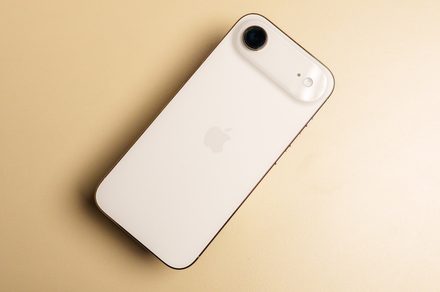
A rumored frame and larger vapor chamber could shape Apple’s next platform for mobile AI workloads.
30-Second TL;DR
What Changed
The rumored iPhone 20 may borrow its frame design from the iPhone Air.
Why It Matters
If the design direction proves accurate, Apple could use the iPhone Air as a foundation for a major anniversary hardware refresh. Larger displays and improved thermal management could influence future mobile computing and on-device AI workloads, although no AI features were confirmed.
What To Do Next
For mobile AI products, monitor the iPhone Air and future iPhone 20 hardware disclosures to update thermal, display, and device-performance assumptions in your iOS roadmap.
Key Points
- •The rumored iPhone 20 may borrow its frame design from the iPhone Air.
- •A larger vapor chamber is reportedly under consideration.
- •Pro models could receive larger displays.
- •The information is based on leaked details rather than an official announcement.
Deep Insight
AI-generated analysis for this event — not the original article.
Enhanced Key Takeaways
- •The 'iPhone Air' branding is widely speculated to replace the 'Slim' or 'Plus' tier in Apple's lineup, focusing on a ultra-thin chassis design rather than raw performance.
- •Industry analysts suggest the iPhone 20's shift to a vapor chamber is a direct response to thermal management challenges posed by the thinner, high-density logic boards required for the Air form factor.
- •Supply chain reports indicate Apple is testing a new 'A-series' chip architecture specifically optimized for the iPhone 20, prioritizing power efficiency over peak clock speeds to accommodate the reduced battery volume.
- •The display upgrades for Pro models are rumored to utilize a new generation of LTPO OLED panels that offer higher peak brightness while consuming 15% less power than the iPhone 18/19 series.
- •The 20th-anniversary branding is expected to mirror the strategy used for the iPhone X, positioning the device as a 'halo' product that introduces a new design language for the next decade of iPhones.
Competitor Analysis
- iPhone 20 (Rumored)
- Ultra-thin 'Air' Chassis
- Samsung Galaxy S26 Ultra
- Titanium/Glass
- Google Pixel 11 Pro
- Ceramic/Glass
- iPhone 20 (Rumored)
- Large Vapor Chamber
- Samsung Galaxy S26 Ultra
- Vapor Chamber
- Google Pixel 11 Pro
- Advanced Thermal Pad
- iPhone 20 (Rumored)
- Next-Gen LTPO OLED
- Samsung Galaxy S26 Ultra
- Dynamic AMOLED 3X
- Google Pixel 11 Pro
- Actua Display
- iPhone 20 (Rumored)
- Expected $1,199+
- Samsung Galaxy S26 Ultra
- $1,299
- Google Pixel 11 Pro
- $1,099
| Feature | iPhone 20 (Rumored) | Samsung Galaxy S26 Ultra | Google Pixel 11 Pro |
|---|---|---|---|
| Design | Ultra-thin 'Air' Chassis | Titanium/Glass | Ceramic/Glass |
| Cooling | Large Vapor Chamber | Vapor Chamber | Advanced Thermal Pad |
| Display | Next-Gen LTPO OLED | Dynamic AMOLED 3X | Actua Display |
| Pricing | Expected $1,199+ | $1,299 | $1,099 |
Technical Deep Dive
- Chassis Architecture: Utilization of a high-strength aluminum-titanium alloy to maintain structural integrity despite the reduced thickness of the Air-style frame.
- Thermal Management: Implementation of a copper-based vapor chamber with a micro-porous structure designed to dissipate heat across the wider surface area of the thinner device.
- Display Technology: Adoption of a tandem OLED structure to increase longevity and brightness without increasing the thickness of the display stack.
- Battery Integration: Potential use of silicon-anode battery technology to achieve higher energy density within a smaller physical footprint.
Future ImplicationsAI analysis grounded in cited sources
Timeline
- 2007-06Original iPhone launches, establishing the baseline for Apple's smartphone design.
- 2017-11iPhone X released as the 10th-anniversary model, introducing the notch and OLED displays.
- 2024-09Apple introduces the iPhone 16 series, emphasizing thermal efficiency and AI-ready hardware.
- 2025-09iPhone 17 series debuts with significant advancements in display technology and camera sensors.
- 2026-06Apple announces architectural shifts in iOS and hardware integration at WWDC, hinting at the iPhone 20 design language.
Weekly AI Recap
Read this week's curated digest of top AI events →
AI-curated news aggregator. All content rights belong to original publishers.
Original source: Digital Trends ↗
This is a summary, not the original. Read the source, or get the weekly briefing.
The weekly digest
One email a week. Unsubscribe anytime.