Investing Beyond BCI Hype
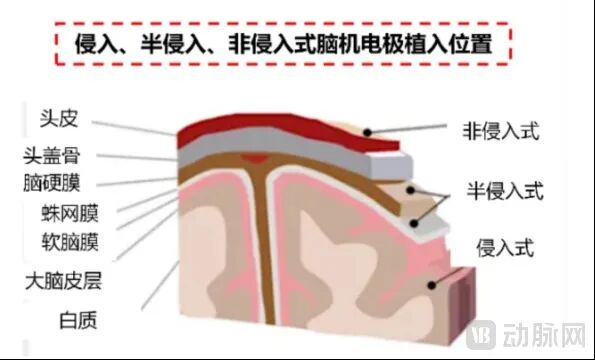
Learn why BCI investment decisions require proven demand—not just impressive technology.
30-Second TL;DR
What Changed
Technical leadership alone does not guarantee a worthwhile brain-computer interface investment.
Why It Matters
The analysis encourages AI founders and researchers to assess brain-computer interface projects through both market validation and technical defensibility. This could shift attention away from impressive demonstrations toward practical adoption and sustainable product value.
What To Do Next
Before building a brain-computer interface feature, interview at least five target users and compare their validated needs with the system’s measurable decoding accuracy.
Key Points
- •Technical leadership alone does not guarantee a worthwhile brain-computer interface investment.
- •Demand certainty should be evaluated alongside technological advancement.
- •The strongest opportunities sit at the intersection of proven demand and advanced technology.
Deep Insight
AI-generated analysis for this event — not the original article.
Enhanced Key Takeaways
- •Clinical BCI applications are currently shifting focus from invasive high-bandwidth neural recording to minimally invasive endovascular approaches to reduce surgical risk and regulatory barriers.
- •The BCI investment landscape is increasingly prioritizing 'data-as-a-service' models where companies monetize neural datasets for pharmaceutical and neurological research rather than relying solely on hardware sales.
- •Regulatory bodies like the FDA and NMPA are establishing standardized benchmarks for BCI safety and efficacy, which is forcing startups to pivot from rapid prototyping to rigorous longitudinal clinical trials.
- •Energy efficiency and heat dissipation in implantable chips have emerged as critical technical bottlenecks, as excessive heat can cause irreversible damage to surrounding brain tissue.
- •The integration of generative AI models with BCI decoders is enabling real-time signal reconstruction, significantly improving the latency and accuracy of motor intent translation for paralyzed patients.
Competitor Analysis
- Neuralink (N1)
- Invasive (Robotic)
- Synchron (Stentrode)
- Endovascular (Minimally)
- Blackrock Neurotech
- Invasive (Craniotomy)
- Neuralink (N1)
- Ultra-High
- Synchron (Stentrode)
- Moderate
- Blackrock Neurotech
- High
- Neuralink (N1)
- Motor/Vision Restoration
- Synchron (Stentrode)
- Motor/Communication
- Blackrock Neurotech
- Research/Clinical Trials
- Neuralink (N1)
- FDA IDE (Clinical)
- Synchron (Stentrode)
- FDA Breakthrough
- Blackrock Neurotech
- FDA Breakthrough
| Feature | Neuralink (N1) | Synchron (Stentrode) | Blackrock Neurotech |
|---|---|---|---|
| Implantation | Invasive (Robotic) | Endovascular (Minimally) | Invasive (Craniotomy) |
| Bandwidth | Ultra-High | Moderate | High |
| Primary Market | Motor/Vision Restoration | Motor/Communication | Research/Clinical Trials |
| Regulatory Status | FDA IDE (Clinical) | FDA Breakthrough | FDA Breakthrough |
Technical Deep Dive
- Signal Acquisition: Utilization of CMOS-based Application Specific Integrated Circuits (ASICs) for on-chip signal processing to minimize data transmission requirements.
- Neural Decoding: Implementation of Recurrent Neural Networks (RNNs) and Transformer-based architectures to map raw electrophysiological signals to motor intent.
- Power Management: Inductive power transfer (wireless charging) systems operating at frequencies that minimize Specific Absorption Rate (SAR) in biological tissue.
- Biocompatibility: Use of flexible polymer substrates (e.g., polyimide or parylene-C) to reduce the mechanical mismatch between rigid electrodes and soft neural tissue, mitigating chronic inflammatory responses.
Future ImplicationsAI analysis grounded in cited sources
Timeline
- 2019-07Neuralink unveils its initial high-bandwidth, minimally invasive robotic implantation system.
- 2021-07Synchron receives FDA IDE approval for human clinical trials of its endovascular BCI.
- 2023-05Neuralink receives FDA approval for its first-in-human clinical study.
- 2024-01First human patient successfully receives a Neuralink implant, demonstrating initial motor control.
- 2025-09Major regulatory updates in the US and China establish new safety frameworks for long-term neural implants.
Weekly AI Recap
Read this week's curated digest of top AI events →
AI-curated news aggregator. All content rights belong to original publishers.
Original source: 钛媒体 ↗
This is a summary, not the original. Read the source, or get the weekly briefing.
The weekly digest
One email a week. Unsubscribe anytime.