Internet Cafes Become AI Compute Hubs
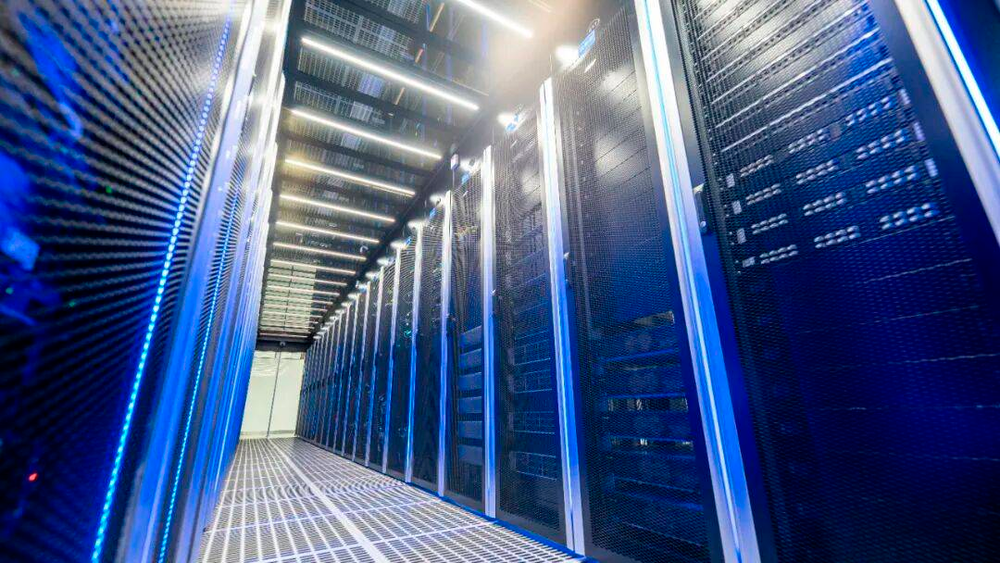
💡Cloud cafes are turning idle retail space into low-cost gaming, coding, and LLM inference infrastructure.
⚡ 30-Second TL;DR
What Changed
China’s broader internet-service venue count reached 122,600 by the end of 2025, up 12.68% year over year.
Why It Matters
For AI builders, the trend suggests a new offline distribution channel for inference, coding assistants, and GPU rental. It also shows how edge infrastructure can turn underused retail venues into accessible AI-compute points.
What To Do Next
Prototype a pay-per-hour AI workstation by connecting an OpenAI-compatible client such as Cursor or Claude Code to a managed inference endpoint.
Key Points
- •China’s broader internet-service venue count reached 122,600 by the end of 2025, up 12.68% year over year.
- •Cloud gaming deployments use small terminals, high-speed optical networks, and remote GPU clusters to deliver 2K gaming with low latency.
- •Shunwang Technology has deployed more than 330 node data centers and supports roughly 10,000–20,000 internet cafes moving to the cloud.
- •AGI Bar offers customers free, unlimited DeepSeek API access through OpenAI-compatible clients in exchange for venue consumption.
- •Cloud-enabled venues can reduce initial hardware investment by more than 70%, while reported monthly revenue exceeds that of traditional cafes.
🧠 Deep Insight
Background and context from public sources — not the original article. 11 sources cited.
🔑 Enhanced Key Takeaways
- •Internet cafes are being repurposed as micro-data centers to solve the 'last mile' latency problem for real-time AI inference in urban environments.
- •Venues are undergoing significant physical retrofitting, transitioning from traditional air cooling to advanced thermal management systems to support high-density GPU clusters.
- •The business model has shifted from entertainment-centric to 'compute-first,' where the physical space is primarily valued for its ability to host and power specialized AI hardware.
- •These hubs are integrating diverse hardware, including specialized AI accelerators alongside standard GPUs, to provide project-based compute resources for local developers and businesses.
- •The transformation is aligned with China's national 'new infrastructure' strategy, which prioritizes localized, efficient compute power to support industrial and commercial AI chains.
📊 Competitor Analysis▸ Show
| Feature | Internet Cafe AI Hubs | Hyperscale Cloud Providers | Localized Edge Nodes |
|---|---|---|---|
| Latency | Ultra-low (Urban proximity) | Moderate (Regional hubs) | Low |
| Hardware | Mixed/Flexible | Standardized/Massive | Specialized |
| Deployment | Retrofitted existing sites | New-build data centers | Modular/Containerized |
| Pricing | Consumption-based/Hourly | Subscription/Usage-based | Contract-based |
🛠️ Technical Deep Dive
- Architecture: Distributed edge computing nodes utilizing existing urban grid capacity to bypass hyperscale congestion.
- Thermal Management: Transition from standard air cooling to high-density thermal management systems to support rack-level GPU clusters.
- Connectivity: Integration of high-speed optical backbones to maintain low-latency links between local inference nodes and remote GPU clusters.
- Compute Stack: Deployment of OpenAI-compatible API gateways to facilitate seamless integration for local users accessing LLMs.
🔮 Future ImplicationsAI analysis grounded in cited sources
⏳ Timeline
📎 Sources (11)
Factual claims are grounded in the sources below. Forward-looking analysis is AI-generated interpretation.
Weekly AI Recap
Read this week's curated digest of top AI events →
👉Related Updates


AI-curated news aggregator. All content rights belong to original publishers.
Original source: 虎嗅 ↗
This is a summary, not the original. Read the source, or get the weekly briefing.
Weekly AI briefing
One email a week. Unsubscribe anytime.