International Space Station air leak situation worsens
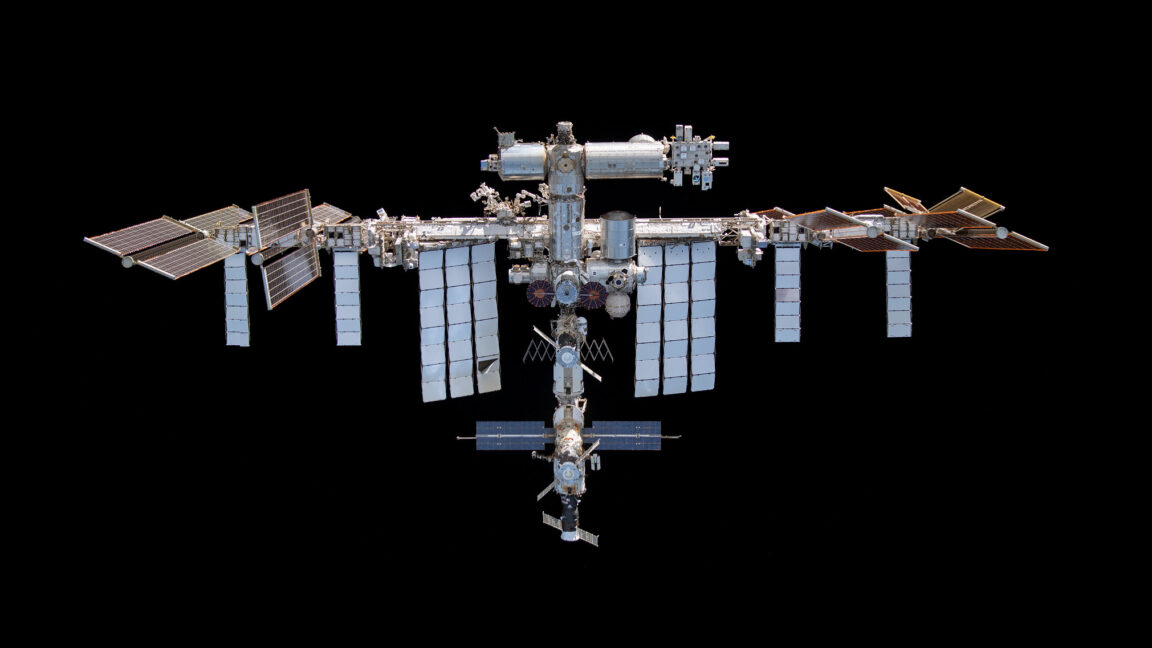
💡Structural issues on the ISS could impact ongoing space-based AI and robotics research projects.
⚡ 30-Second TL;DR
What Changed
Air leak on ISS has taken a worrying turn
Why It Matters
The stability of the ISS is critical for ongoing microgravity research, including AI-driven robotics experiments conducted in space.
What To Do Next
If your research involves space-based AI experiments, assess potential contingency plans for hardware deployment.
Key Points
- •Air leak on ISS has taken a worrying turn
- •NASA and Roscosmos are coordinating a response
- •Structural integrity of the station is under scrutiny
🧠 Deep Insight
Background and context from public sources — not the original article. 28 sources cited.
🔑 Enhanced Key Takeaways
- •The persistent air leak is specifically located in the Zvezda service module's transfer tunnel, known as PrK, a Russian-operated section that has been a recurring issue since September 2019.
- •The leak rate has significantly worsened over time, escalating from less than 1 pound (0.45 kg) per day in 2019 to 3.7 pounds (1.7 kg) per day by April 2024, prompting NASA to elevate the risk to the highest level. On June 5, 2026, the leak rate further increased from one pound to two pounds per day.
- •On June 5, 2026, NASA directed five of the seven astronauts aboard the ISS to shelter in a docked SpaceX Dragon spacecraft as a precautionary 'safe haven' while Russian cosmonauts attempted repairs, a measure unprecedented in the ISS's 25 years of continuous human presence.
- •There is an ongoing disagreement between NASA and Roscosmos regarding the precise root cause of the leak, with Russian engineers suggesting micro-vibrations and NASA pointing to a more complex interplay of pressure variations, material stress, and exposure to the harsh space environment.
- •The aging hardware of the ISS, particularly the Zvezda module which launched in July 2000, is a significant contributing factor to the persistent leaks, underscoring the station's deteriorating condition as it approaches its planned retirement in 2030.
🛠️ Technical Deep Dive
- Location of Leak: Primarily in the Zvezda service module's transfer tunnel (PrK), which connects to a docking port.
- Suspected Cause: Microscopic cracks, likely in the welds of the Zvezda module, exacerbated by factors such as thermal cycling, docking events, and crew exercise.
- Zvezda Module Functionality: Launched in July 2000, Zvezda is a critical component providing life support systems, living quarters, electrical power distribution, data processing, flight control, propulsion, and communication systems, serving as the structural and functional center of the Russian Orbital Segment (ROS).
- Leak Detection Methods:
- Monitoring pressure signals and changes in airflow.
- Utilizing acoustic ultrasonic leak detectors, such as CTRL's UL101, which have been used on the ISS since 2001.
- Employing eddy current flaw detectors (e.g., Olympus' portable NORTEC 600D with pencil-shaped probes) for precise marking of crack tips.
- Isolating compartments by closing hatches and using pressure gauges to pinpoint the source.
- Wireless impact and leak detection systems using ultrasonic transducers and triangulation routines for micrometeoroid or orbital debris (MMOD) impacts.
- Repair Methods Employed:
- Application of temporary patches, including Kapton tape and on-board patch kits.
- Use of specialized sealants, such as a two-component sealing compound (e.g., "Germetal-1").
- Operational mitigation measures, including maintaining lower pressure in the affected transfer tunnel, periodic repressurizations, and keeping the pressure hatch closed when not in use.
- Consideration of permanently closing the hatch to the Zvezda module as a radical solution, which would impact a docking port.
- Safety Protocols: In case of depressurization alarms (rapid ΔP/ΔT or slow ATM PRESS), procedures include recording the incident, contacting mission control, taking pressure readings, evacuating to a docked Soyuz spacecraft, and isolating the leaking compartment.
🔮 Future ImplicationsAI analysis grounded in cited sources
⏳ Timeline
📎 Sources (28)
Factual claims are grounded in the sources below. Forward-looking analysis is AI-generated interpretation.
- gizmodo.com
- engadget.com
- wikipedia.org
- newsweek.com
- space.com
- universemagazine.com
- universemagazine.com
- indiatimes.com
- businessinsider.com
- brusselsmorning.com
- space.com
- nasa.gov
- reddit.com
- scmp.com
- slashdot.org
- theweathernetwork.com
- cbsnews.com
- gizmodo.com
- cbs8.com
- theguardian.com
- spaceq.ca
- space.com
- spaceflightnow.com
- aerospacetestinginternational.com
- stackexchange.com
- ctrlsys.com
- ieee.org
- wikipedia.org
Weekly AI Recap
Read this week's curated digest of top AI events →
👉Related Updates
AI-curated news aggregator. All content rights belong to original publishers.
Original source: Ars Technica ↗
This is a summary, not the original. Read the source, or get the weekly briefing.
The weekly digest
One email a week. Unsubscribe anytime.