🇭🇰Freshcollected in 1m

Intel's CPU Comeback in AI Era
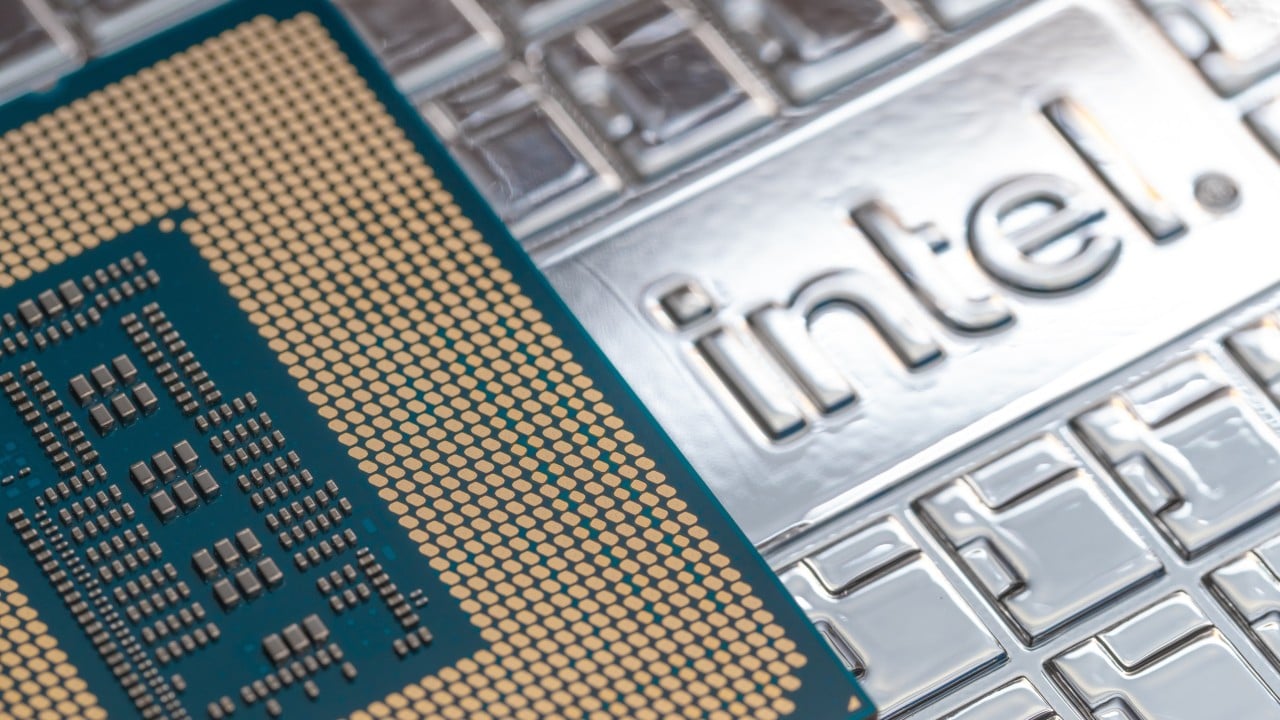
Intel's CPU Comeback in AI Era
PostLinkedIn
🇭🇰Read original on SCMP Technology

💡Intel CEO: CPUs are AI's new foundation—challenging GPU dominance?

⚡ 30-Second TL;DR

What Changed

Intel CEO Lip-Bu Tan highlights CPU's role as AI foundation per customers

Why It Matters

This signals a potential shift in AI hardware preferences, offering alternatives to GPU-heavy setups and possibly reducing dependency on Nvidia. It may influence enterprise AI infrastructure decisions towards more balanced CPU-GPU architectures.

What To Do Next

Benchmark Intel's latest Xeon CPUs against GPUs for your AI inference workloads.

Who should care:Enterprise & Security Teams

🧠 Deep Insight

AI-generated analysis for this event.

🔑 Enhanced Key Takeaways

  • Intel's strategic pivot under Lip-Bu Tan emphasizes the integration of Advanced Matrix Extensions (AMX) within Xeon processors to accelerate AI inference workloads without requiring dedicated discrete GPUs.
  • The market shift toward CPU-based AI is driven by enterprise demand for lower total cost of ownership (TCO) and simplified software stacks, as companies seek to run AI models on existing general-purpose server infrastructure.
  • Intel's recent financial performance reflects a successful transition toward a 'foundry-first' model, where the synergy between internal CPU design and advanced packaging technologies has improved margins despite intense competition from ARM-based server chips.
📊 Competitor Analysis▸ Show
FeatureIntel Xeon (AI-Optimized)NVIDIA H100/B200AMD EPYC (w/ AVX-512)
Primary RoleGeneral Purpose + AI InferenceDedicated AI Training/InferenceGeneral Purpose + AI Inference
Architecturex86 w/ AMXHopper/Blackwell (GPU)x86 w/ AVX-512
Memory BandwidthModerate (DDR5/HBM options)Extremely High (HBM3e)High (DDR5)
AI EfficiencyHigh for small/medium modelsIndustry-leading for LLMsCompetitive for inference

🛠️ Technical Deep Dive

  • Intel Advanced Matrix Extensions (AMX): A built-in hardware accelerator designed to significantly boost deep learning training and inference performance on the CPU.
  • AMX Architecture: Comprises two main components: Tile Configuration (TILECFG) and Tile Data (TILEDATA), allowing for high-throughput matrix multiplication operations.
  • Software Ecosystem: Integration with oneAPI and OpenVINO toolkit enables developers to optimize AI model deployment across Intel CPUs, reducing the need for specialized CUDA-based codebases.
  • Memory Hierarchy: Utilization of high-bandwidth memory (HBM) variants in specific Xeon SKUs to mitigate the traditional CPU bottleneck in data-intensive AI workloads.

🔮 Future ImplicationsAI analysis grounded in cited sources

Intel will capture a larger share of the edge AI inference market by 2027.
The ability to run complex AI models on standard CPUs reduces hardware complexity and power requirements for decentralized edge deployments.
General-purpose CPU demand will decouple from pure GPU-centric AI growth.
As AI models become more efficient, the necessity for massive GPU clusters for inference will diminish in favor of cost-effective, CPU-based scaling.

Timeline

2022-09
Intel officially appoints Lip-Bu Tan to the Board of Directors to guide foundry and chip design strategy.
2023-01
Intel launches 4th Gen Xeon Scalable processors featuring built-in AMX accelerators.
2024-12
Intel reports significant adoption of Xeon processors for enterprise-grade AI inference workloads.
2025-06
Lip-Bu Tan assumes a more prominent leadership role amid Intel's corporate restructuring.
2026-04
Intel stock surges 20% following earnings report highlighting CPU-based AI growth.
📰

Weekly AI Recap

Read this week's curated digest of top AI events →

👉Related Updates

AI-curated news aggregator. All content rights belong to original publishers.
Original source: SCMP Technology

Intel's CPU Comeback in AI Era | SCMP Technology | SetupAI | SetupAI