Huawei Invests $11.7B in Autopilot Training Compute
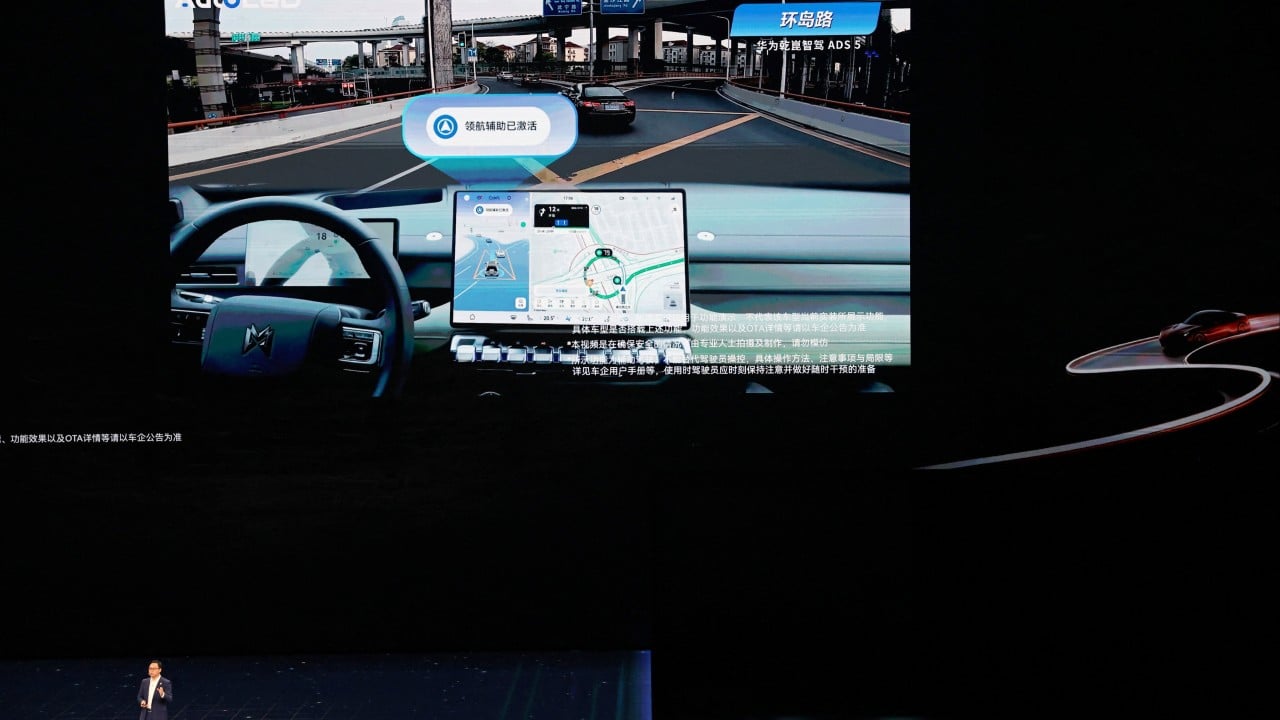
💡Huawei's $11.7B AV compute bet accelerates China-led training infra
⚡ 30-Second TL;DR
What Changed
Huawei to invest US$11.7B over 5 years in AV compute
Why It Matters
Huawei's huge investment underscores China's push in autonomous driving AI, potentially pressuring global competitors. It signals scaling compute infrastructure critical for AV model training. AI practitioners may see new partnership opportunities in AV tech.
What To Do Next
Benchmark Qiankun ADS against your AV stack using Huawei's developer docs.
Key Points
- •Huawei to invest US$11.7B over 5 years in AV compute
- •Boosts training/testing for Qiankun ADS system
- •Aims to retain lead in China's smart driving supply
- •CEO Jin Yuzhi announced expansion plans
🧠 Deep Insight
AI-generated analysis for this event — not the original article.
🔑 Enhanced Key Takeaways
- •The investment is specifically earmarked for the construction of a massive 'intelligent computing center' in Guizhou, designed to handle the petabyte-scale data ingestion required for end-to-end neural network training in autonomous driving.
- •Huawei is shifting its Qiankun ADS architecture toward a 'God Eye' (Tianyan) vision-centric model, reducing reliance on high-definition maps to achieve 'mapless' navigation capabilities across complex urban environments.
- •This capital injection is part of a broader strategic pivot to monetize the 'Huawei Inside' business model, moving away from direct vehicle manufacturing to becoming the primary Tier-1 supplier for Chinese OEMs like Seres, Chery, and JAC.
📊 Competitor Analysis▸ Show
| Feature | Huawei Qiankun ADS | Tesla FSD (China) | XPeng XNGP |
|---|---|---|---|
| Architecture | End-to-End Neural Net | End-to-End Neural Net | Transformer + Occupancy Net |
| Sensor Suite | LiDAR + Camera + Radar | Camera-only (Vision) | LiDAR + Camera |
| Map Dependency | Mapless (Urban) | Mapless | Mapless (Urban) |
| Market Focus | Tier-1 Supplier (B2B) | Direct-to-Consumer | Direct-to-Consumer |
🛠️ Technical Deep Dive
- Compute Infrastructure: Utilization of Ascend 910B/910C AI accelerators to support large-scale model training, specifically optimized for Transformer-based architectures.
- Model Architecture: Transition to a unified 'End-to-End' model that integrates perception, planning, and control into a single neural network, replacing traditional modular pipelines.
- Data Processing: Implementation of a proprietary 'Data-Driven' loop that automatically mines edge cases from the existing fleet of millions of connected vehicles to retrain models in the cloud.
🔮 Future ImplicationsAI analysis grounded in cited sources
⏳ Timeline
Weekly AI Recap
Read this week's curated digest of top AI events →
👉Related Updates

AI-curated news aggregator. All content rights belong to original publishers.
Original source: SCMP Technology ↗
This is a summary, not the original. Read the source, or get the weekly briefing.
The weekly digest
One email a week. Unsubscribe anytime.