Intel Reportedly Targets Budget AI Gaming Handhelds
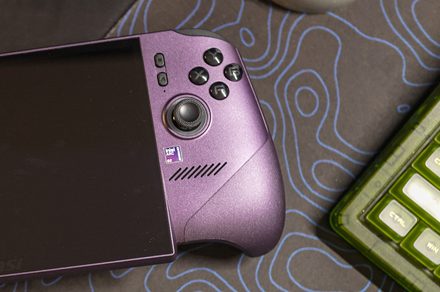
💡A rumored low-cost Panther Lake chip could reshape compute options for compact gaming and edge AI devices.
⚡ 30-Second TL;DR
What Changed
The reported chip would be a lower-cost member of Intel’s Panther Lake family.
Why It Matters
A cheaper integrated CPU-GPU platform could expand the hardware options for compact AI-enabled gaming devices and edge applications. However, the report remains speculative, so performance, power efficiency, availability, and AI acceleration capabilities are still unconfirmed.
What To Do Next
Track Intel’s official Panther Lake specifications and benchmark any announced handheld reference platform for local inference performance before committing to a device design.
Key Points
- •The reported chip would be a lower-cost member of Intel’s Panther Lake family.
- •It is said to include an 8-core CPU configuration.
- •Four Xe3 GPU cores could target affordable gaming handhelds and edge graphics workloads.
🧠 Deep Insight
AI-generated analysis for this event.
🔑 Enhanced Key Takeaways
- •Panther Lake is expected to utilize Intel's 18A process node, marking a significant shift in manufacturing efficiency for mobile-focused silicon.
- •The architecture is rumored to integrate a new NPU (Neural Processing Unit) specifically optimized for local AI acceleration, distinct from the GPU-based AI tasks.
- •Industry reports suggest this budget-tier chip will leverage Foveros 3D packaging technology to reduce footprint and power consumption in handheld form factors.
- •The Xe3 'Celestial' graphics architecture is designed to improve ray tracing performance and power efficiency compared to the previous Xe2 'Battlemage' generation.
- •Intel is reportedly positioning this chip to compete directly with AMD's 'Strix Point' and 'Krackan' APUs in the sub-$500 handheld gaming market.
📊 Competitor Analysis▸ Show
| Feature | Intel Panther Lake (Budget) | AMD Ryzen Z2 Extreme | Qualcomm Snapdragon G3x Gen 2 |
|---|---|---|---|
| Architecture | Panther Lake (18A) | Zen 5 / RDNA 3.5 | Kryo / Adreno |
| Target Market | Budget Handhelds | Premium Handhelds | Android Handhelds |
| AI Capability | Integrated NPU | XDNA 2 NPU | Hexagon NPU |
| Est. Pricing | Low ($300-$500) | High ($600+) | Mid ($400-$600) |
🛠️ Technical Deep Dive
- Panther Lake utilizes the 18A process node which incorporates RibbonFET gate-all-around transistors and PowerVia backside power delivery.
- The Xe3 Celestial GPU architecture focuses on scaling down to lower power envelopes while maintaining high throughput for upscaling technologies like XeSS.
- The 8-core CPU configuration is expected to follow a hybrid architecture, likely utilizing a mix of P-cores and E-cores to balance performance and battery life.
- The chip is designed to support LPDDR5X memory to maximize bandwidth for integrated graphics workloads.
🔮 Future ImplicationsAI analysis grounded in cited sources
⏳ Timeline
Weekly AI Recap
Read this week's curated digest of top AI events →
👉Related Updates




AI-curated news aggregator. All content rights belong to original publishers.
Original source: Digital Trends ↗