🌍The Next Web (TNW)•Stalecollected in 57m
Intel Hires Qualcomm Vet for Physical AI
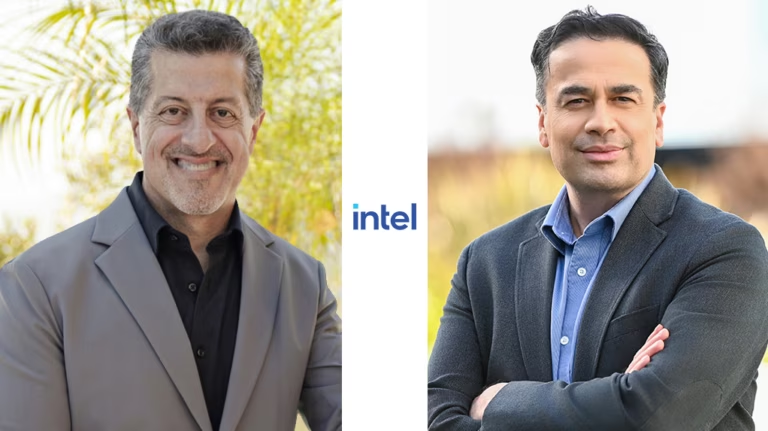
💡Intel's Physical AI hire from Qualcomm—edge for embodied AI hardware devs
⚡ 30-Second TL;DR
What Changed
Alex Katouzian joins from Qualcomm after 25 years
Why It Matters
Bolsters Intel's AI hardware push into physical and client domains, signaling competitive edge in edge AI and robotics via key talent acquisition.
What To Do Next
Track Intel's Physical AI announcements for new client-side inference chips.
Who should care:Developers & AI Engineers
Key Points
- •Alex Katouzian joins from Qualcomm after 25 years
- •Leads Intel's new Client Computing and Physical AI group
- •Part of Lip-Bu Tan's hire-from-rivals restructuring strategy
- •Katouzian oversaw Qualcomm mobile, compute, XR divisions
🧠 Deep Insight
AI-generated analysis for this event.
🔑 Enhanced Key Takeaways
- •Katouzian's appointment follows Intel's 2026 organizational pivot to integrate 'Physical AI'—defined as AI models capable of interacting with the physical world through robotics and edge devices—directly into its client silicon roadmap.
- •The restructuring consolidates Intel's legacy PC client business with its emerging edge-AI hardware initiatives, signaling a move to compete directly with Qualcomm's Snapdragon X Elite architecture in the AI PC market.
- •Industry analysts suggest this move is a direct response to Intel's struggle to maintain market share in the mobile-compute space, leveraging Katouzian's deep expertise in ARM-based SoC design and power-efficient mobile architectures.
📊 Competitor Analysis▸ Show
| Feature | Intel (Client/Physical AI) | Qualcomm (Snapdragon/XR) | NVIDIA (Jetson/Robotics) |
|---|---|---|---|
| Primary Architecture | x86 + NPU | ARM + Hexagon NPU | GPU + Tensor Cores |
| Target Market | AI PC & Edge Robotics | Mobile, Laptop, XR | Industrial/Autonomous AI |
| Key Strength | Ecosystem Compatibility | Power Efficiency | Software/CUDA Stack |
🔮 Future ImplicationsAI analysis grounded in cited sources
Intel will shift its future client CPU roadmap to prioritize ARM-like power efficiency metrics.
Katouzian's long tenure at Qualcomm suggests a strategic pivot toward optimizing x86 or hybrid architectures for the thermal and power constraints typical of mobile and edge devices.
Intel will increase M&A activity in the robotics and edge-sensor software space.
To operationalize 'Physical AI,' Intel requires a robust software stack to bridge its silicon with real-world sensor data, an area where it currently lags behind competitors.
⏳ Timeline
2024-09
Intel Foundry Services and product design groups are separated to improve operational efficiency.
2025-03
Intel announces a strategic shift toward 'AI Everywhere,' focusing on edge-computing hardware.
2026-05
Alex Katouzian is appointed to lead the newly formed Client Computing and Physical AI group.
📰 Event Coverage
📰
Weekly AI Recap
Read this week's curated digest of top AI events →
👉Related Updates

AI-curated news aggregator. All content rights belong to original publishers.
Original source: The Next Web (TNW) ↗