Intel Core Ultra 270K/250K: Conditionally Great CPUs
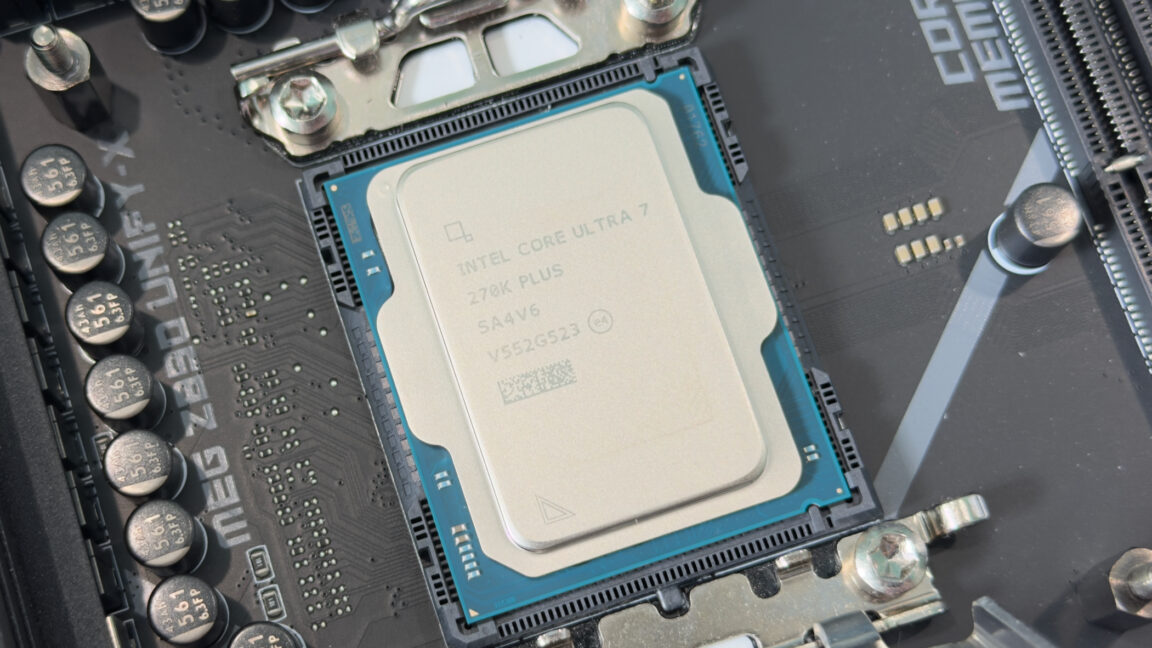
💡Intel desktop CPUs w/ NPU: great value for local AI if you stomach RAM/GPU costs
⚡ 30-Second TL;DR
What Changed
Strong CPU performance relative to price
Why It Matters
These CPUs provide value for AI builders running local inference on desktops with NPUs, if total build costs are controlled. Lowers entry barrier for experimental AI hardware setups.
What To Do Next
Benchmark Core Ultra 270K NPU with OpenVINO toolkit for local LLM inference.
Key Points
- •Strong CPU performance relative to price
- •High costs for RAM, SSDs, and GPUs diminish value
- •Best for builds overlooking peripheral expenses
🧠 Deep Insight
AI-generated analysis for this event — not the original article.
🔑 Enhanced Key Takeaways
- •The Core Ultra 200 series utilizes the 'Arrow Lake' architecture, marking a significant shift to a disaggregated chiplet design manufactured on TSMC's N3B process node for the compute tile.
- •The platform requires the new LGA 1851 socket, necessitating a motherboard upgrade for all users regardless of their previous Intel platform generation.
- •Power efficiency metrics show a marked improvement over the previous Raptor Lake Refresh generation, specifically in multi-threaded workloads, despite the high total system cost.
📊 Competitor Analysis▸ Show
| Feature | Intel Core Ultra 270K | AMD Ryzen 9 9950X | AMD Ryzen 7 9800X3D |
|---|---|---|---|
| Architecture | Arrow Lake (Hybrid) | Zen 5 | Zen 5 (3D V-Cache) |
| Platform | LGA 1851 | AM5 | AM5 |
| Gaming Performance | High | High | Industry Leading |
| Multi-core Efficiency | Competitive | Excellent | Very Good |
🛠️ Technical Deep Dive
- •Architecture: Arrow Lake-S utilizes a modular tile-based design, separating the Compute, Graphics, SoC, and I/O dies.
- •Process Nodes: Compute tile uses TSMC N3B; Graphics tile uses TSMC N5P; SoC/IO tiles use TSMC N6.
- •Memory Support: Native support for DDR5-6400 MT/s, with significant overclocking headroom on Z890 chipsets.
- •Connectivity: Integrated support for Thunderbolt 4/5 and PCIe 5.0 lanes for both GPU and NVMe storage.
- •NPU: Includes a dedicated NPU 3.0 for AI acceleration, meeting Microsoft's Copilot+ PC requirements.
🔮 Future ImplicationsAI analysis grounded in cited sources
⏳ Timeline
Weekly AI Recap
Read this week's curated digest of top AI events →
👉Related Updates
AI-curated news aggregator. All content rights belong to original publishers.
Original source: Ars Technica ↗
This is a summary, not the original. Read the source, or get the weekly briefing.
Weekly AI briefing
One email a week. Unsubscribe anytime.