Intel and Apple Partner for US Chip Manufacturing
💡Major shift in US semiconductor supply chain; potential impact on future AI hardware availability and costs.
⚡ 30-Second TL;DR
What Changed
Intel and Apple will collaborate on domestic US chip design and production.
Why It Matters
This partnership could significantly alter the semiconductor supply chain for AI hardware, potentially accelerating domestic AI chip production timelines.
What To Do Next
Monitor Intel Foundry Services (IFS) updates to see if new nodes become available for custom AI accelerator designs.
Key Points
- •Intel and Apple will collaborate on domestic US chip design and production.
- •The initiative aims to repatriate semiconductor manufacturing to the United States.
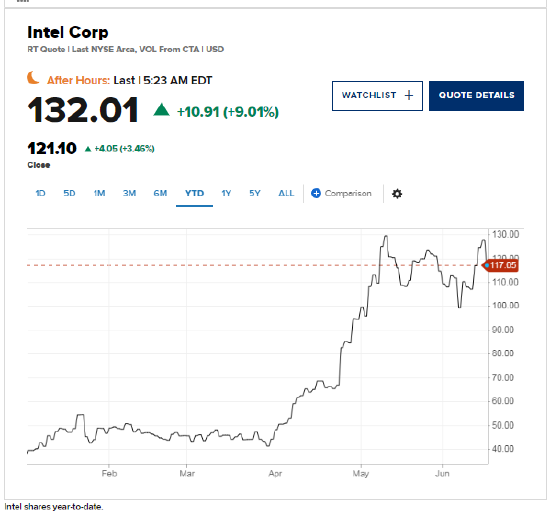
- •Intel's stock surged 9% following the announcement of the partnership.
🧠 Deep Insight
AI-generated analysis for this event — not the original article.
🔑 Enhanced Key Takeaways
- •The partnership leverages the CHIPS and Science Act subsidies, which provide federal financial incentives to offset the higher operational costs of manufacturing advanced semiconductors in the United States compared to East Asian foundries.
- •Intel Foundry Services (IFS) is expected to utilize its 18A process node for Apple's future silicon, marking a significant shift from Apple's long-standing exclusive reliance on TSMC for its A-series and M-series chips.
- •The collaboration includes a commitment to establish a dedicated supply chain ecosystem in the American Midwest, aiming to integrate packaging and testing facilities alongside wafer fabrication to create a localized 'end-to-end' production pipeline.
📊 Competitor Analysis▸ Show
| Feature | Intel Foundry (Apple Partnership) | TSMC (Current Apple Partner) | Samsung Foundry |
|---|---|---|---|
| Primary Location | United States | Taiwan | South Korea |
| Process Node | 18A (Angstrom Era) | N2 / N3 (3nm/2nm) | SF2 / SF3 (2nm/3nm) |
| Geopolitical Risk | Low (Domestic) | High (Cross-Strait) | Moderate |
| Supply Chain | Integrated US Ecosystem | Global/Distributed | Global/Distributed |
🛠️ Technical Deep Dive
- Intel 18A Process Node: Utilizes RibbonFET gate-all-around (GAA) transistor architecture to improve power efficiency and performance density.
- PowerVia Technology: Implements backside power delivery, separating power and signal lines to reduce voltage droop and improve transistor switching speeds.
- Advanced Packaging: Integration of Foveros 3D packaging technology to allow heterogeneous chiplet stacking, enabling Apple to combine logic, memory, and I/O dies efficiently.
🔮 Future ImplicationsAI analysis grounded in cited sources
⏳ Timeline
Weekly AI Recap
Read this week's curated digest of top AI events →
👉Related Updates
AI-curated news aggregator. All content rights belong to original publishers.
Original source: cnBeta (Full RSS) ↗
This is a summary, not the original. Read the source, or get the weekly briefing.
The weekly digest
One email a week. Unsubscribe anytime.